
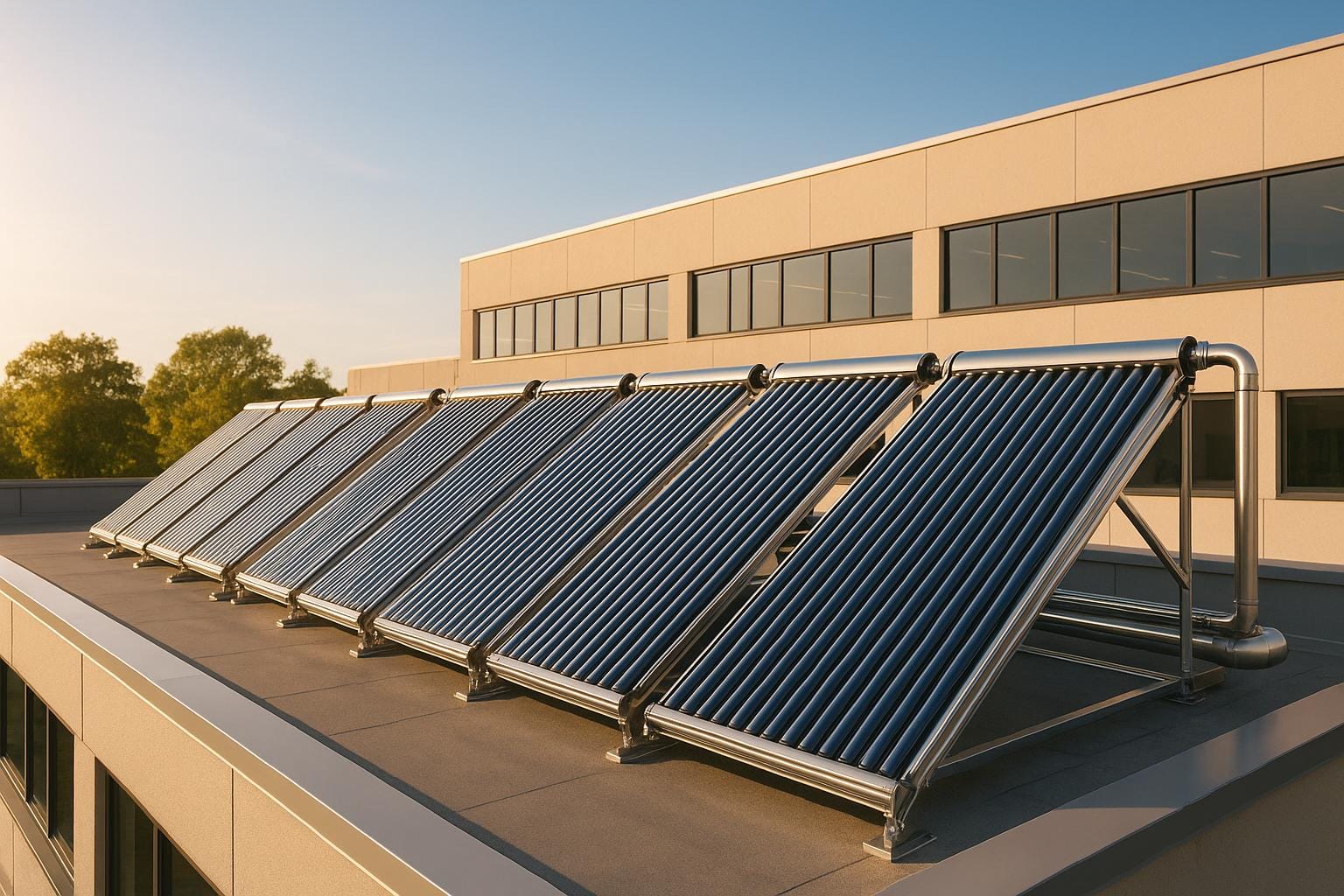
Solar thermal systems provide an efficient way for businesses to generate heat using sunlight, cutting energy costs and reducing reliance on fossil fuels. These systems are especially effective for industries with consistent hot water needs, such as hospitality, food processing, and healthcare. Here’s what you need to know:
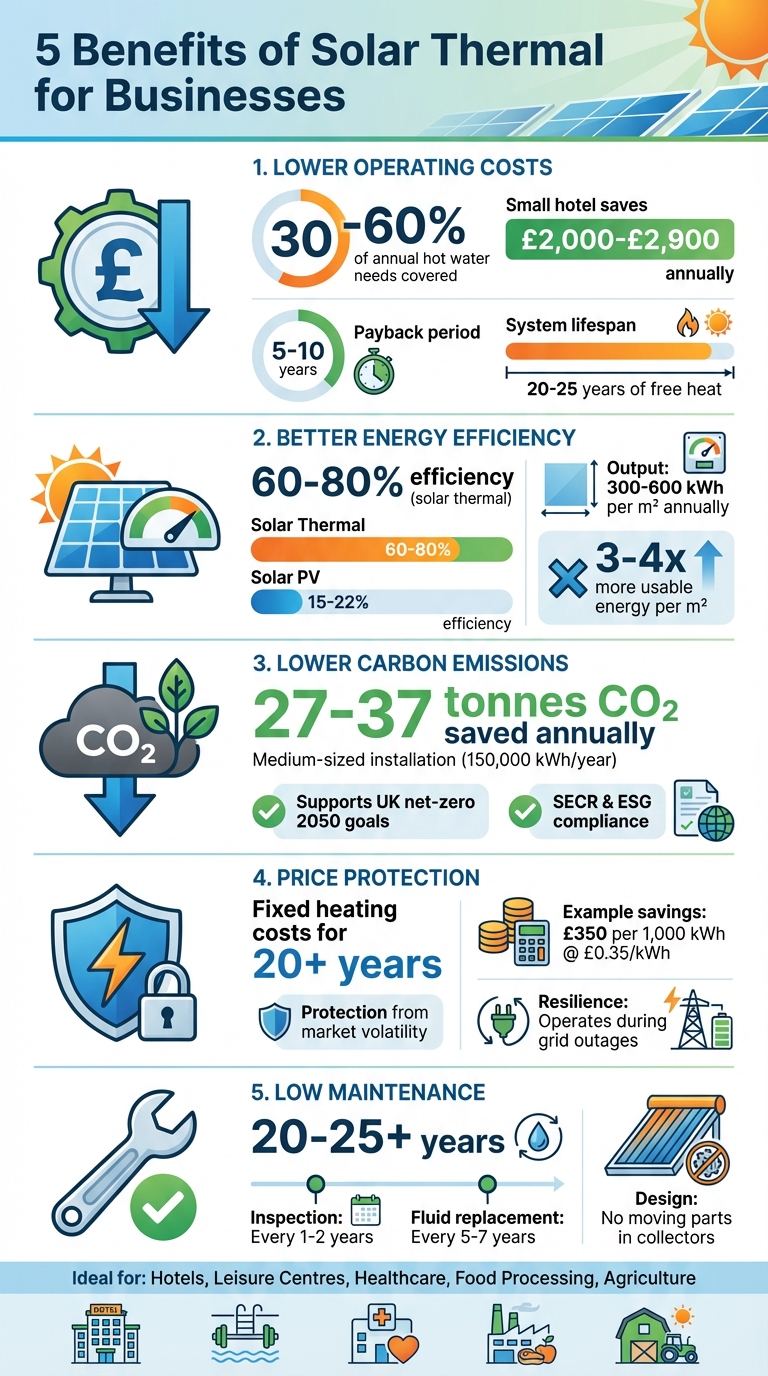
- Lower Costs: Solar thermal systems can supply 30–60% of annual hot water needs, saving thousands annually on energy bills. For example, a small hotel could save £2,000–£2,900 per year.
- Efficient Use of Space: With 60–80% efficiency, solar thermal collectors outperform solar PV panels for heat generation, making better use of roof space.
- Reduced Emissions: By replacing fossil fuels, businesses can cut CO₂ emissions, helping meet the UK’s net-zero goals and regulatory requirements.
- Protection from Price Hikes: Solar thermal systems offer stable heating costs, shielding businesses from fluctuating energy prices.
- Durability: These systems last 20–25 years with minimal maintenance, providing long-term savings and reliability.
Solar thermal systems are a practical choice for businesses aiming to lower costs, reduce emissions, and future-proof their operations. Partnering with experienced installers ensures the system is tailored to your needs and maximises savings.
5 Key Benefits of Solar Thermal Systems for UK Businesses
1. Lower Operating Costs for Hot Water and Process Heat
Solar thermal systems offer a practical way to cut energy bills by using free solar energy to heat water directly, whether for domestic needs or industrial processes. Once installed, these systems absorb solar radiation through collectors, which then transfer the heat via a fluid into a storage cylinder. This process reduces reliance on gas, oil, or electricity, saving you money by replacing paid energy sources with solar power. Additionally, fewer boiler run-hours mean less fuel consumption, which is particularly valuable for businesses with a constant demand for hot water.
The benefits are especially pronounced for businesses where hot water usage remains steady throughout the year. Industries like hotels, B&Bs, gyms, swimming pools, dairies, pig and poultry farms, and food processing facilities often experience the greatest reductions in operating costs. These sectors rely on hot water for activities such as showers, cleaning, wash-downs, and production processes. In such cases, solar thermal systems can cover 30–60% of annual hot water needs, with even higher contributions during sunny summer months.
For example, a small hotel in Northern Ireland that consumes around 40,000 kWh of natural gas annually for hot water could see a solar thermal array meeting 50–60% of that demand. This translates to roughly 20,000–24,000 kWh of solar-generated energy each year. At a gas price of 10–12p per kWh, the hotel could save between £2,000 and £2,900 annually. If the system replaces direct electric heating, where costs exceed 30p per kWh, the financial savings are even more significant.
In the UK, commercial solar thermal systems typically achieve payback within 5–10 years, depending on factors like system size, fuel prices, and the consistency of hot water use. With rising energy tariffs across the UK and Ireland, each solar-generated kilowatt-hour has become more valuable, shortening payback periods compared to past estimates. Once the system pays for itself, it continues to deliver free heat for 20–25 years. This long-term financial advantage, combined with the ease of integration, makes solar thermal an attractive option for businesses.
Integrating solar thermal into an existing heating setup is straightforward. These systems usually act as a pre-heat stage, where collectors warm water in a dedicated cylinder or buffer tank. The existing gas or oil boiler then only needs to raise the temperature when required, reducing boiler use and fuel consumption without needing a full system overhaul. Partnering with experienced installers like EECO Energy ensures the system is properly sized and optimised, helping businesses maximise their savings.
2. Better Energy Efficiency and Use of Roof Space
Solar thermal collectors are a smart way to turn sunlight into heat. With efficiency rates ranging from 60–80%, flat-plate and evacuated-tube systems outperform commercial solar PV panels, which typically convert only 15–22% of sunlight into electricity. For businesses that rely heavily on hot water or process heat, solar thermal systems can generate three to four times more usable energy per square metre of roof space. This makes them an excellent choice for getting the most out of your roof while cutting down on energy costs.
By installing solar thermal collectors on commercial rooftops – whether it’s a hotel, leisure centre, food processing plant, or care home – you can turn unused roof space into a productive heat source. This also frees up ground areas for other purposes. Additionally, using solar thermal systems to pre-heat water reduces boiler activity and fuel consumption, improving overall efficiency. These benefits can lead to better Energy Performance Certificate (EPC) ratings and help businesses comply with ESOS and SECR reporting requirements.
A well-planned solar thermal system can cover 40–60% of a building’s annual hot water needs, with even greater output during summer when the system operates at peak efficiency. In the UK, these installations typically generate between 300–600 kWh of thermal energy per square metre of collector area each year, ensuring an optimal return on investment for the roof space used.
Skilled installers take into account the roof’s layout, orientation, and structural integrity to maximise energy production. South-facing roofs with minimal shading are ideal, but south-east and south-west orientations can also perform well in UK conditions. EECO Energy specialises in designing commercial solar systems that optimise energy output, helping businesses in Northern Ireland lower both heating and electricity costs while making the best use of their buildings. These savings contribute to more efficient operations and reduced overall expenses.
3. Lower Carbon Emissions and Regulatory Compliance
Installing solar thermal systems doesn’t just save on operating costs – it also significantly cuts carbon emissions and helps businesses meet regulatory requirements by reducing reliance on fossil fuel heating. For every kilowatt-hour (kWh) of heat generated, on-site fuel combustion decreases, shrinking your business’s carbon footprint. For example, a medium-sized commercial solar thermal installation producing around 150,000 kWh of heat annually could prevent approximately 27–37 tonnes of CO₂ emissions each year by replacing natural gas heating. This dual benefit of cost savings and reduced emissions aligns with environmental compliance goals.
For businesses in Northern Ireland, this reduction plays a role in meeting the UK’s net-zero emissions target by 2050. By transitioning part of your heat demand from fossil fuels to solar thermal, you directly reduce Scope 1 emissions – those tied to on-site fuel use. Moreover, showcasing renewable heat solutions positions your business in line with national policies, such as the planned phase-out of high-carbon heating fuels and stricter energy performance standards for commercial buildings.
Solar thermal systems also help businesses stay ahead of evolving environmental regulations. By cutting Scope 1 emissions, they support compliance with the Streamlined Energy and Carbon Reporting (SECR) framework and contribute to achieving the UK’s net-zero objectives. As regulatory and reporting expectations become stricter, adopting solar thermal can reduce both compliance risks and reputational concerns. Additionally, where planning permissions or environmental permits encourage renewable energy adoption, solar thermal systems provide a practical, effective solution for meeting such requirements.
Many businesses incorporate solar thermal systems into a broader carbon reduction plan, which monitors current heat-related emissions and projects long-term savings. Once installed, you can track reductions in gas, oil, or electricity consumption, converting avoided kilowatt-hours into measurable CO₂ savings using official UK emissions factors. These savings can then be highlighted in ESG (Environmental, Social, and Governance) and CSR (Corporate Social Responsibility) reports, showcasing achievements such as annual CO₂ reductions and the percentage of hot water demand met by solar thermal systems.
EECO Energy takes this a step further by integrating solar thermal systems with battery storage, optimising on-site renewable heat generation while streamlining regulatory reporting. For businesses interested in combining solar PV, solar thermal, and battery storage, specialist installers can design tailored systems to maximise self-consumption, reduce dependence on fossil fuels, and provide the performance data increasingly demanded for regulatory disclosures and tender submissions. This approach ties environmental benefits to operational efficiency and cost savings, creating a compelling case for solar thermal adoption.
sbb-itb-d2d975a
4. Protection from Energy Price Increases
Solar thermal systems offer businesses a way to shield themselves from the unpredictability of energy markets by producing heat on-site using sunlight – a resource that’s both free and unaffected by market fluctuations. Once installed, the main expenses are largely fixed, consisting of the upfront investment and minimal maintenance costs. Meanwhile, the sunlight powering the system is constant and cost-free. This setup allows businesses to cover a portion of their heating needs at a steady cost, enabling more accurate long-term budgeting over 15–20 years or more. In essence, this fixed-cost heating approach helps businesses weather the ups and downs of energy prices.
The UK energy market has seen sharp price swings in recent years, with wholesale gas and electricity costs climbing significantly. By generating a substantial part of your heat requirements with solar thermal, you reduce the amount of energy you purchase at fluctuating market rates. For instance, if your business currently pays £0.35 per kWh for electricity to heat water, generating 1,000 kWh on-site could save you approximately £350. As grid tariffs increase, every kilowatt-hour of heat you produce yourself becomes a safeguard against future price hikes.
This advantage extends far beyond the typical energy contract period. While most UK business energy agreements last one to three years before rates are adjusted, solar thermal systems are built to last 20–25 years. Businesses with high and consistent hot water demands – like hotels, leisure centres, food processors, and dairies – can benefit significantly, as solar thermal systems cover a large portion of their heating needs, ensuring long-term price stability.
Solar thermal systems also offer an added layer of resilience against supply disruptions. As long as there’s sunlight, the system continues to operate, providing hot water and low-temperature heat even during grid outages or periods of limited supply. This reliability is particularly valuable for industries where uninterrupted hot water availability is critical.
For even greater energy security, combining solar thermal systems with other renewable technologies, such as photovoltaic (PV) panels and battery storage, creates a more comprehensive solution. This integrated approach expands on-site energy generation, reduces reliance on the grid, and strengthens protection against future energy price increases. EECO Energy specialises in designing such systems, optimising roof space and balancing heat and power needs to maximise efficiency and resilience.
5. Long System Lifespan and Low Maintenance Requirements
Solar thermal systems are built to last, with a typical lifespan of 20–25 years or even longer. The collectors – whether flat-plate or evacuated tube designs – are designed with durability in mind. With no moving parts, they experience minimal wear and tear over time. Materials like toughened glass, corrosion-resistant frames, and sturdy mounts ensure they can handle the unpredictable UK weather.
Maintenance is straightforward and infrequent. Most systems only need an inspection every one to two years to check pressure, antifreeze levels, pump functionality, and controls. The heat transfer fluid usually requires replacement every 5–7 years, while components like pumps or sensors might need swapping after 10–15 years. These replacements are relatively inexpensive compared to the overall system, and they can be carried out with minimal disruption. Many installers also offer maintenance packages with annual service fees, helping businesses and facilities managers easily plan and budget for upkeep.
When compared to traditional gas or oil boilers – which demand frequent servicing, flue checks, and combustion adjustments – solar thermal systems come with much lower operating costs. With no fuel costs and fewer moving parts, maintenance is generally limited to periodic inspections, fluid replacements, and occasional component updates. This simplicity contributes to a much lower total cost of heat over the system’s lifetime, often measured on a pence-per-kWh basis. This is particularly advantageous when compared to the costs of grid electricity or oil heating. The system’s resilience also makes it a valuable addition to integrated energy solutions, strengthening its role in renewable energy strategies.
Conclusion
Solar thermal systems bring a host of clear advantages, starting with reduced operating costs by harnessing free sunlight to generate hot water and process heat. They make better use of underutilised roof space, transforming it into a productive energy source, while also cutting carbon emissions – helping businesses align with the UK’s net-zero goals. On top of that, by generating heat on-site, companies gain greater control over their energy needs and protection from fluctuating fuel prices, making long-term budgeting far easier. It’s no wonder solar thermal is seen as a smart investment for businesses looking to future-proof their operations.
One of the standout features of solar thermal systems is their durability and minimal maintenance requirements. This reliability strengthens the financial and environmental benefits they offer. The technology is especially well-suited for industries with a steady demand for hot water, such as hospitality, leisure, agriculture, food processing, healthcare, and education. Across Northern Ireland’s varied commercial landscape, many businesses could see real savings and significant carbon reductions by incorporating solar thermal into their energy plans.
Local providers like EECO Energy offer tailored solutions and precise savings estimates. Their deep understanding of local factors – such as planning regulations, roof designs, weather conditions, and system constraints – ensures installations are correctly sized and free from avoidable issues. This expertise helps businesses maximise both their financial returns and environmental impact.
For companies with substantial hot water or process heat needs, working with a local installer to conduct a site-specific feasibility study is crucial. This step provides a clear picture of potential savings, payback periods, and how solar thermal can be seamlessly integrated into existing energy systems.
FAQs
What’s the difference in efficiency between solar thermal systems and solar PV panels?
Solar thermal systems excel at turning sunlight into heat, often reaching efficiency levels of 70–80%. On the other hand, solar PV panels typically convert sunlight into electricity with efficiency rates of around 15–20%.
Because of this, solar thermal systems are ideal for businesses that require significant amounts of hot water or heating. In contrast, solar PV panels are better suited for generating electricity to run appliances and equipment.
What kind of maintenance do solar thermal systems need?
Keeping your solar thermal system in top shape requires regular maintenance. This involves checking all components, looking out for leaks, and ensuring the insulation remains intact. In regions with hard water, flushing the system periodically is especially important to prevent mineral deposits from building up.
For the best results, have a qualified technician service the system every 1 to 2 years. This not only helps it perform efficiently but also prolongs its lifespan and keeps energy usage effective.
How can solar thermal systems help businesses reduce carbon emissions and comply with UK regulations?
Solar thermal systems are an effective way for businesses to cut down on their carbon footprint by reducing greenhouse gas emissions. By producing renewable energy directly on-site, these systems align with the UK’s environmental objectives, including those specified in the Climate Change Act.
On top of that, they assist businesses in achieving their sustainability targets and meeting renewable energy regulations. This not only supports a cleaner future but also showcases a commitment to environmental responsibility.