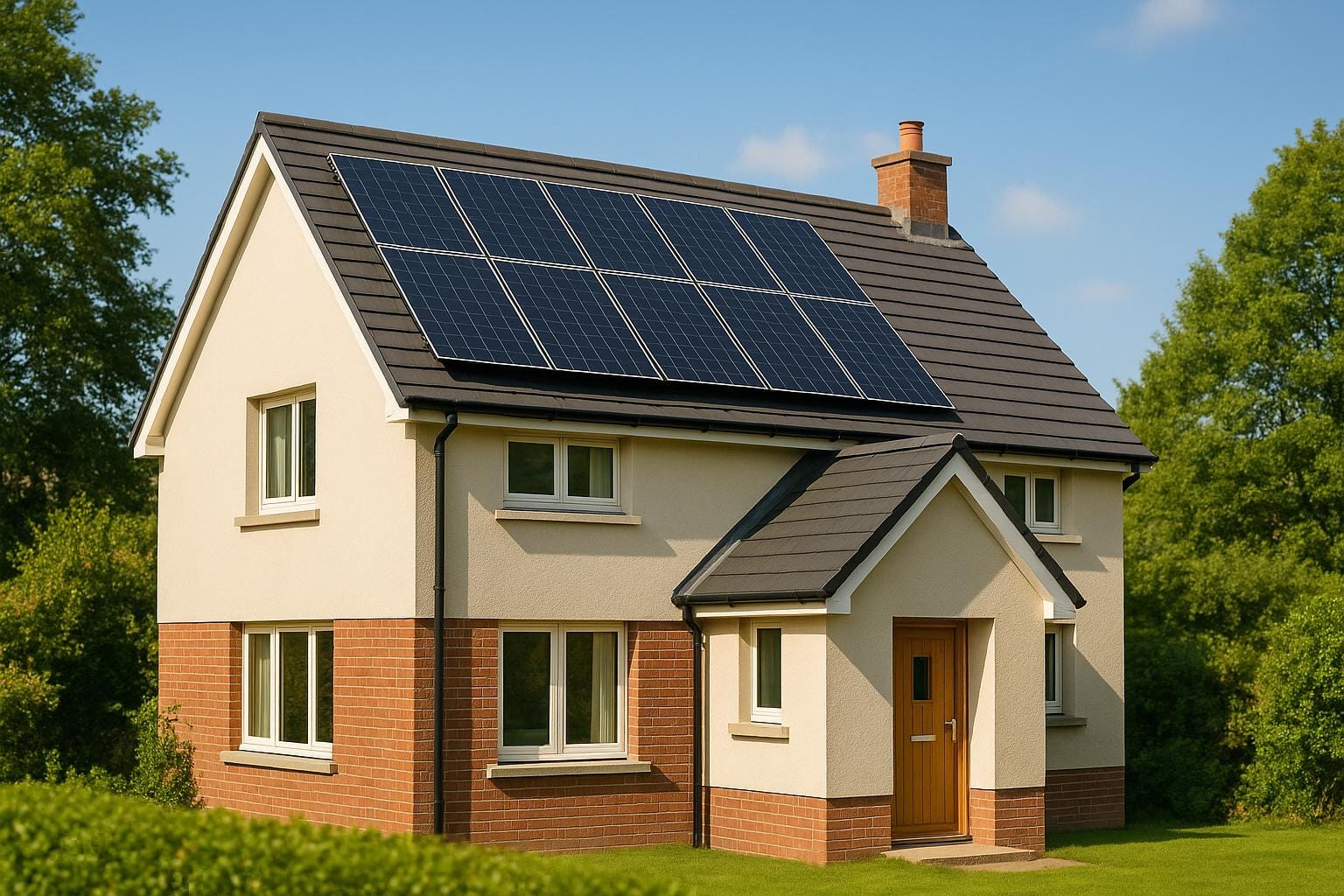
Residential solar panels can help you save on electricity bills by generating power from sunlight, even in cloudy regions like Northern Ireland. They work by converting sunlight into electricity through photovoltaic (PV) cells, which is then used to power your home or stored for later use. Here’s a quick overview of what you need to know:
- Suitability: South-facing roofs with a 30–40° pitch are ideal, but east- and west-facing roofs also work. Flat roofs can use mounting systems for optimal angles.
- Costs: Installation ranges from £3,800 to £12,200, depending on system size. Adding battery storage costs an extra £2,400–£3,650.
- Savings: A 3–6kW system can save £450–£980 annually, with a payback period of 7–14 years.
- Climate Performance: Solar panels perform well in Northern Ireland’s cool, cloudy weather, generating 20–40% of their output on overcast days.
- Incentives: A 0% VAT rate on installations until March 2027 reduces upfront costs.
Solar panels last 25–30 years with minimal maintenance, making them a long-term investment that reduces energy costs and reliance on the grid. To get started, assess your roof’s condition and energy usage, and consult an MCS-accredited installer for tailored advice.
How Residential Solar Panels Work
How Solar Panels Convert Sunlight into Electricity
Solar panels are made up of silicon photovoltaic (PV) cells. When sunlight strikes these cells, it triggers a process where photons knock electrons free, creating direct current (DC) electricity. This DC electricity is then converted into alternating current (AC) by an inverter, making it suitable for use in your home. Any surplus energy can be sent back to the grid. On sunny days, a single panel can produce between 100 and 400 watts of power. For an average installation of 8 to 12 panels, this translates to an annual generation of approximately 2,450–3,000 kWh of electricity. Let’s take a closer look at the components that make this possible.
Main Components of a Solar Panel System
A solar panel system is more than just the panels themselves; it’s a combination of essential parts working together. The inverter plays a crucial role by converting the DC electricity produced by the panels into AC electricity that powers your home. Many inverters also come with monitoring features, allowing you to track energy production.
Mounting systems are designed to securely anchor the panels, ensuring they are positioned at the best angle to capture sunlight while withstanding wind and adverse weather. Battery storage can be added to store excess energy, giving you access to power during periods of low sunlight or at night. Other necessary components include wiring, conduit, and a net meter, which is especially important for grid-tied systems as it tracks energy flow.
When choosing an inverter, you’ll encounter different options. String inverters serve as a central unit for multiple panels, while microinverters are installed beneath each panel, often offering warranties of around 25 years. There’s also the option of string inverters with optimisers, which combine the benefits of both systems. Together, these components ensure your solar panel system performs efficiently, even under varying weather conditions.
Performance in Northern Ireland’s Climate
Northern Ireland’s climate is surprisingly well-suited for solar panels. Thanks to the region’s cool Atlantic weather, solar panels can operate more efficiently. For every degree Celsius above 25°C, panels lose about 0.4% of their efficiency, making Northern Ireland’s moderate summers an advantage. On a crisp January day with temperatures around 5°C, panels can actually exceed their rated output, reaching 105–110% efficiency.
Data from 3,200 installations across Northern Ireland shows that cloudy weather reduces panel output by only 15–25% compared to clear skies. A typical 6kW system can generate about 30 kWh on sunny summer days, 15–21 kWh under partial cloud cover, and 3–7 kWh on overcast days. Seasonal variations are also notable: summer months (May through August) account for 60–65% of annual electricity production, while winter months (November through February) contribute around 15–20%.
Interestingly, Northern Ireland’s frequent rainfall has a practical benefit – it helps to keep the panels clean. Additionally, the region’s breezy conditions during warmer months help to cool the panels, maintaining their efficiency. These factors combine to make solar energy a viable and effective option for homes in Northern Ireland.
Is Your Home Suitable for Solar Panels?
Roof Requirements and Structural Considerations
Your roof’s orientation plays a huge role in how much energy your solar panels can produce. South-facing roofs are the best option, as they get the most direct sunlight throughout the day. East- and west-facing roofs can still work well, though they tend to generate 10–20% less energy since they only capture sunlight during specific parts of the day. North-facing roofs, on the other hand, are the least effective unless you use tilt frames or advanced solar technology to offset the reduced sunlight exposure.
The angle of your roof also matters. A pitch of 30°–40° is considered ideal for capturing sunlight, particularly during the winter months. If your roof is flat, don’t worry – mounting structures can tilt the panels to achieve the best angle, often using ballasted mounts to keep them secure.
The material of your roof is another key factor. Asphalt shingles are a common and cost-effective option, providing a solid surface for mounting panels. Metal roofs are an even better choice in many cases, thanks to their durability – some can last over 40 years. Standing seam metal roofs are particularly convenient because panels can be clamped on without drilling, reducing the risk of leaks. Tile roofs made from clay, concrete, or slate can also work, but they often require specialised installation techniques, which can add to the cost. Fragile or unsafe roof materials, like thatch, asbestos, or glass, should be avoided altogether.
Once you’ve considered the physical aspects of your roof, it’s time to look into local rules and regulations to ensure your installation is compliant.
Planning Permission and Grid Connection in Northern Ireland
In most cases, installing solar panels in Northern Ireland doesn’t require planning permission because it falls under permitted development. However, if your property is a listed building or located in a conservation area, you’ll likely need to get approval. It’s always a good idea to check with your local council or divisional planning office before starting, as applying for permission after installation can be both complicated and costly.
Even if planning permission isn’t needed, your installation must still meet building regulations to ensure it’s safe and structurally sound. Once your system is in place, your installer will register it with NIE Networks to connect it to the grid. This process follows the Engineering Recommendation EREC G98/NI standard.
After addressing these regulatory requirements, the next step is to figure out the right system size for your home.
Sizing a System to Match Your Energy Usage
Choosing the right system size depends on your electricity consumption, roof space, and budget. The size of a solar system refers to its power output, measured in kilowatt-peak (kWp), not its physical size. If your system is too small, it won’t make a noticeable dent in your electricity bills. On the other hand, a system that’s too large could mean spending more upfront than necessary.
For many homes in the UK, a 3–4 kWp system – which usually consists of 8 to 12 panels – strikes a good balance. Such a system can generate around 2,450–3,000 kWh of electricity annually, as previously mentioned. To determine the best system size for your needs, review your recent electricity bills and consider how much roof space you have available. This way, you can ensure your investment is both practical and efficient.
Costs, Savings, and Financial Considerations

Solar Panel Costs, Savings and ROI for Northern Ireland Homes 2025
System Costs and Pricing Options
Solar panel installations in Northern Ireland have become much more affordable in recent years. For an average home, installation costs typically range from £3,800 to £12,200, depending on the system size. For example, a 4kW system – ideal for a 2–3 bedroom home – usually costs between £6,600 and £8,100, while a larger 6kW system for a 4–5 bedroom property comes in at £10,000 to £12,200.
The size of your home plays a big role in determining what system you need. Smaller homes with 1–2 bedrooms often require a 2–3kW system, which costs around £3,800–£7,000, whereas larger homes with 4–5 bedrooms typically need a 5–6kW system. These prices usually cover the panels, inverter, mounting equipment, and installation labour.
If you opt for battery storage, the upfront cost increases, but it offers greater energy independence. Adding a 5kWh battery typically costs an additional £2,400–£3,650. Basic solar panel packages with a battery start at roughly £3,500, while medium-sized packages begin at around £7,000.
Interestingly, solar panel prices have dropped by 40–50% since 2020, making them more accessible. Meanwhile, electricity prices have climbed from 16p/kWh in 2020 to an expected 28p/kWh by 2025. These trends make solar panels an increasingly appealing investment.
Energy Bill Savings and Payback Period
For most homeowners in Northern Ireland, the investment in solar panels pays off in 7–14 years, depending on the system size, energy usage, and whether a battery is included. Annual savings vary by system size. For instance:
- A 3kW system saves £450–£520 per year.
- A 4kW system saves £580–£680 annually.
- A 6kW system can save £850–£980 per year.
These figures are based on electricity rates as of August 2025 and assume a good portion of the energy generated is used directly.
Your daily routine also affects the payback period. Homes with people present during the day might recoup costs in about 9 years, while those with residents returning at 4pm may see payback in 12 years. If no one is home until 6pm, payback could take closer to 13 years. Running appliances like washing machines and dishwashers between 10am and 3pm, when solar panels are most productive, can help shorten this timeframe.
Adding a 5kWh battery to a 4kW system increases annual savings by about £140, but the higher initial cost can extend the payback period from 12.1 years to 14.6 years. Once the system pays for itself, homeowners can save £400–£600 annually. Over 25 years, this could result in a net profit of £11,500–£15,000, representing a return on investment of 164–214%.
Incentives and VAT Exemptions
The introduction of a 0% VAT rate on solar panel and battery installations for residential properties on 1 May 2023 offers significant savings. This exemption can reduce installation costs by £1,000 to £2,000, potentially cutting payback periods by 12–18 months.
However, this incentive is temporary and will end on 31 March 2027, when the VAT rate will rise to 5%. For example, a three-bedroom home system costing £11,307 could incur an additional £565 in VAT if installed after this date.
To benefit from the 0% VAT rate, you must purchase both the solar panels and the battery from the same company that handles the installation. If you buy the equipment separately and hire a different installer, the equipment alone could be subject to a 20% VAT charge.
Beyond VAT savings, homeowners may also avoid income tax on earnings from selling excess electricity back to the grid, provided their system doesn’t produce more than 120% of their annual energy usage. Even if this threshold is exceeded, you can still earn up to £1,000 tax-free under the ‘trading and miscellaneous income’ allowance.
sbb-itb-d2d975a
Choosing and Maintaining Your Solar Panel System
How to Choose the Right System
Start by reviewing your energy bills to figure out your average monthly energy use in kilowatt-hours (kWh). This will help you decide the size of the solar panel system you need. A good rule is to aim for panels that generate around 20% more energy than your usual consumption. This extra capacity accounts for cloudy weather, seasonal changes, system inefficiencies, and even future increases in your energy needs.
When selecting a system, think about the type of panels, inverter quality, and whether you’ll need battery storage. Discuss performance expectations, roof orientation, shading, and warranty details with an MCS-accredited installer. For instance, if you’re home during the day, you can use more solar energy as it’s generated, reducing the need for a large battery. On the other hand, if your household is typically out during the day, a battery can store excess energy for use in the evening.
Working with an MCS-accredited installer is essential – not only for ensuring high-quality work but also to qualify for the Smart Export Guarantee. To get the best deal, request quotes from at least three different installers and compare their recommendations and costs.
Once you’ve chosen your system, the installation process will take you through the steps to get it up and running.
The Installation Process
In the UK, installing solar panels usually takes 1–3 days. However, the entire process – from your initial enquiry to having a fully operational system – typically spans 4–8 weeks. Every week, over 3,000 solar panel installations are completed across the country.
The process starts with a consultation and site survey. During this step, your installer will assess your roof’s suitability, your energy usage, and any shading concerns. They’ll then design a system tailored to your needs and ensure your roof can safely support the panels. Scaffolding is usually set up first, which can take about a day. After that, mounting rails or brackets are attached to the roof rafters, followed by the panels themselves – a job that typically takes less than a day. The inverter, which connects the panels to your home’s electrical system, is installed next, taking about 4–6 hours. If you’ve opted for battery storage, it will be installed at the same time.
Once the physical installation is complete, the system is connected to your home’s consumer unit and the grid. It is then thoroughly tested to ensure it meets safety and compliance standards. Your installer will also register the system with the District Network Operator and might help you sign up for the Smart Export Guarantee. While installation is generally straightforward, there may be brief power outages during the electrical work.
It’s important to avoid attempting a DIY installation. Solar panel systems must meet strict safety and electrical regulations, and doing it yourself could void warranties and disqualify you from government incentives.
Maintenance and Long-Term Performance
To keep your solar panel system running efficiently for its 25–30 year lifespan, regular maintenance is key. While solar panels require minimal upkeep, proper care can boost energy production by about 15%. Neglecting maintenance, on the other hand, can lead to dirt build-up that reduces output by as much as 25%.
Check your panels a few times a year for dirt, debris, or damage. Rain often does a good job of cleaning them, but during dry spells, you might need to clean them manually. Monitoring your system’s performance – through an app or a display – can help you quickly spot any drops in output. If you notice any issues, inspect electrical connections and arrange for professional servicing. Routine cleaning and maintenance can significantly extend the life of your system.
Summary: What Northern Ireland Homeowners Need to Know
Solar panels are a smart choice for homes in Northern Ireland, even with the region’s often cloudy skies. Thanks to modern technology, these panels can generate electricity from daylight, not just direct sunlight, and they actually perform efficiently in cooler climates. The proof is in the numbers: Northern Ireland’s solar capacity has skyrocketed from just 2 megawatts in 2011 to an impressive 352MW by 2022.
The financial benefits are equally compelling. For example, a typical three-bedroom home equipped with a 4.5kW solar system and a 3kWh battery could save approximately £883 a year on electricity bills. With these savings, the system could pay for itself in about 10–13 years. On top of that, solar panels can cut a home’s carbon emissions by up to 1.5 tonnes annually and even increase property value. Plus, with 0% VAT on installations in Northern Ireland, the upfront cost becomes much more affordable.
There are some practical steps to take before installation. You’ll need to assess your roof’s condition, orientation, and any potential shading issues. It’s important to get quotes from MCS-accredited installers to ensure quality and access to government-backed schemes. Working with an accredited professional not only guarantees a high standard but also ensures you’re eligible for these incentives.
The installation process itself is relatively quick – typically completed in a single day. However, from your initial enquiry to having the system up and running, the timeline can stretch to several weeks. Once installed, solar systems require minimal maintenance, with occasional cleaning and monitoring, and they can last for 20–30 years.
FAQs
Do solar panels still work during cloudy weather?
Yes, solar panels can generate electricity even on cloudy days, though their efficiency takes a hit. Depending on how thick the cloud cover is, they usually produce around 10% to 25% of their normal energy output. This is because they can still harness diffused sunlight, even when the sun is hidden from view.
What are the main expenses when installing residential solar panels?
The main costs involved in setting up residential solar panels include the solar panel system, which typically ranges from £6,600 to £8,100 for a 4kW system. On top of that, installation fees can cost between £800 and £1,200, and the inverter – a key component – comes in at around £700 to £1,400. If you choose to include a battery storage system, expect to pay an additional £2,500 to £4,000.
You should also factor in potential extra expenses like labour, mounting equipment, and any roof repairs that might be needed. Taking these into account will give you a more accurate idea of the total investment required for your solar panel setup.
How can I tell if my roof is suitable for solar panels?
If you’re considering solar panels for your home, start by evaluating your roof’s direction, angle, and potential shading. Ideally, a south-facing roof with a tilt between 30° and 40° and minimal shading from trees or buildings will provide the best energy output.
You’ll also need enough space for the panels and a roof that’s in solid structural condition to handle their weight. To be sure, it’s worth arranging a professional survey to assess these factors and confirm if your roof is a good match for solar installation.