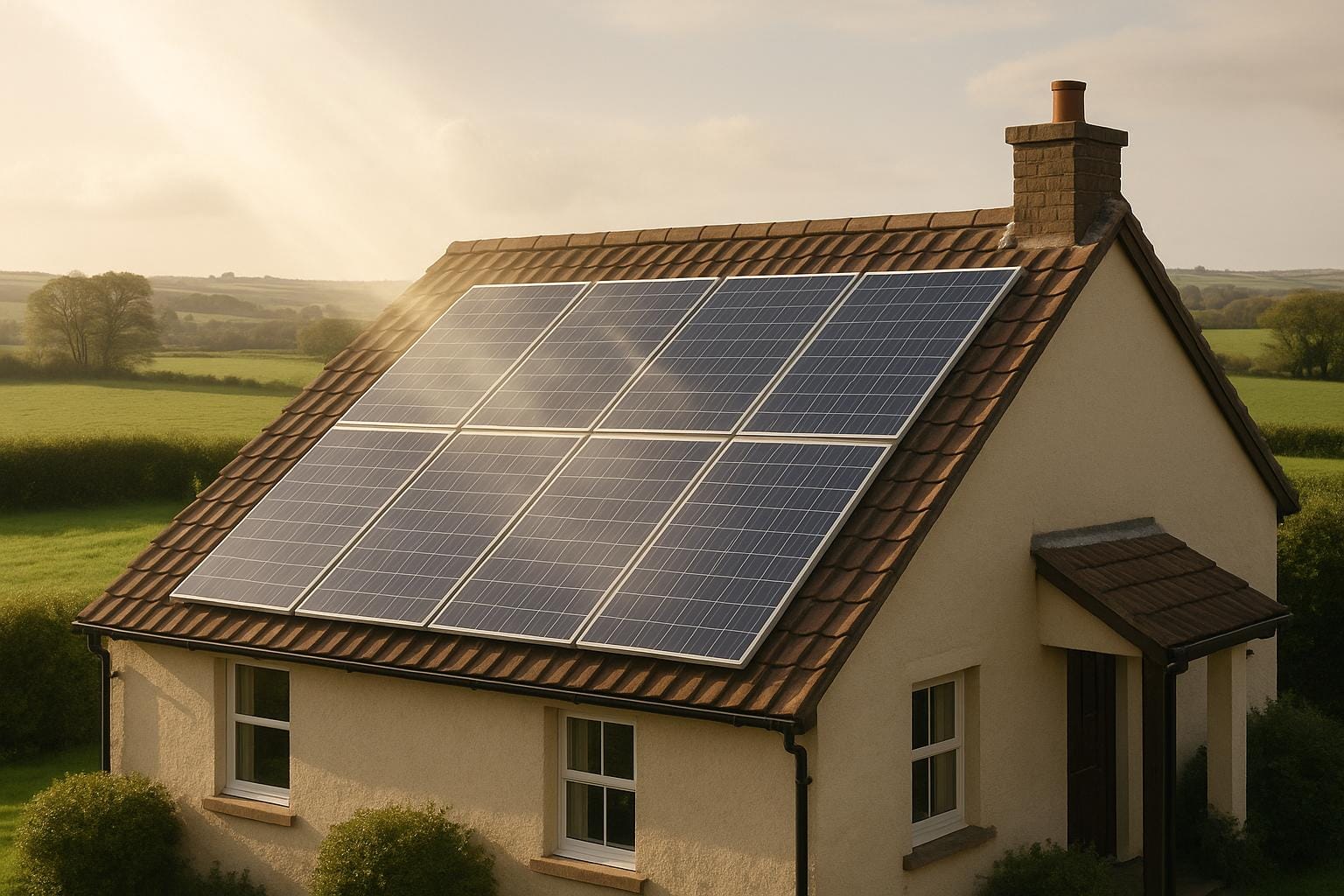
Solar power systems turn sunlight into electricity for your home. Here’s a quick breakdown of how it works:
- Solar Panels: These absorb sunlight and generate direct current (DC) electricity using the photovoltaic effect.
- Inverter: Converts DC electricity into alternating current (AC), which powers your appliances.
- Energy Flow: Electricity is sent to your consumer unit (fuse box) for household use. Surplus energy can either be stored in batteries or exported to the grid.
Northern Ireland’s cooler climate is surprisingly well-suited for solar panels, as they work more efficiently at lower temperatures. Even on cloudy days, solar systems generate power. With proper installation and positioning (south-facing roofs are best), a well-designed system can cover a large portion of your yearly energy needs.
Adding batteries increases energy independence by storing unused power for later, while hybrid systems combine solar and battery technologies for greater flexibility. Costs for a typical residential setup start at around £6,000, with additional options like battery storage costing extra. Maintenance is minimal, and government incentives, like 0% VAT, make solar systems a smart long-term investment.
Switching to solar reduces reliance on the grid and helps lower electricity bills. Whether you’re looking to generate your own power or sell surplus energy back to the grid, solar systems offer a reliable and efficient solution for homes in Northern Ireland.

How Solar Power Systems Work: From Sunlight to Electricity
How Solar Panels Capture Sunlight
The Science Behind Solar Panels
Solar panels work thanks to the photovoltaic effect, a principle discovered by French physicist Edmond Becquerel in 1839. At their core, these panels are made up of many solar cells, usually crafted from high-purity silicon – one of the most common elements on Earth. Each solar cell is built with two silicon layers: one positively charged (p-type, treated with boron) and the other negatively charged (n-type, treated with phosphorus). The meeting point of these layers, called the p–n junction, creates an electric field within the cell.
When sunlight hits the panel, photons (light particles) excite electrons in the silicon, breaking them free from their atomic bonds. The internal electric field pushes these freed electrons, creating a flow of direct current (DC) electricity. Metal contacts – arranged as a grid on the front and as a solid layer on the back – collect the electrons, completing the electrical circuit.
While each solar cell generates only a small amount of power, typically 1–2 watts, connecting multiple cells into a single panel increases the output. Since the 1950s, solar panel efficiency has improved dramatically, rising from under 10% to nearly 25% today.
Getting the Best Performance from Your Panels
The efficiency of solar panels depends heavily on their placement. South-facing panels are ideal for capturing the most sunlight. Proper orientation can increase energy output by as much as 30%, while east–west alignments reduce it by only 10–15%.
For year-round efficiency, the tilt angle of the panels should roughly match the local latitude. For example, in Northern Ireland, where the latitude is around 54–55°, many systems are installed at the pitch of the roof. Adjustments can fine-tune performance: tilting panels 15° less than the latitude enhances summer output, while a tilt 15° greater is better for winter.
Shading is another critical factor. Panels perform best when sunlight strikes them directly, as oblique angles spread the light over a larger area, reducing efficiency. Shading from trees, chimneys, or nearby buildings can significantly impact performance. In such cases, micro-inverters or power optimisers can help mitigate energy losses.
System Sizes and Energy Output
The size of a residential solar system in the UK depends on a household’s energy needs. Panels are typically about 1.7 metres by 1 metre, so sufficient roof space is essential to fit the system. In Northern Ireland, a well-planned solar setup can cover a substantial portion of a home’s yearly electricity demand. However, factors like roof orientation, shading, and the quality of the panels all influence the actual output.
Modern solar panels are designed for durability and efficiency. The tempered glass covering protects the cells while allowing maximum light to pass through. An anti-reflective silicon nitride coating further enhances light absorption. Advanced research has even developed nanoengineered coatings that increase absorption rates to an impressive 96.21% across the solar spectrum. The entire unit is housed in an aluminium frame, ensuring structural integrity and weather resistance.
With their ability to efficiently capture sunlight and their durable construction, solar panels are a vital component in converting sunlight into usable electricity for homes and businesses.
Converting DC Power to AC Electricity
What Inverters Do
Solar panels produce direct current (DC) electricity, but homes and businesses in the UK require alternating current (AC) for everyday use. This is where inverters come in – they’re the devices that transform the DC electricity generated by your panels into AC, making it suitable for your appliances and the grid.
Modern inverters achieve this by using advanced components like MOSFETs or IGBTs, which rapidly switch the current to create an AC waveform. Impressively, these devices operate with energy conversion efficiencies as high as 97–99%. They also constantly monitor the grid’s voltage and frequency, sampling it 128 times per cycle to ensure precise synchronisation.
But inverters do more than just convert electricity. Using Maximum Power Point Tracking (MPPT) technology, they optimise the energy output from your solar panels, potentially increasing energy harvest by up to 30%. MPPT adjusts the load to ensure your panels operate at their peak performance. Additionally, inverters are equipped with safety systems that disconnect from the grid in under two seconds if voltage or frequency drift outside safe operating limits.
Different Types of Inverters
String inverters are the go-to choice for most residential systems. They connect multiple solar panels – usually 6 to 12 – in a series, combining their output into a single inverter. These inverters are cost-effective, ranging from £500 to £1,000 for a typical home system. However, they work best on roofs with consistent sunlight, as shading on one panel can reduce the performance of the entire series.
Microinverters, on the other hand, are installed on each individual solar panel. This setup allows each panel to convert DC to AC independently. Microinverters are ideal for roofs with varying angles, partial shading, or panels facing different directions. They also provide detailed, panel-level performance data, making it easier to detect and address issues. While they offer these advantages, the initial installation cost is typically higher than that of string inverters.
Hybrid inverters combine the functions of solar and battery inverters into a single unit. These are becoming increasingly popular as battery storage systems gain traction. Hybrid inverters enable you to store solar energy for later use, offering greater energy independence – especially useful if your energy demand is higher in the evenings or during power outages.
Each of these inverter types plays a vital role in ensuring solar systems operate efficiently and adapt to different installation needs.
How the System Connects Together
The process starts with solar panels on your roof generating DC electricity. This electricity flows through cables to the inverter, which is often installed in a garage or utility room. The inverter converts the DC into AC, which is then directed to your consumer unit (fuse box) to power your home’s appliances.
Modern inverters often include real-time monitoring capabilities via Wi-Fi or Ethernet. While string inverters provide system-level data, microinverters and power optimisers allow you to monitor individual panel performance.
In addition to managing energy conversion, inverters handle grid synchronisation. They feed any surplus electricity back into the grid while incorporating anti-islanding protection, which shuts down the system within seconds during a power cut. This feature ensures the safety of utility workers during outages.
Connecting to the Grid and Using Batteries
Grid Connection and Selling Surplus Power
Once solar energy has been converted from DC to AC, it’s ready to power your home and potentially feed back into the grid. The AC electricity flows into your home’s consumer unit, powering your appliances. Any excess energy your system generates – especially on sunny days – gets exported to the grid through your existing connection.
In Northern Ireland, grid-tied systems automatically sync with the electricity network. Your meter tracks both the energy you consume and the energy you export. If your solar panels produce more electricity than you use, the surplus is sent to the grid. Depending on your energy supplier, you might receive payments for this exported energy through specific tariff schemes.
But exporting energy isn’t the only option. Storing surplus electricity in batteries can make your system even more efficient.
Why Add Battery Storage
Adding battery storage allows you to save excess power for later use, especially during times when your panels aren’t generating electricity, like in the evening. Instead of sending unused energy to the grid during the day, batteries store it, ensuring your home can rely on solar power for longer periods. This increases your solar self-consumption, meaning you use more of the energy you generate rather than exporting it.
For most households, a 10 kWh battery is sufficient to cover evening energy needs. Batteries also provide a backup energy source during power outages. Additionally, they can store electricity during off-peak hours when rates are lower, saving you money by using that stored energy when electricity prices are higher.
Hybrid and Off-Grid Systems
While battery storage improves your energy independence, hybrid systems take it a step further by balancing grid reliance with self-sufficiency. Hybrid inverters manage energy flow between your solar panels, batteries, and the grid. They determine whether to charge the battery, power your home, or export electricity based on your energy needs and the battery’s status. This setup combines the dependability of a grid connection with the flexibility of battery storage.
For those in remote areas or seeking complete independence, off-grid systems eliminate the need for a grid connection entirely. These systems rely solely on solar panels and batteries. In Northern Ireland, over 2,800 rural properties have adopted solar installations, with off-grid systems gaining popularity in areas where connecting to the grid can cost anywhere from £15,000 to £50,000. Off-grid setups require larger battery banks and often include a backup diesel generator to handle the reduced solar output during winter. Because of the complex calculations involved in determining energy needs and battery capacity, professional design is crucial for these systems.
sbb-itb-d2d975a
How Solar Systems Perform in Northern Ireland
Daily Power Generation Patterns
Solar systems begin producing electricity as the sun rises, reaching their highest output around midday. For homeowners in Northern Ireland, understanding this pattern can help make the most of their system. For instance, a 400-watt solar panel might generate around 2.4 kWh on a bright summer day, but only about 0.4 kWh during the shorter, darker days of winter. Typically, the peak production occurs between 11:00 and 15:00, tapering off as the sun sets. This means the best time to use appliances like washing machines and dishwashers is during daylight hours, as it allows you to rely more on your solar power and less on the grid. These daily cycles are just one part of the story, as seasonal changes also play a big role.
Seasonal Changes and Weather Effects
Northern Ireland’s climate brings distinct seasonal variations in solar energy production. Between May and August, the summer months can account for 60–65% of the system’s annual output, while the winter period from November to February contributes only about 15–20%. Even so, during winter, a household with 12 solar panels can still generate around 4.8 kWh daily, which is nearly half the average household’s energy needs for that season.
Cloudy skies don’t mean your system stops working. While overcast conditions may reduce output to 20–40% of what you’d get on a clear day, thin clouds have a smaller impact, cutting production by just 5–15%. On the other hand, dense storm clouds can reduce output to 10–20%. Cooler temperatures, which are common in Northern Ireland, also work in your favour. Solar panels lose about 0.4% efficiency for every degree above 25°C, so the cooler winter temperatures, often around 5°C, can actually push efficiency to 105–110% of the panel’s rated capacity.
Reading Your System’s Performance Data
Keeping an eye on your system’s performance is crucial to ensure it’s running as expected. Monitoring apps provide real-time data, showing power output (kW) and daily energy production (kWh). These tools also help track daily totals and grid exports, giving you a clear picture of how well your system is performing.
Monthly tracking can highlight seasonal trends. For example, September and October often deliver better results than mid-summer due to more stable weather and moderate temperatures, which improve panel efficiency. If you notice a sudden drop in production that doesn’t align with local weather conditions, it could be a sign that your panels need cleaning or maintenance to restore optimal performance.
Benefits and Things to Consider
Main Benefits of Solar Power
Solar panels can significantly lower your electricity bills while increasing your energy independence. On average, a typical solar system can meet 40–60% of a household’s electricity needs. If paired with battery storage, this can jump to 75% or more of your annual electricity consumption. By generating your own power, you’re also shielding yourself from rising energy prices. Any surplus energy you produce can be sold back to the grid through the Smart Export Guarantee (SEG), though the income from this may decrease if you use more of the energy you generate on-site.
Switching to solar power also helps reduce your carbon footprint by replacing electricity generated from fossil fuels with clean energy. For example, Northern Ireland’s solar capacity has surged from just 2 megawatts in 2011 to 352 megawatts, showcasing a growing commitment to renewable energy [doc]. Solar installations also make you less vulnerable to energy supply disruptions. Since January 2025, a 0% VAT rate on solar systems has made them more affordable, and businesses can further reduce upfront costs by applying for NISEP grants.
These benefits highlight why solar power is increasingly seen as a practical and forward-thinking investment.
Practical Factors to Consider
To make the most of these benefits, there are some practicalities to keep in mind. The upfront cost of a solar system is a key consideration. A 4kW system with 12–14 panels typically costs between £6,000 and £7,000, while opting for an 8-panel system could reduce this by £1,000–£1,500. Adding a 10kW battery for energy storage will increase the cost by £2,400–£3,650, depending on the brand. Keep in mind that your roof must be strong enough to support the panels, each of which weighs about 18 kg. You’ll also need around 15–20 m² of roof space for a 3.5kWp system [63,65].
Optimal performance is achieved with south-facing roofs at a 30–40° angle, but east- or west-facing roofs can still work, albeit with up to a 15% drop in efficiency. North-facing roofs, however, are not recommended [62,63]. Shading can also impact performance, though microinverters or power optimisers can help minimise these effects [63,64].
Maintenance is straightforward, with occasional cleaning and visual inspections being the main requirements. However, inverters typically last about 10 years and cost £500–£1,000 to replace. Planning permission is generally not required for single-family homes, but it may be necessary for flats, listed buildings, or properties in conservation areas [63,64,65].
| Feature | PV-only Systems | PV with Battery Systems |
|---|---|---|
| Upfront Cost | Lower | Higher |
| Energy Storage | None; relies on the grid | Stores excess energy for later use |
| Grid Reliance | Higher | Lower |
| Self-Consumption | Lower; surplus exported | Higher; stored energy used later |
| Export Income (SEG) | Higher potential income | Lower potential income |
| Power Outages | No power during outages | Can provide power if designed for backup |
| Electricity Bill Coverage | Covers 40–60% of demand | Can cover up to 75% or more |
To maximise your savings, try to use high-energy appliances, like washing machines, during daylight hours when your panels are generating power. It’s worth noting that summer months typically account for 60–65% of your annual output, while winter contributes just 15–20%.
When choosing an installer, go for an MCS-certified professional, check their credentials, and get at least three detailed quotes to ensure you’re getting good value [62,64,66]. Look for warranties that cover both the equipment (solar panels usually come with 25-year warranties) and the workmanship (typically 5–10 years). Finally, don’t forget to inform your building insurance provider about your new installation [62,63].
Conclusion
We’ve walked through the journey of solar energy – from capturing sunlight to delivering electricity to your home. Solar panels convert sunlight into direct current (DC) electricity, which an inverter then transforms into alternating current (AC) power for everyday use. Any extra energy can be stored in batteries or sent back to the grid, ensuring nothing goes to waste.
Thanks to advancements in technology, solar systems have become more efficient and dependable. Even with Northern Ireland’s often cloudy skies, solar energy still provides a reliable way to generate a significant share of your electricity.
Choosing solar power means taking control of your energy supply while cutting costs. By producing your own electricity, you shield yourself from rising energy prices, reduce your environmental impact, and support the wider adoption of renewable energy across Northern Ireland.
Whether you’re a homeowner or a business owner, solar energy is a proven option. With panels designed to last 25–40 years and requiring minimal upkeep, it’s an investment that delivers long-term benefits. Now is the time to embrace dependable, cost-efficient solar energy for your property in Northern Ireland.
FAQs
What is the photovoltaic effect and how does it help solar panels generate electricity?
The photovoltaic effect is what makes it possible for solar panels to turn sunlight into electricity. Here’s how it works: when sunlight, made up of tiny particles called photons, strikes the surface of a solar panel, it interacts with a semiconductor material like silicon. This interaction energises the electrons in the material, giving them enough energy to break free and start moving. This movement of electrons generates an electric current.
Once this current is produced, it’s captured and transformed into usable electricity. This electricity can then be used to power anything from household appliances to entire businesses. The photovoltaic effect is at the heart of how solar panels tap into the sun’s energy to produce clean and renewable power.
What are the advantages of adding battery storage to your solar power system?
Adding a battery to your solar power setup can be a game-changer. It lets you store the extra energy your solar panels produce during sunny days, so you can use it later – whether at night or when the weather isn’t cooperating. This means you can rely less on the grid, cut down on your electricity bills, and enjoy greater control over your energy use.
Another big advantage? Battery storage gives you a dependable backup during power cuts, keeping crucial appliances and devices running when you need them most. Over time, this addition can make your energy usage more efficient and sustainable, offering a smart solution for both homes and businesses.
How do the seasons impact solar energy production in Northern Ireland?
Seasonal shifts in Northern Ireland have a noticeable impact on solar energy production, largely due to changes in daylight hours and weather conditions. During the summer months (May to August), solar panels generate the bulk of their annual electricity – about 60–65%. May and June are particularly productive thanks to longer daylight hours and mild temperatures, which create ideal conditions for solar power generation.
In contrast, winter (November to February) contributes only 15–20% of the yearly output, with December being the least productive month. Shorter days and frequent cloud cover during this period significantly reduce the amount of sunlight available.
Interestingly, cooler winter temperatures can help maintain the efficiency of solar panels, as they tend to perform optimally within a temperature range of 15°C to 35°C. However, the limited sunlight during winter ultimately restricts the overall energy generated. Despite these seasonal fluctuations, solar systems are built to operate throughout the year, storing energy or supplementing it when needed to ensure households and businesses stay powered.