Solar panels in Northern Ireland can pay for themselves in 5 to 13 years, depending on system size, energy use, and whether you include battery storage. After that, you’ll enjoy 15–25 years of reduced or nearly eliminated electricity bills. A typical setup costs £5,000–£10,000 and can save £50–£180 per month, with lifetime savings reaching £20,000–£30,000.
Key factors affecting payback:
- System Size & Efficiency: Larger systems generate more energy, but smaller setups (e.g., 600W) can pay off in as little as 2.5–4 years.
- Roof Orientation & Shading: South-facing roofs are ideal; shading can reduce output by 10–20%.
- Electricity Usage Patterns: Using energy during peak solar hours maximises savings.
- Battery Storage: Boosts self-consumption and shortens payback time.
- Grants & Incentives: Homeowners benefit from 0% VAT and schemes like ECO4, while businesses can claim 100% capital allowances.
To maximise savings, focus on self-consumption and explore available financial support. Solar panels also reduce CO₂ emissions by about 1 tonne per year, contributing to a cleaner future.
What Affects Solar Panel Payback in Northern Ireland
Several factors influence how quickly solar panels pay for themselves in Northern Ireland. Understanding these can help provide a clearer picture of the potential return on investment.
System Size and Efficiency
The size of your solar panel system, measured in kilowatts peak (kWp), has a direct impact on how much energy it generates annually. For example, a 4kWp system in Northern Ireland typically produces around 3,600 kWh per year – this is roughly 12% less than sunnier locations. On the other hand, smaller setups, such as a 600W system, can achieve payback periods of 2.5 to 4 years, especially when most of the generated energy is used on-site.
Modern N-Type solar panels are known for their high efficiency, with ratings ranging from 22% to 22.5%. These panels also perform better in low-light conditions and often come with warranties lasting up to 30 years.
Roof Orientation and Shading
The direction your roof faces significantly affects energy production. A south-facing roof is ideal, delivering maximum output. In contrast, east- or west-facing roofs typically generate 15–20% less energy. North-facing roofs are generally not recommended due to their much lower efficiency.
Industry professionals caution:
"Getting the angle or direction wrong can reduce your system’s output by 50% or more."
Shading is another critical factor. Even small amounts of shade from nearby trees or chimneys can reduce energy production by 10–20%. When shading is unavoidable, solar optimisers can help by preventing one shaded panel from reducing the performance of the entire system. For Northern Ireland’s latitude, the ideal roof tilt is between 39° and 44°. Roofs with a tilt of 15° or more also benefit from natural cleaning by rain.
Electricity Consumption and Rates
Your electricity usage patterns play a big role in how quickly your solar panels pay off. The more energy you use directly from your solar panels – known as self-consumption – the greater the savings. Each kilowatt-hour (kWh) of solar energy used on-site saves you the full retail electricity rate, currently around 35–40 pence per kWh. In contrast, exporting power to the grid earns a lower rate of about 18–19 pence per kWh.
Markus Weber, an Energy Consultant and TÜV-certified PV Specialist, explains:
"Every kilowatt-hour (kWh) you use yourself saves you the full retail price of electricity – currently a hefty 35-40 cents. Every kWh you don’t use gets exported to the grid for a much lower Clean Export Guarantee (CEG) payment."
Households where residents are often away during the day typically achieve about 40% self-consumption. However, by running high-energy appliances like dishwashers or washing machines during peak solar hours (around 1 PM), self-consumption can increase to 70% or more. This adjustment significantly improves the financial returns on solar installations.
Grants and Capital Allowances
Businesses can benefit from capital allowances, which let them deduct the full cost of solar installations from taxable profits. Depending on the tax rate, this can reduce the installation cost by 19–25%. However, older homes may require a fuse board upgrade to meet current regulations, which can add between £800 and £1,500 to the total cost.
Battery Storage Inclusion
Adding a battery storage system can further enhance the financial benefits of solar panels. Batteries store excess energy generated during the day, allowing it to be used when the panels aren’t producing power. This can increase self-consumption from around 40% to 70% or more for homes where residents are often out during daylight hours.
For a more affordable alternative, an energy diverter switch – costing roughly £800 – can redirect surplus energy into heating water rather than exporting it to the grid. EECO Energy also offers battery systems designed to maximise on-site energy use, providing another option for optimising savings.
sbb-itb-d2d975a
Financial Support for Solar Panels in Northern Ireland
Reducing upfront costs through financial support options can make solar panels a more accessible and appealing investment.
Capital Allowances for Businesses
Businesses in Northern Ireland can take advantage of 100% capital allowances on solar panel installations. This allows them to deduct the full cost of the installation from their taxable profits in the first year. To qualify, the equipment must be brand new, owned outright by the business, and used specifically for trade purposes. This tax relief not only reduces the initial financial burden but also improves cash flow, making solar installations a more feasible option for businesses.
While businesses enjoy these tax benefits, homeowners have access to a range of other support schemes.
Support Schemes for Homeowners
For homeowners, there are several incentives to reduce the cost of solar installations:
- 0% VAT on residential solar installations: This exemption, available until March 2027, can save homeowners between £500 and £800 on a typical installation.
- ECO4 scheme: Eligible benefit recipients can receive up to £10,000 in funding for solar installations.
- Warm Homes Plan: This UK government initiative offers free solar panels and battery storage to low-income households, with dedicated funding for Northern Ireland.
To access these benefits, homeowners must ensure their installer is MCS-certified. This certification is essential for schemes like the Smart Export Guarantee and most other funding options.
In addition to these schemes, there are financial products designed to assist with installation costs. Some banks and credit unions in Northern Ireland offer green loans with interest rates ranging from 3–6% APR for energy efficiency projects. Certain installers also provide 0% interest finance for periods of 12–24 months. For example, EECO Energy, an MCS-accredited installer, not only ensures installations meet required standards but also helps homeowners explore these financing options. Together, these supports significantly reduce upfront costs, making the journey to financial break-even much faster.
Payback Period Examples for Northern Ireland
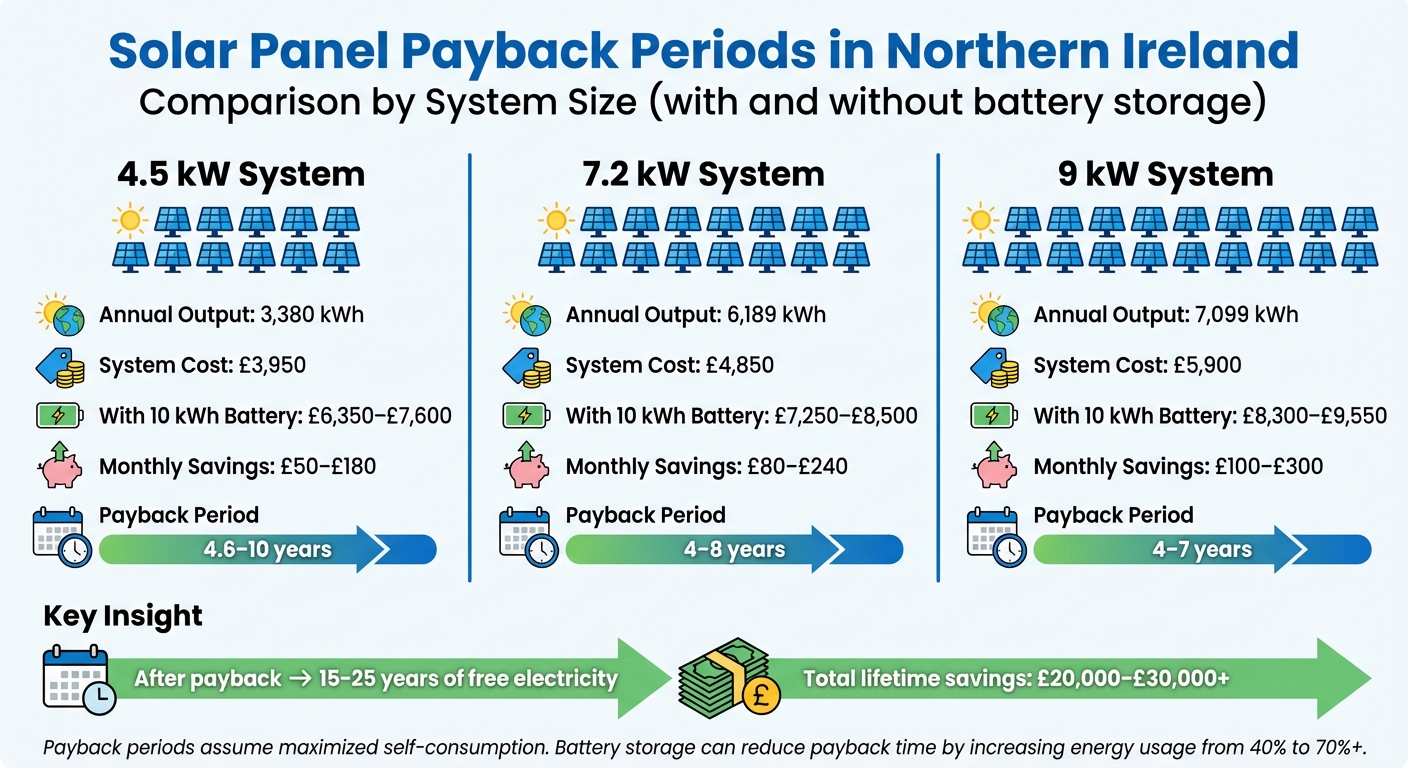
Solar Panel Payback Periods by System Size in Northern Ireland
Example Scenarios by System Size
In Northern Ireland, the payback period for solar panel systems varies depending on factors like local sunlight levels, energy costs, and system size. By examining different system configurations, you can better understand the potential financial returns on your investment. Key factors influencing the timeframe include installation costs, monthly savings, and whether a battery storage system is included.
Take a 4.5 kW system as an example. This setup, with 10 panels, costs about £3,950 and produces around 3,380 kWh annually. Monthly savings range from £50 to £180, leading to a payback period of approximately 4.6 to 10 years. For a typical homeowner in Belfast, this could mean seeing energy bills drop significantly from around £200 per month.
Adding solar battery storage can further boost savings. For instance, a 10 kWh battery adds £2,400–£3,650 to the initial cost but increases monthly savings to about £120–£150. This adjustment can shorten the payback period. A 7.2 kW system (16 panels costing £4,850), combined with a £2,400 battery, would have a total cost of £7,250. With enhanced monthly savings of around £150, this setup might pay for itself in just 4–5 years.
Here’s a breakdown of how system size and battery storage influence costs and payback periods:
| System Size | Panels | Annual Output | System Cost | With Battery (10 kWh) | Monthly Savings | Estimated Payback |
|---|---|---|---|---|---|---|
| 4.5 kW | 10 | 3,380 kWh | £3,950 | £6,350–£7,600 | £50–£180 | 4.6–10 years |
| 7.2 kW | 16 | 6,189 kWh | £4,850 | £7,250–£8,500 | £80–£240 | 4–8 years |
| 9 kW | 20 | 7,099 kWh | £5,900 | £8,300–£9,550 | £100–£300 | 4–7 years |
To achieve these payback periods, maximising self-consumption is critical. This means using the energy your system generates instead of exporting it back to the grid. Running energy-intensive appliances, like washing machines and dishwashers, during the day helps you make the most of your solar energy and reduces reliance on external power.
Even after the payback period, your system will continue to provide savings for the remainder of its 25–30-year lifespan, offering substantial financial benefits over the long term.
What Happens After Payback
Solar Panel Lifespan and Savings
Once your solar panels have paid for themselves, the benefits don’t just stop – they keep rolling in, and the rewards can be substantial.
After reaching the break-even point, your solar panels generate electricity at no additional cost for the rest of their lifespan. In Northern Ireland, most modern systems are built to last 25 to 30 years, which means you could enjoy 15 to 25 years of free energy after covering your initial costs.
The savings don’t stop there. If your system includes battery storage, the financial perks can grow even more, with total benefits estimated at £20,000 to £30,000 or more over the system’s lifetime.
"Once you’ve recovered your initial investment, you continue receiving free electricity for another 15-20 years. A system with a 7-year payback that lasts 25 years generates 18 years of pure profit." – Solar ROI Calculator
The long-term value of your solar panels increases as electricity prices rise. While your system keeps producing power for free, the energy it generates becomes more valuable with every utility price increase. This makes solar energy a smart investment for the future, especially in Northern Ireland. However, it’s worth noting that you’ll need to replace the inverter every 10–12 years, which typically costs around £1,500 – a small price compared to the ongoing savings.
Even as solar panels age, they remain efficient. They degrade at a rate of about 0.5% per year, which is a minor reduction that barely impacts long-term savings. Over their lifespan, your solar system not only shields you from rising energy costs but also reduces your carbon footprint by 1 to 2 tonnes of CO₂ annually, potentially for up to three decades.
Conclusion
In Northern Ireland, solar panels usually pay for themselves within five to ten years. Over their 25–30 year lifespan, this means decades of reduced electricity bills. However, the feasibility of the investment depends on several factors, including roof orientation, shading, energy usage patterns, and whether you opt for battery storage. These aspects directly influence both the financial savings and the environmental advantages, as discussed earlier.
To make the most of your solar panels, aim to use power generated during daylight hours. Adding battery storage can boost your savings by up to 50%, and solar panel grants in Northern Ireland can further improve financial returns. For a personalised evaluation, reach out to an MCS-registered installer. They can assess your roof’s suitability, provide a detailed financial outlook, and let you know if any electrical upgrades are required.
The cost of a domestic solar system typically ranges from £5,000 to £10,000, with potential lifetime savings exceeding £20,000. This makes solar panels a solid long-term investment, offering protection against rising energy prices while contributing to a greener future. A carefully planned solar installation not only cuts energy costs significantly but also plays a role in reducing your carbon footprint.
FAQs
Is my roof suitable for solar in Northern Ireland?
Your roof might be a good fit for solar panels if you’re in Northern Ireland. While many homes have roofs that can accommodate solar systems, it’s important to have a professional survey done. This will assess key factors like the roof’s orientation, potential shading, and structural strength. EECO Energy specialises in carrying out these assessments to ensure your roof is ready for solar panel installation.
Do I need a battery to make solar worthwhile?
Solar panels alone can significantly reduce your electricity bills, making them a worthwhile investment even without a battery. That said, adding a battery can take things a step further by increasing your energy independence and allowing you to make the most of the electricity your panels produce.
What grants or tax relief can reduce the upfront cost?
Grants or tax relief schemes aimed at reducing the initial cost of solar panels in Northern Ireland aren’t specifically outlined here. For the latest details, it’s a good idea to contact local authorities or energy suppliers directly to explore the options currently available.