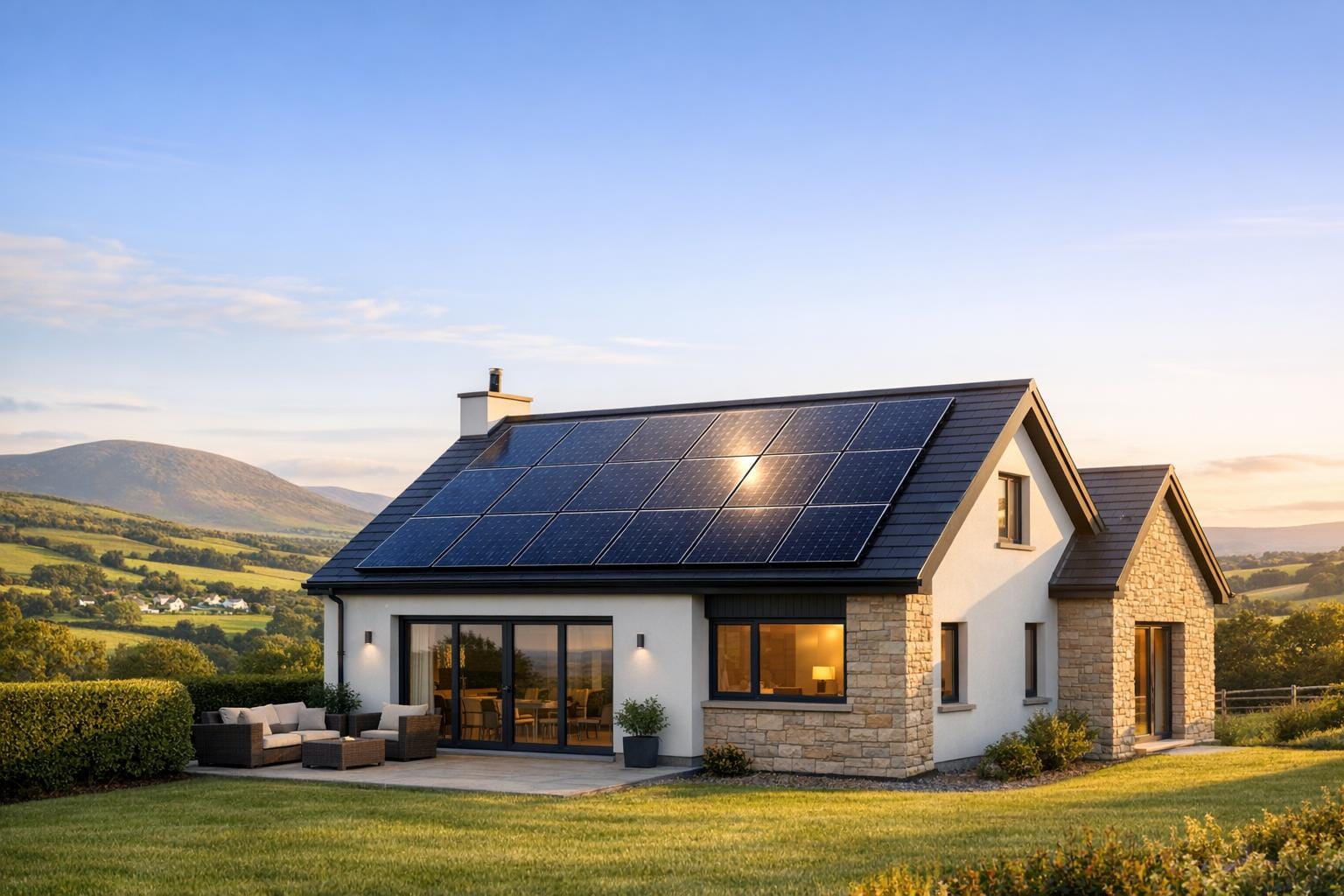
Switching to solar power in Northern Ireland makes sense now more than ever. Rising energy costs, government incentives like 0% VAT on installations, and modern solar technology have made solar panels a cost-effective and practical solution for homes and businesses. Here’s why:
- Savings: A 4.5 kW solar system with battery storage can save up to £883 annually, with installation costs starting at £4,999. Payback periods range from 6 to 11 years.
- Government Support: Benefits like the Smart Export Guarantee (selling excess electricity) and business grants through NISEP reduce upfront costs and boost returns.
- Efficient Tech: Today’s solar panels work well even in Northern Ireland’s cloudy weather, producing energy year-round. Battery systems store excess energy for later use.
- Environmental Goals: Solar adoption supports Northern Ireland’s target of 80% renewable electricity by 2030, contributing to cleaner energy and reduced carbon emissions.
With over 30,000 solar installations already in place and electricity prices continuing to climb, solar power offers long-term savings, lower bills, and greater energy independence. Now is the perfect time to make the switch.

Solar Panel Savings and Benefits in Northern Ireland: Key Statistics
How Rising Electricity Prices Affect Northern Ireland
The Cost of Higher Energy Bills
Electricity bills in Northern Ireland are made up of wholesale, network, and supply costs. Wholesale costs can vary depending on factors like demand, the mix of energy generation, and global fuel prices. Network costs, on the other hand, cover the expense of transporting electricity through the grid. These costs increase per unit when fixed infrastructure expenses are spread across lower levels of consumption. Additionally, government policies add taxes and green energy charges to network costs, while inefficiencies in infrastructure further drive up prices. For example, the lack of the North-South interconnector is estimated to cost consumers more than £20 million annually. These challenges underline the financial benefits of producing your own electricity.
How Solar Panels Lower Your Energy Costs
Installing solar panels can significantly cut down the amount of electricity you need to buy from the grid. For example, a 3.5 kW solar system can save a household approximately £513–£514 each year. If you combine a 4.5 kW system with a 3 kWh battery, those savings can climb to around £883 annually. In fact, solar panels have the potential to reduce electricity bills by as much as 64%.
There’s also the opportunity to earn money by selling excess energy back to suppliers. Power NI, for instance, pays 17.66p per kWh for exported energy, while Action Renewables offers at least 18p per kWh. Mark Compston, Head of Projects at Action Renewables, explained:
This year we will be paying our clients at least 18p [per kWh].
Adding a battery storage system to your setup can maximise these savings even further. Batteries allow you to store energy for use during peak times or take advantage of cheaper off-peak tariffs.
Modern Solar Technology and How It Works in Northern Ireland
Improved Solar Panel Efficiency
Today’s solar panels are more efficient than ever, with many exceeding 20% efficiency, and some high-end models even reaching 25%. In early 2025, Trina Solar set a new benchmark by achieving a world record efficiency of 25.44% in their n-type fully passivated heterojunction (HJT) modules.
Advancements like light-trapping technology and high-quality silicon in monocrystalline panels ensure steady performance, even during overcast conditions. Bifacial panels take things a step further by capturing sunlight from both the front and back, utilising reflected light from the ground or clouds to boost energy output by 5% to 30%.
Northern Ireland’s cooler climate works to the advantage of solar panels, as moderate temperatures help avoid the performance degradation often caused by overheating in hotter climates. For roofs with shaded areas, microinverters are a game-changer. They optimise the output of each panel individually, ensuring that one shaded panel doesn’t drag down the performance of the entire system.
These advancements mean that even with limited sunlight, solar systems can still deliver reliable energy.
Battery Storage Systems for Reliable Energy Use
Modern battery storage systems are the perfect partner for advanced solar panels, ensuring that no energy goes to waste. These batteries store excess solar power, making it available when sunlight is scarce. Lithium-ion batteries have become the go-to option due to their efficiency, faster charging, and long lifespan of 10–15 years, far outlasting older lead-acid batteries.
Without a battery, most households only use 15–25% of the electricity their solar panels produce. A battery allows you to capture and store unused energy for evenings or cloudy days. In Northern Ireland, they’re especially useful during winter. You can programme them to charge from the grid during cheaper night-time rates and discharge during the more expensive daytime hours. During sunnier months, the system can be adjusted to prioritise charging directly from the solar panels.
In December 2025, NI Water launched an ambitious solar project across five locations, including Antrim, Ballymena, and Magilligan. Backed by £3 million from the "Energy Invest to Save" fund, nearly 5,000 panels were installed, providing a total capacity of 2.2MW. Dr. Sara Venning, CEO of NI Water, highlighted the initiative’s goals:
By continuing to innovate, we are not only reducing our reliance on the electricity grid but also ensuring greater cost resilience in our operations.
This system is expected to cut carbon emissions by 250 tonnes by March 2026 and generate enough electricity to power the equivalent of 815 homes.
Government Support and Financial Incentives
Northern Ireland offers a range of financial benefits to make solar energy more appealing. Tax breaks, payment schemes, and business grants significantly reduce the upfront costs of installation, complementing the long-term savings from solar power.
0% VAT on Solar Panel Installations
As of 1st May 2023, residential solar panel installations in Northern Ireland benefit from a 0% VAT rate. This change, extended under the Windsor Framework, reduces installation costs by around £1,000 per household. With this tax relief, the starting price for a standard solar system now begins at approximately £4,999. Additionally, the removal of VAT shortens the payback period by about one year, making solar an even more attractive investment.
Earning Money Through the Smart Export Guarantee
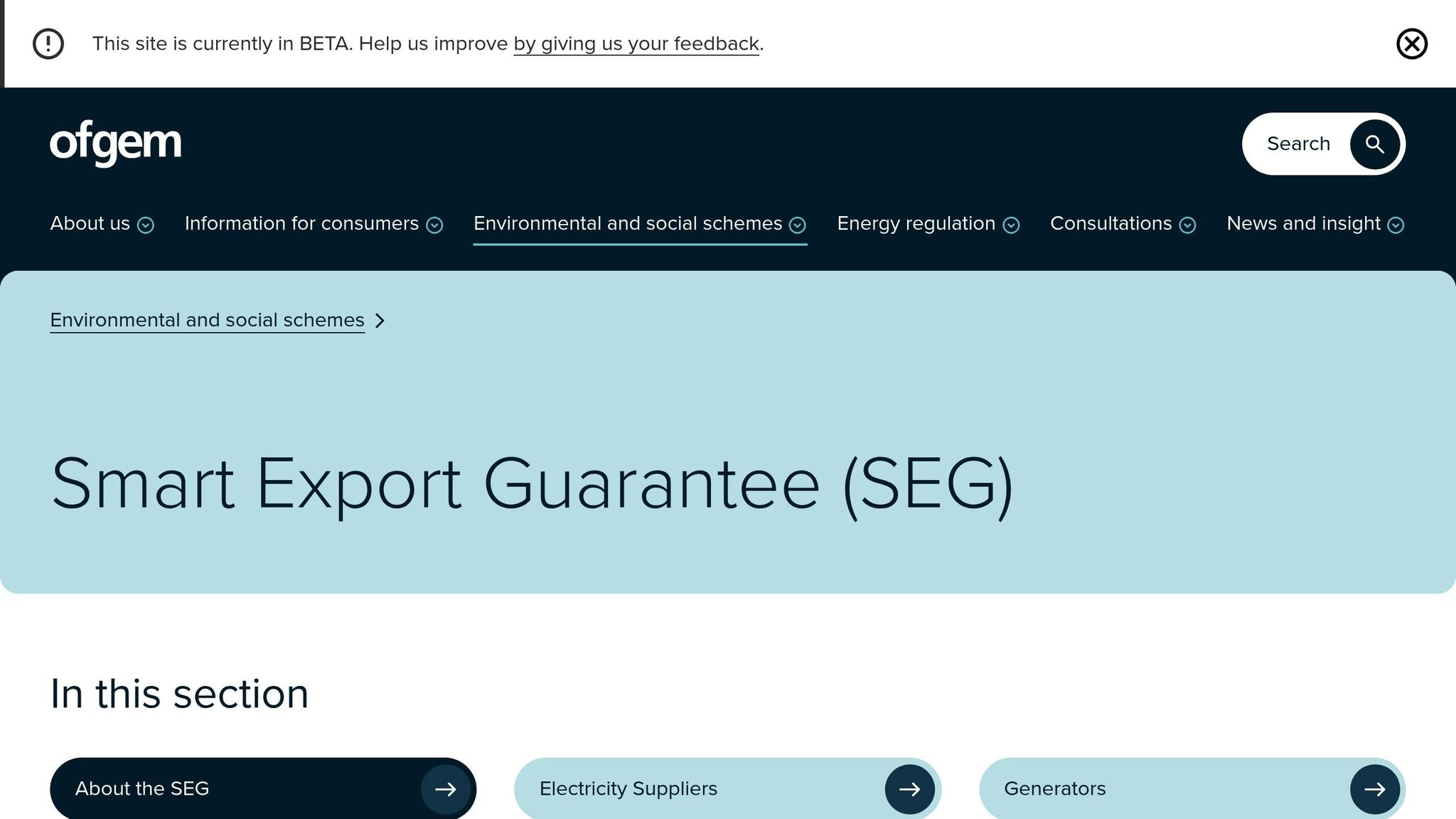
The Smart Export Guarantee (SEG) offers a way for solar panel owners to generate income. Through this scheme, energy suppliers pay homeowners for any surplus electricity they export back to the National Grid. Combined with energy bill savings – often exceeding 50% for many households – the SEG transforms solar panels into a dual benefit: they save money and create an additional revenue stream.
Business Grants Through NISEP
For businesses, the Northern Ireland Sustainable Energy Programme (NISEP) provides grants that cover up to 20% of solar installation costs. This programme, funded by £8 million collected through a public service obligation, has been extended until March 2027. However, businesses planning to apply for funding during the 2025/26 period should act early, as grants are allocated on a first-come, first-served basis. It’s crucial to wait for a formal grant offer before placing orders or starting installation work, as proceeding prematurely could disqualify applicants from receiving funding. With these grants, businesses in Northern Ireland can see a payback period of less than three years for their solar investments.
sbb-itb-d2d975a
How Solar Panels Perform in Northern Ireland’s Climate
When it comes to solar power in Northern Ireland, the region’s often cloudy weather might seem like a drawback. But modern solar technology has been designed to thrive in such conditions, making solar panels a practical and efficient choice. By tailoring installations to Northern Ireland’s specific climate, homeowners can maximise energy output and savings.
Generating Solar Energy on Cloudy Days
One of the biggest misconceptions is that solar panels need direct sunlight to work. In reality, they rely on daylight – meaning they can still produce electricity even on overcast days. Northern Ireland gets only about 5% less sunshine annually than the UK average, making it nearly as suitable for solar energy as sunnier parts of the country.
Interestingly, the region’s mild temperatures actually work in favour of solar panels. Unlike in hotter climates, where overheating can reduce efficiency, Northern Ireland’s cooler weather helps panels maintain steady performance year-round. For instance, a typical 3kW system can generate around 2,600 kWh annually, covering over 40% of an average household’s energy needs. While energy production naturally peaks between May and September – accounting for about 75% of the yearly output – solar panels remain effective during the winter months, especially when paired with battery storage. Proper installation design can further counter the effects of weather variability, ensuring consistent performance.
Optimising Solar Systems for Local Conditions
The way a solar system is designed and installed plays a huge role in its overall efficiency. While south-facing panels are often considered ideal, east- or west-facing setups can be more practical for homes where energy use is higher in the mornings or evenings. This approach ensures that energy production aligns better with household consumption patterns.
For homes with shaded areas – whether from trees or nearby buildings – microinverter technology can make a big difference. This setup allows each panel to function independently, so shading on one panel doesn’t drag down the performance of the entire system. Innovations like gable wall fitting kits, which mount panels vertically, are also gaining popularity. These are particularly useful for capturing low-angle winter sunlight and are a smart solution for properties with limited roof space.
Regular maintenance, such as cleaning the panels every few years, is another crucial step. This is especially important for homes near coastal areas or busy roads, where dirt and debris can accumulate. Keeping the panels clean ensures they absorb as much light as possible, even in cloudy conditions. Northern Ireland’s climate may seem challenging at first glance, but with the right technology and setup, solar panels can perform exceptionally well.
The Benefits of Installing Solar Panels
Solar panels bring long-term financial savings, lower carbon emissions, and greater energy independence, making them a smart choice for both homes and businesses.
Cutting Down Your Energy Bills
One of the immediate perks of solar panels is the reduction in electricity bills. For example, a typical home in Northern Ireland could save up to £1,304 annually, with larger homes potentially saving around £1,567. Most systems pay for themselves within 6–10 years and can provide up to 15 years of nearly free electricity. Over 25 years, the average three-bedroom home could see a profit of roughly £7,841.
On top of that, you can earn extra income by selling surplus electricity back to the grid through schemes like the Smart Export Guarantee.
For businesses, the financial benefits are just as compelling. Initiatives like the Northern Ireland Sustainable Energy Programme (NISEP) offer up to 20% funding for green energy systems. Additionally, solar panels can boost property values, adding between 0.9% and 2% to their worth.
Lowering Carbon Emissions
Solar panels do more than save money – they also help reduce your environmental footprint. A standard domestic solar system in Northern Ireland can cut carbon emissions by 0.45 to 1 tonne per year, reducing a household’s carbon footprint by an average of 13%. By switching to solar, you’re opting for a clean energy source that avoids the harmful emissions associated with fossil fuels.
Northern Ireland has a legal target to generate at least 80% of its electricity from renewable sources by 2030, as outlined in the Climate Change Act (NI). Installing solar panels supports this goal while also contributing to the growing renewable energy sector. In 2023, 45.8% of Northern Ireland’s electricity came from renewable sources, with solar capacity increasing from just 2 MW in 2011 to 352 MW by the end of 2022. Over 30,000 homes in the region now have solar installations.
Gaining Energy Independence
Beyond financial and environmental advantages, solar panels offer greater energy independence. By generating your own electricity, you reduce reliance on the grid and shield yourself from fluctuating energy prices or unexpected utility costs. Adding battery storage takes this a step further, allowing you to store excess energy for use at night or during power outages. For rural homes with unreliable grid connections, a solar and battery system can even enable complete independence from the grid.
Even if you stay connected to the grid, you can optimise your energy use. For example, you can use stored solar power during peak hours when electricity rates are higher, a strategy known as peak shaving. Solar energy can also be redirected to heat water through immersion heaters or power air source heat pumps, reducing your reliance on gas or oil for heating. Without a battery, households typically use only 15–25% of the electricity their panels generate, but storage solutions can significantly increase this self-consumption.
Conclusion
With electricity prices climbing, government-backed incentives, and advancements in solar technology, now is an excellent time for households and businesses in Northern Ireland to consider solar energy. Programmes like the 0% VAT relief, available until March 2027, and grants through NISEP make solar panel installations more affordable, while the financial benefits continue to grow.
But it’s not just about saving money. Solar energy offers a cleaner, greener alternative by reducing your carbon footprint by about one tonne annually. Northern Ireland’s climate, with around 1,600 hours of sunshine each year, combined with cooler temperatures that enhance panel efficiency, makes it an ideal location for solar power. Modern battery storage systems further boost the appeal by allowing you to store excess energy, ensuring you’re less reliant on the grid and better protected during outages – all while contributing to the region’s goal of 80% renewable electricity by 2030.
Whether your aim is to cut energy bills, reduce your environmental impact, or achieve greater energy independence, solar panels offer long-term benefits far beyond their typical 6–10 year payback period. Plus, the savings provide greater control over your energy usage and costs.
EECO Energy makes switching to solar simple and cost-effective. They offer MCS-accredited installations, a 25-year warranty, free surveys, and systems starting at just £3,950 for a 4.5kW setup. With one-day installation and service across Northern Ireland, solar power has never been more accessible.
To get started, contact EECO Energy at 028 9592 2730 or email hello@eeco.energy for a free, no-obligation quote.
FAQs
Can solar panels work effectively in Northern Ireland’s cloudy weather?
Yes, solar panels can generate electricity even on cloudy days because they work with daylight, not just direct sunlight. Thanks to advancements in photovoltaic (PV) technology, panels can still produce about 10–25% of their maximum output during overcast conditions. This makes them a practical option for Northern Ireland’s often grey and cloudy weather.
Northern Ireland gets around 1,600 hours of sunlight each year. That’s sufficient for a typical 4 kW solar system to generate between 3,400 and 4,200 kWh annually. This output can meet 60–80% of the energy needs of an average household, even with frequent cloudy skies. Plus, modern solar panels and inverters are designed to perform well in low-light conditions, making them a reliable way to cut energy bills while contributing to renewable energy efforts.
What financial support is available for installing solar panels in Northern Ireland?
Northern Ireland residents have access to several financial incentives that make installing solar panels more affordable. One of the standout benefits is the 0% VAT rate on both solar panels and their installation. This eliminates the usual 20% tax, making the upfront costs significantly lower.
Another helpful option is the Energy Company Obligation (ECO4) scheme. This programme offers funding of up to £10,000 for eligible households, particularly those receiving certain benefits. On top of that, the Smart Export Guarantee (SEG) provides an opportunity to earn money by selling any surplus electricity generated by your solar panels back to the grid, turning your energy production into a source of income.
Although there aren’t currently any dedicated domestic solar grants in Northern Ireland (as of early 2026), local councils may offer advice or limited support. Additionally, green loans from banks can help spread the cost of installation over time. These incentives make it a practical moment to explore solar energy solutions for your home or business.
How can battery storage make solar energy more efficient and reliable?
Battery storage takes your solar panel system to the next level, turning it into a reliable energy source you can count on day and night. It works by storing any extra electricity your panels generate during the day – even on overcast days – so you can use it later, whether that’s in the evening or during the shorter, darker days of winter. This means you can tap into more of the energy your system produces, cutting down on your reliance on the grid and trimming your electricity costs.
But it’s not just about saving money. A battery also brings peace of mind by acting as a backup during power cuts, keeping essential appliances running when you need them most. Plus, it lets you take advantage of time-of-use tariffs by charging up when electricity rates are low and discharging when rates are higher, boosting your savings even further. For households in Northern Ireland, where daylight hours can change dramatically throughout the year, battery storage ensures you make the most of your solar panels, delivering both financial savings and a positive impact on the environment.