Solar panels are designed to last 25–30 years, but without proper care, their efficiency can drop. Regular cleaning, professional inspections, and monitoring energy output are crucial to maintaining performance and catching issues early. Here’s what you need to know:
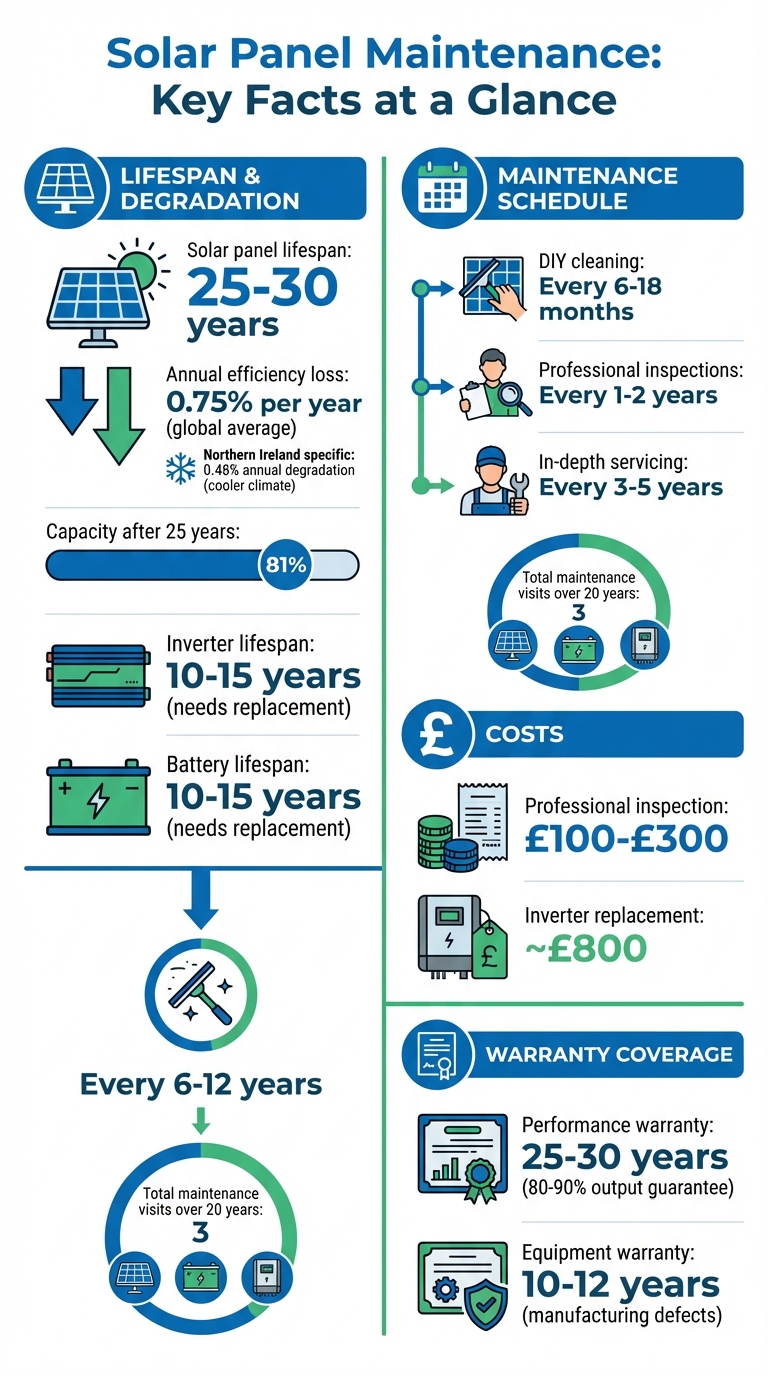
- Lifespan: Panels lose about 0.75% efficiency yearly, retaining ~81% output after 25 years. Inverters and batteries need replacement sooner, typically every 10–15 years.
- Cleaning: Rain helps, but bird droppings, pollen, and grime may require manual cleaning. Use soft brushes, mild soap, and avoid pressure washers.
- Professional Help: Inspections every 1–2 years (costing £100–£300) can prevent expensive repairs by spotting wiring issues, cracks, or water ingress.
- Northern Ireland’s Weather: Rain aids cleaning, but moss and debris can accumulate. Cooler temperatures slow degradation to ~0.48% annually.
- DIY Tips: Trim overhanging branches, monitor energy output, and ensure batteries are ventilated and dry.
With simple upkeep and timely professional servicing, your solar panels can perform reliably for decades.
Solar Panel Lifespan and Maintenance Cost Guide
How Long Solar Panels Last
Understanding the lifespan and warranty of solar panels is key to planning their maintenance and ensuring long-term efficiency.
Typical Lifespan and Warranty Coverage
Solar panels generally last between 25 and 30 years, though some premium models can stretch up to 40 years. Rather than failing suddenly, they experience a slow decline in efficiency over time. According to a 2024 study by the National Renewable Energy Laboratory, solar panels lose about 0.75% of their performance each year, leaving them with around 81% capacity after 25 years.
Manufacturers typically provide two types of warranties:
- Performance warranties: These last 25 to 30 years and guarantee that the panels will retain 80–90% of their original output by year 25.
- Equipment warranties: Covering 10 to 12 years, these address manufacturing defects.
Even after these warranties expire, high-quality panels often continue to perform effectively, making 25–30 years a reasonable timeframe for considering a system upgrade. However, other components, such as string inverters and batteries, usually need replacing sooner.
How Northern Ireland’s Weather Affects Your Panels
Northern Ireland’s weather plays a mixed role in solar panel performance. On the one hand, frequent rain helps keep panels clean by washing away dirt. On the other, damp conditions can encourage moss growth and debris build-up, which can block sunlight and reduce efficiency. Additionally, Northern Ireland’s cooler climate slows degradation, with an annual decline of about 0.48%, compared to 0.88% in hotter regions.
However, moisture can pose risks. If panels are damaged or poorly installed, water ingress may occur, potentially affecting their durability over time. Moss, leaves, and bird droppings can also accumulate, further impacting performance. Despite these challenges, solar panels are built to endure harsh weather, including hail, strong winds, and heavy snow, ensuring they can withstand Northern Ireland’s occasional storms.
These conditions underline the importance of professional installation and high standards to maintain efficiency and durability.
Why Quality Installation and MCS Accreditation Matter
The installation process is critical to getting the most out of your solar panels. Poor installation can lead to increased maintenance needs – or worse, safety hazards. As Solar Together warns:
So not only can bad installation mean higher maintenance needs, but it can even be dangerous.
Choosing an installer with MCS accreditation ensures they meet strict quality standards and undergo regular inspections. This reduces the risk of costly problems caused by improper installation. For example, EECO Energy’s MCS accreditation, combined with their 25-year warranty, guarantees that your system is installed to high standards. Proper mounting, positioning, and wiring are essential steps to protect your panels’ longevity and performance.
Basic Maintenance You Can Do Yourself
Taking care of your solar panels doesn’t have to be complicated. In fact, it’s pretty straightforward and requires minimal effort. Thanks to Northern Ireland’s frequent rainfall, most panels – especially those installed at an angle of more than 5° – benefit from natural cleaning. However, certain types of dirt, like bird droppings, pollen, or debris from nearby trees, can stick around. During dry periods or if your panels are installed at a lower tilt, manual cleaning might be necessary.
Before starting any maintenance, always switch off your solar system to avoid risks like electrocution or water damage. If you notice damaged cabling during your inspection, stop immediately and contact your installer – damaged cables can pose a serious electric shock hazard.
Once you’ve ensured safety, it’s time to focus on simple monthly tasks to keep your system running efficiently.
Monthly Maintenance Checklist
A quick monthly check can help you catch potential issues early. Start by reviewing your monitoring system to make sure your energy output matches what you’d expect for the time of year. A sudden drop in performance could signal dirt build-up or a technical problem.
From ground level, take a good look at your panels. Check for obvious debris like bird droppings or leaves and ensure the mounting brackets are secure. Also, look for any visible damage to the panel surfaces. If grime is building up, it’s time to give them a clean.
How to Clean Your Panels Safely
For the best results, clean your panels when they’re cool – early morning, late evening, or on overcast days are ideal. Cleaning during these times prevents water from evaporating too quickly, which can leave streaks. Morning dew can also help loosen stubborn dirt.
Use a long-handled, soft brush and a garden hose to clean your panels from the ground. Start by gently brushing away loose dirt, then rinse with a soft water spray. For tougher spots, you can use warm water mixed with a mild biodegradable soap. Just make sure to rinse thoroughly to avoid leaving any residue. If your tap water is hard, using rainwater for the final rinse can help prevent mineral deposits.
One thing to avoid? Pressure washers. Energy Efficiency Ireland advises:
You should not use a pressure washer on solar panels under any circumstances, as the high pressure may scratch or damage the panels. This may also void the warranty on the panels if pressure washing does cause damage.
Similarly, avoid washing-up liquid – it can leave a film that attracts dust and may contain chemicals harmful to the panel’s coating.
Finally, never climb onto your roof or apply weight to the panels. If you can’t safely reach them from the ground, it’s best to hire a professional cleaner.
Looking After Your Battery Storage System
If your solar setup includes battery storage, a little attention here goes a long way too.
Make sure the battery has proper ventilation and that nothing is obstructing the area around it. Check the indicator lights to ensure they’re functioning as described in your system’s manual, and keep the surrounding area clean and dry.
Since batteries involve complex electronics and high-voltage components, leave anything beyond simple visual inspections to a qualified professional. It’s always better to be safe than sorry when dealing with high-powered systems.
When to Call a Professional
While basic maintenance for solar systems is manageable for most, there are certain situations where expert assistance is essential. Calling a professional at the right time can save you money, avoid safety risks, and protect your solar investment.
Issues That Require Professional Help
Electrical problems should always be a priority. If you notice frayed, loose, or damaged wiring, stop any work immediately and call your installer or a licensed electrician. Regular inspections of your solar system’s electrical components are critical to catch potential issues before they worsen.
Inverter issues are another area where professional help is necessary. Warning lights, error messages, or a noticeable drop in energy output on your monitoring system often indicate a problem. Solar inverters typically have a lifespan of 10 to 15 years, so if yours is nearing that range, it might be time for a replacement.
Physical damage to panels, such as cracks, hot spots, or water ingress, also demands expert evaluation. Even micro-cracks, which can be invisible to the naked eye, can grow over time and disrupt energy production.
If you’re dealing with pest problems, like birds nesting under your panels, it’s best to involve a pest control specialist. Dry nesting materials near high-voltage systems can create fire hazards.
Lastly, if your panels are located in hard-to-reach or unsafe areas, leave cleaning or inspections to trained professionals to avoid accidents.
Addressing these issues with professional servicing ensures they’re resolved safely and effectively.
What to Expect During Professional Servicing
Once an issue has been identified, professional servicing is the next step to confirm and fix the problem. It’s recommended to schedule a professional inspection every 1–2 years, or opt for a more in-depth service every 3–5 years to maintain your warranty .
During a service, technicians will perform a thorough inspection. They’ll check for physical damage to the panels, test electrical components, and examine the inverter, meter, and wiring for signs of wear. Additionally, they’ll analyse your system’s performance data and assess your roof’s condition to ensure it continues to support the panels securely.
The cost of professional servicing typically ranges from £100 to £300, depending on factors like the number of panels, roof accessibility, and the complexity of any issues found. This expense is a worthwhile investment, as it helps catch problems early and prevents costly repairs down the line.
Repairs and Replacements: What You Need to Know
One of the most common repairs involves inverter replacement, as inverters usually last 10–15 years, compared to the 25+ years expected from solar panels. Replacing an inverter can cost around £800.
Panel replacement may be necessary if there’s significant physical damage, persistent hot spots, or micro-cracks that reduce energy output. A technician will determine whether the problem affects individual panels or the entire system.
Wiring repairs are another critical area, addressing issues like corrosion, pest damage, or loose connections. Damaged wiring not only impacts performance but also creates serious safety risks, including fire hazards. Always leave wiring repairs to professionals.
Proactive repairs and routine inspections are essential for maintaining optimal performance and extending your system’s lifespan. By regularly monitoring your system and scheduling professional check-ups, you can ensure it continues to operate efficiently for years to come.
sbb-itb-d2d975a
Getting the Most from Your Solar Panels in Northern Ireland
To keep your solar panels performing at their best, it’s worth going beyond the basics. With a few extra steps, you can extend the life of your system and ensure it runs efficiently for years to come.
Northern Ireland’s climate naturally helps with solar panel upkeep, but a more proactive approach can make a big difference in long-term performance.
Design and Maintenance Tips for Longer Panel Life
One simple yet effective tip is to position your panels at steeper angles. This allows rain to naturally wash away dirt and debris, keeping them cleaner with less effort. If you’re considering an installation with EECO Energy, it’s a good idea to discuss the best angles for your roof to balance energy production and natural cleaning.
Another important aspect is managing surrounding vegetation. Overhanging branches can cast shadows on your panels, reducing their output and potentially causing hotspots that can damage the system. Make it a habit to trim trees and clear ivy or climbing plants that could obstruct sunlight or create hotspots.
Protecting your panels from wildlife is also crucial. Birds and squirrels often nest under panels, leaving droppings that reduce efficiency or even damage wiring. Installing bird-proofing during setup can save you the hassle and expense of dealing with these issues later. If your panels are already installed, consider adding mesh netting or barriers to prevent future damage.
Using Monitoring Data to Catch Problems Early
Physical maintenance is important, but keeping an eye on your system’s performance data can help you catch issues before they become serious. By monitoring energy output at the same time each day, you can spot any sudden drops that might indicate problems like shading, obstructions, or equipment malfunctions.
It’s also essential to understand normal energy fluctuations. For instance, it’s expected that your panels will generate less energy during the winter months. However, if you notice a drop that’s outside the usual seasonal range, it’s time to investigate. Pay attention to your inverter’s indicator light – flashing green means everything is running smoothly, but an off or differently coloured light could signal a fault that needs professional attention.
Modern apps make this process easier by tracking voltage levels and overall energy production, giving you a clear picture of your system’s health.
Maintaining Solar Panels and Battery Systems Together
To keep your entire solar setup running efficiently, don’t forget about your battery system. Over the course of 20 years, a typical solar and battery system will require three maintenance check-ups: one for the panels, one for the battery, and one for the inverter.
Battery care is particularly important. Ensure batteries are stored in well-ventilated areas to prevent overheating, and avoid exposing them to temperatures below 0°C, as this can cause malfunctions. Additionally, make sure lithium-ion batteries are not undercharged, as this can lead to faster deterioration.
When arranging professional servicing with EECO Energy, it’s best to have the entire system inspected – panels, battery, and inverter. This comprehensive approach helps identify potential issues early, ensuring your system generates energy efficiently, stores it effectively, and remains reliable over time.
Conclusion
Solar panels generally have a lifespan of 25–30 years when properly maintained. Regular upkeep, such as DIY cleaning every 6–18 months and professional inspections every 1–2 years, is key to keeping the system running efficiently.
Spotting performance issues early can help you avoid expensive repairs. For instance, while the panels themselves are durable, your inverter will likely need replacing every 10–15 years. Staying ahead of these potential issues ensures your system continues to perform as expected.
Professional servicing plays a crucial role in addressing technical challenges that go beyond routine DIY care. Tasks like verifying wiring integrity, preventing water damage, and inspecting structural components not only maintain efficiency but also help protect your warranty. By combining these maintenance practices, you can ensure your solar panels deliver consistent performance and longevity.
FAQs
How often do I need to clean my solar panels to keep them working efficiently?
In the UK, solar panels generally don’t need much cleaning, thanks to the frequent rainfall that helps rinse away dirt and debris. Cleaning is only necessary if they look noticeably dirty or if you observe a decline in their performance, which might suggest a build-up of grime.
For most homes, this might mean cleaning them just once or twice a year – or even less often. When it’s time to clean, stick to lukewarm water and a soft sponge or cloth, steering clear of abrasive materials that could scratch the surface. Regular inspections can help keep your panels running efficiently and ensure they remain in good condition for years.
What should I do if my solar panels suddenly produce less energy than usual?
If you notice a sudden decline in your solar panels’ energy output, the first step is to take a closer look at them. Common culprits include dirt accumulation, debris, or shading caused by nearby trees or structures. If you spot any of these, clean the panels carefully using water and a soft cloth or brush to avoid causing any damage.
Should the problem continue, it’s wise to call in a professional for a thorough inspection. A qualified technician can check the entire system, including the inverter, to identify potential faults or damage. Staying on top of regular maintenance and addressing issues promptly can help your solar panels perform at their best and last longer.
Why is it important to choose a professional, MCS-accredited installer for solar panels?
When you hire a professional to install your solar panels, you’re not just ensuring they’re set up correctly – you’re also making sure they operate safely and efficiently, delivering the best possible performance. Plus, proper installation helps protect your warranties, offering long-term reassurance.
It’s also important to choose an installer with MCS accreditation. This certification confirms they meet the UK’s standards for microgeneration. On top of that, it makes your system eligible for government incentives, giving you the chance to save money while supporting environmentally friendly energy solutions.