Solar panels can boost property value, but the amount varies based on factors like location, system ownership, and quality. In the UK, homes with solar panels often sell for 6.1%–7.1% more, adding between £14,062 and £16,368 to an average property. In Northern Ireland, the increase is typically lower, ranging from £1,171 to £2,545. Key benefits include reduced energy bills, improved EPC ratings, and future-proofing for rising energy costs. However, leased systems or outdated panels may limit value gains.
Key Points:
- Ownership: Owned systems add value, while leased systems can complicate sales.
- Savings: Solar panels lower energy bills by £190–£310 annually.
- Local Impact: Northern Ireland sees modest value increases due to lower property prices.
- Upgrades: Battery storage and smart tech can enhance system appeal.
- Installation Cost: A 4.5kW system costs £3,950–£8,100, with battery storage adding £2,400–£3,650.
To maximise value, ensure your solar system is modern, well-maintained, and installed by an MCS-accredited professional.
How Solar Panels Affect Property Value
Solar Panel Property Value Increase by UK Region
What Buyers Look For
Energy efficiency is a top priority for many homebuyers today, with features like reduced electricity bills, better Energy Performance Certificate (EPC) ratings, and sustainable upgrades becoming increasingly desirable. With energy costs continuing to climb, homes that offer these advantages stand out in the market.
Solar panels tick many of these boxes. They suggest lower running costs, show a commitment to environmentally friendly living, and indicate readiness for future energy trends. These qualities align with what buyers want, often translating into measurable increases in property value.
Property Value Increases: The Numbers
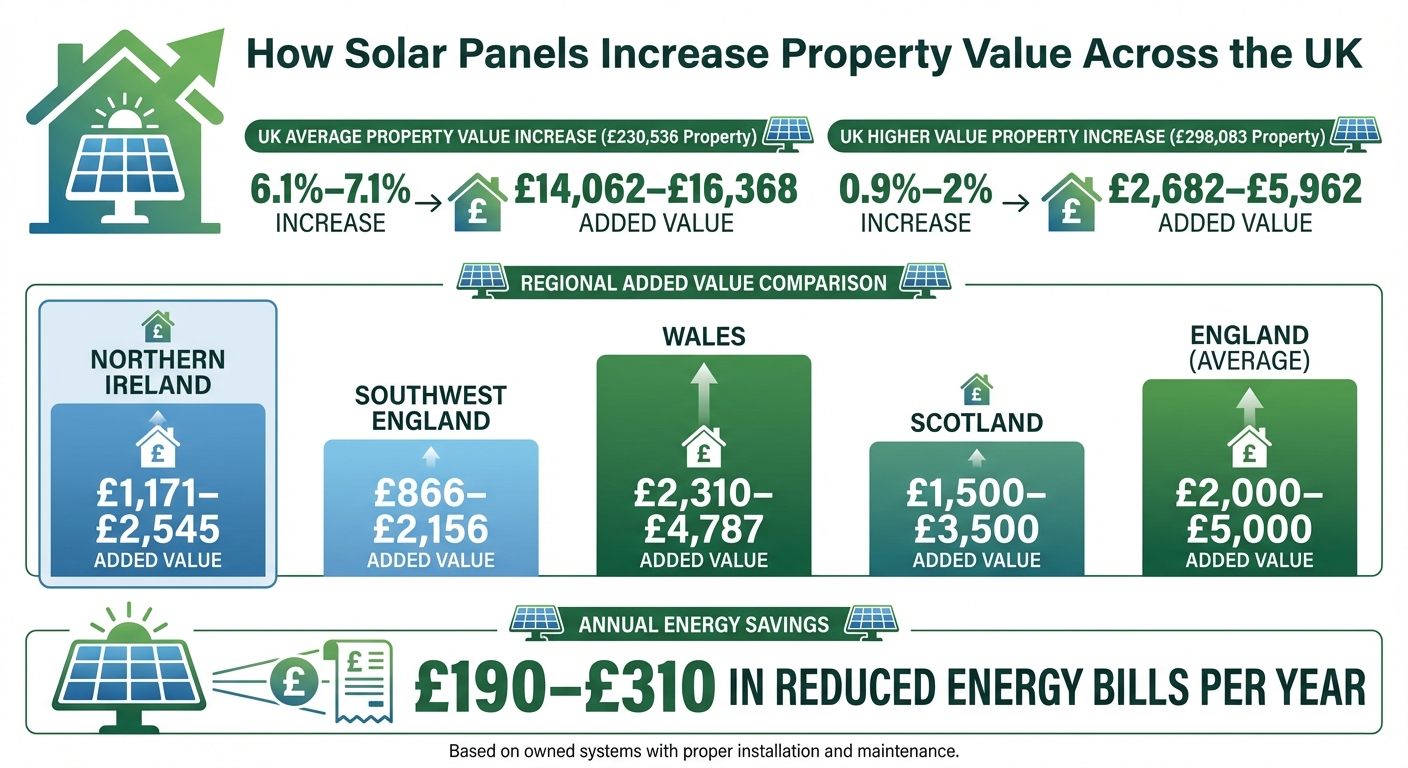
Research shows that homes in the UK with solar panels often sell at higher prices. For instance, studies indicate a premium of 6.1% to 7.1% for an average home valued at £230,536 – adding between £14,062 and £16,368. On the more conservative side, homes valued at £298,083 may see increases of 0.9% to 2%, equating to £2,682 to £5,962.
In Northern Ireland, where property values are generally lower, the added value may differ, emphasising the importance of localised analysis. These premiums are largely tied to tangible benefits like lower energy bills – estimated savings range from £190 to £310 – and improved EPC ratings.
When Solar Panels Don’t Add Much Value
Not all solar panel installations boost property value. For example, leased systems can complicate sales. Mortgage lenders may hesitate to approve financing for properties with leased panels, buyers must qualify to take over the lease, and early termination fees can be a deterrent. These hurdles often make such properties less appealing.
Similarly, outdated or poorly maintained systems usually add little value. Panels older than 15 years, in particular, may turn buyers away due to concerns about lower efficiency and potential replacement costs. Proper upkeep and modern technology are key to ensuring solar panels enhance a property’s appeal.
What Determines Solar Panel Value in Northern Ireland
Ownership and Paperwork
If you own your solar panels outright, your property’s resale value can see a noticeable boost. Owned systems are considered assets, directly contributing to a home’s worth. On the other hand, leased systems or power purchase agreements often complicate sales. Buyers may be hesitant to take on agreements with ongoing payments, which can make the property less appealing. For those considering selling their home, buying out the system beforehand can simplify the process and help achieve a higher sale price.
Proper documentation is just as important. Buyers and property valuers will want to see proof that the system was installed by certified professionals. Poor installation can lead to inefficiencies or even electrical issues, reducing the system’s benefits. Additionally, high-quality panels with long-term warranties provide reassurance to potential buyers, promising reliable performance for years to come.
Property Type and Location
The type of property and its location also play a major role in determining how much value solar panels can add. Studies show that in Northern Ireland, solar panels can increase property values by anywhere from £1,171 to £2,545, depending on factors like property type, market conditions, and local demand. For comparison, similar installations have added between £2,310 and £4,787 in Wales and between £866 and £2,156 in Southwest England.
Northern Ireland enjoys between 1,000 and 1,100 hours of UV light annually. This is similar to the Midlands in England, where solar installations have proven to be highly effective. Research backed by the Department for the Economy has also highlighted how specific factors – like a south-facing roof, minimal shading, and a sturdy structure – can significantly enhance energy generation. These features, in turn, can make a property more attractive to buyers.
Battery Storage and Smart Technology
Technical upgrades, such as battery storage and smart technology, can further enhance the value of a solar installation. Adding battery storage allows homeowners to store surplus energy generated during the day for use at night. This not only maximises energy self-sufficiency but also addresses buyers’ concerns about reducing utility bills and achieving greater energy independence. Research supported by the Department for the Economy has emphasised the growing importance of battery storage for residential properties.
Modern battery systems typically provide around 10kWh of storage capacity, which is enough to power an average home through the night. Pairing this with smart technology – like smart immersion controllers or energy monitoring systems – gives homeowners real-time insights into energy production and consumption. This helps optimise energy use and ensures the property is ready for future energy demands and trends.
sbb-itb-d2d975a
How to Make a Smart Solar Investment
Checking If Your Property Is Suitable
Before diving into solar energy, it’s essential to determine if your property is a good fit. The orientation of your roof plays a key role. For example, east-facing panels are great for generating energy during morning peak times, while west-facing panels excel in the afternoon and evening when household demand tends to rise.
The angle of your roof also matters. While a pitch of 30°–40° is ideal, modern solar panels are designed to perform well across a range of angles. If you have a flat roof, you can use tilted frames to achieve the best positioning. However, keep in mind that shading – whether from trees, nearby buildings, or even parts of your own roof – can significantly impact the system’s efficiency and the returns on your investment.
It’s also crucial that your roof is in good condition and structurally sound to support the panels. To get a clear picture, you’ll want a professional assessment from an MCS-accredited installer. They can evaluate your roof, check for any local planning requirements, and give you a reliable assessment of your property’s potential.
Once you’ve confirmed your property is suitable, the next step is to break down the financial side of things.
Working Out Costs and Returns
Understanding the costs and potential returns of a solar panel system is key to making an informed choice. For instance, a 4.5kW system – typically 10 panels capable of generating around 3,380kWh annually – costs approximately £3,950. If you need something larger, a 9kW system with 20 panels producing roughly 7,099kWh annually will set you back about £5,900, assuming a south-facing installation.
Adding battery storage to your setup increases the upfront expense but can significantly boost your long-term savings. A 10kWh battery system, which allows you to store excess energy for use during peak times, typically costs between £2,400 and £3,650, depending on the brand.
The benefits extend beyond lower energy bills. You could earn income by exporting surplus energy back to the grid and potentially increase your property’s value. Keep in mind that most solar systems are designed to last 25 years or more, so factor that lifespan into your calculations.
Once you’ve worked out the numbers, the next step is finding the right installer to ensure your system performs at its best.
Choosing the Right Installer
The installer you choose can make or break the success of your solar investment, so it’s worth taking the time to pick carefully. Always go with an MCS-accredited installer. The Microgeneration Certification Scheme is a government-backed quality standard that ensures installers are properly qualified and adhere to strict guidelines.
"MCS is a government‐backed quality scheme that ensures installers are qualified and work in line with the scheme’s high standards." – Energy Saving Trust
Experience matters, so look for installers with a proven track record. Check their portfolio of past projects and read customer reviews to gauge their reliability. A trustworthy installer will offer warranties covering the installation, panels, and inverter, along with solid after-sales support. They should also handle all the regulatory requirements, such as compliance with the Engineering Recommendation EREC G98/NI standard for grid connection and registration with NIE Networks.
When discussing your project with potential installers, ask them how they calculate projected savings, factor in shading or roof orientation, and estimate your energy usage versus export. To ensure you’re getting the best value, request quotes from at least three different companies. A dependable, MCS-accredited installer not only guarantees quality but also helps you maximise the benefits of your solar investment.
For instance, EECO Energy, an MCS-accredited installer operating across Northern Ireland, offers free surveys and quotes. Their installations are typically completed in just one day and come with a 25-year warranty, giving you peace of mind and a strong foundation for your solar journey.
Conclusion
Solar panels can increase property value in the UK by 6.1%–7.1%, adding an estimated £18,183–£21,163, based on local trends and energy savings. But the real benefit extends beyond property value – it’s about the long-term energy savings over the system’s 25-year lifespan and the positive impact on the environment. To reap these rewards, start by evaluating your property’s potential.
The key to getting the most out of your solar investment lies in ensuring your property is suitable and partnering with a trusted, MCS-accredited installer. A professional assessment will confirm whether your property is a good fit for solar. They’ll also take care of essential tasks like grid connection paperwork and improving your EPC rating, leaving you free to enjoy the benefits.
Solar panels also prepare your home for the future. With rising electricity costs and growing demand for energy-efficient homes, a well-installed system not only reduces your bills today but also makes your property more appealing to buyers. Owning the system outright further increases its value and avoids complications when selling.
If you’re considering solar for your property in Northern Ireland, EECO Energy offers free surveys to help you get started. Their one-day installations, 25-year warranty, and full support ensure your investment pays off from the very first day. Take action now to save on energy costs and enhance your home’s value.
FAQs
Does owning solar panels increase the value of your home?
Yes, having solar panels on your property can noticeably increase its market value. Research indicates that homes with owned solar panels may experience a value uplift of anywhere between 6% and 14%. For some properties, this could translate to an extra £14,000 or even more, depending on factors like location and property size.
The appeal lies in the fact that owned solar panels are seen as a long-term investment. They provide energy efficiency and lower utility costs – qualities that many buyers actively look for. Unlike leased solar systems, which can sometimes complicate the selling process, owning your panels outright simplifies transactions and enhances your property’s attractiveness to potential buyers.
How much could you save and increase your property value with solar panels?
Installing solar panels can lead to annual savings of £190 to £800 on your energy bills, depending on how much energy you use and the size of the system you install. On top of that, they can increase your home’s value by 6.2% to 6.8%. For an average UK property, this could translate to an added £14,000 to £16,000.
These advantages come from lower energy expenses, the rising demand for environmentally friendly homes, and the appeal of sustainable features to potential buyers. Solar panels aren’t just about cutting energy costs – they can also make your property stand out in the housing market.
Do solar panels increase property value across the UK?
Yes, adding solar panels to your property can increase its value across the UK. Studies indicate that homes equipped with solar panels typically sell for 6% to 7% more on average. This boost in value stems from the growing appeal of lower energy bills, better energy efficiency, and the rising interest in environmentally-conscious living.
More and more buyers are seeking properties with renewable energy features, as they promise long-term savings and align with sustainability priorities. While the exact increase in value depends on factors like location, property type, and the size of the solar system, solar panels are widely regarded as a smart way to make your home more attractive to buyers and increase its resale potential.