
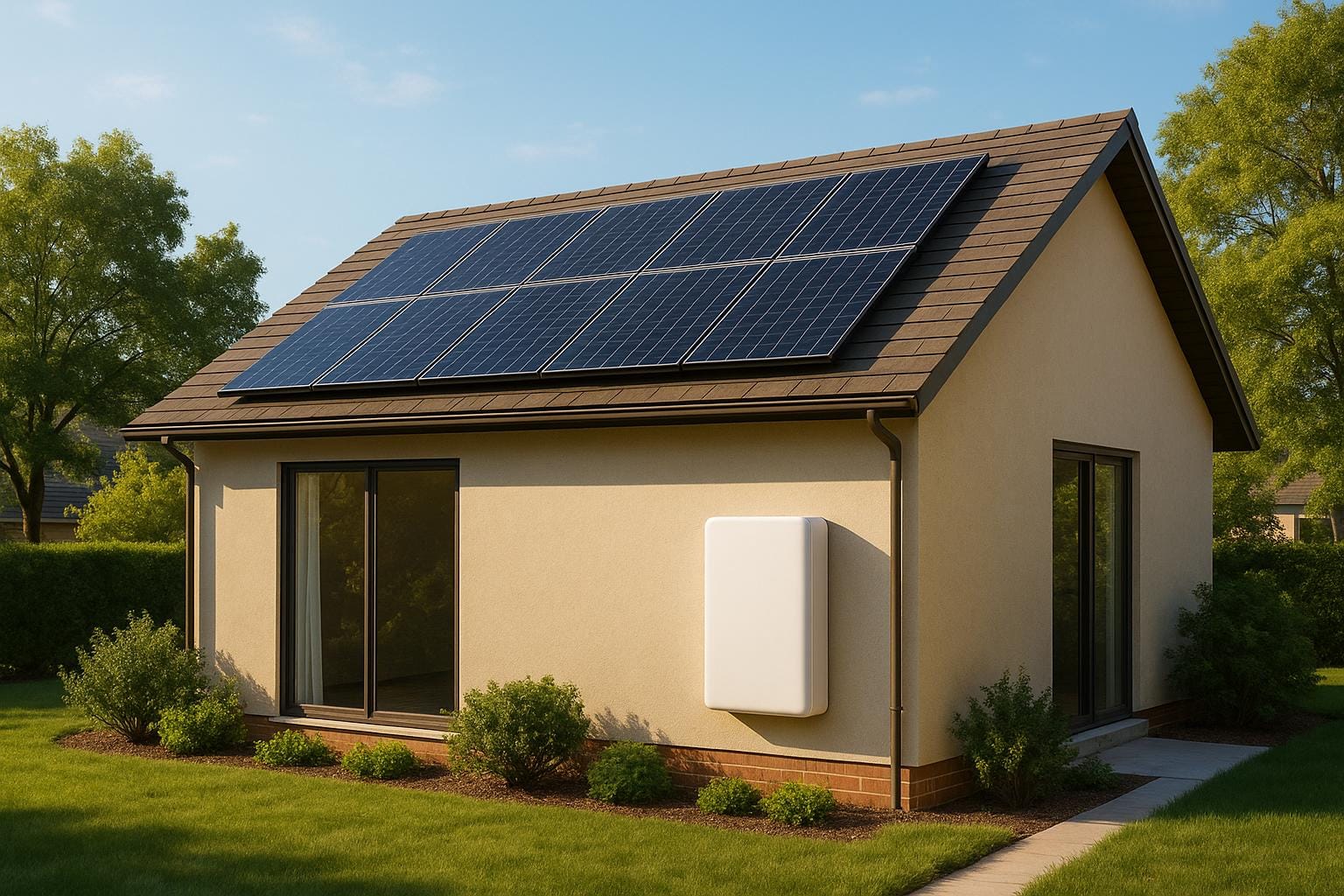
Battery storage is transforming how we use renewable energy, helping to reduce carbon emissions and cut energy costs. In Northern Ireland, as the UK works towards net zero by 2050, batteries play a key role in balancing energy supply and demand. They store surplus wind and solar power for use during peak times, reducing reliance on fossil fuels.
Here’s how battery storage helps:
- Shift Renewable Energy to Peak Demand: Store solar energy generated during the day for evening use, cutting reliance on gas-fired electricity.
- Lower Peak-Time Grid Demand: Batteries discharge during high-demand periods, reducing strain on the grid and the need for fossil fuel plants.
- Support Renewable Integration: Batteries store excess wind and solar energy, ensuring it isn’t wasted when production exceeds demand.
- Prevent Energy Waste: Capture surplus power from solar panels or wind farms, using it later instead of exporting it at low rates.
- Offset Manufacturing Emissions: Batteries save more CO₂ over their lifetime than is emitted during production, delivering long-term carbon reductions.
For homes and businesses in Northern Ireland, pairing solar panels with batteries can lower electricity bills by 20–50% and reduce carbon footprints. With the UK government’s 0% VAT policy on battery systems, now is an ideal time to invest in this technology.
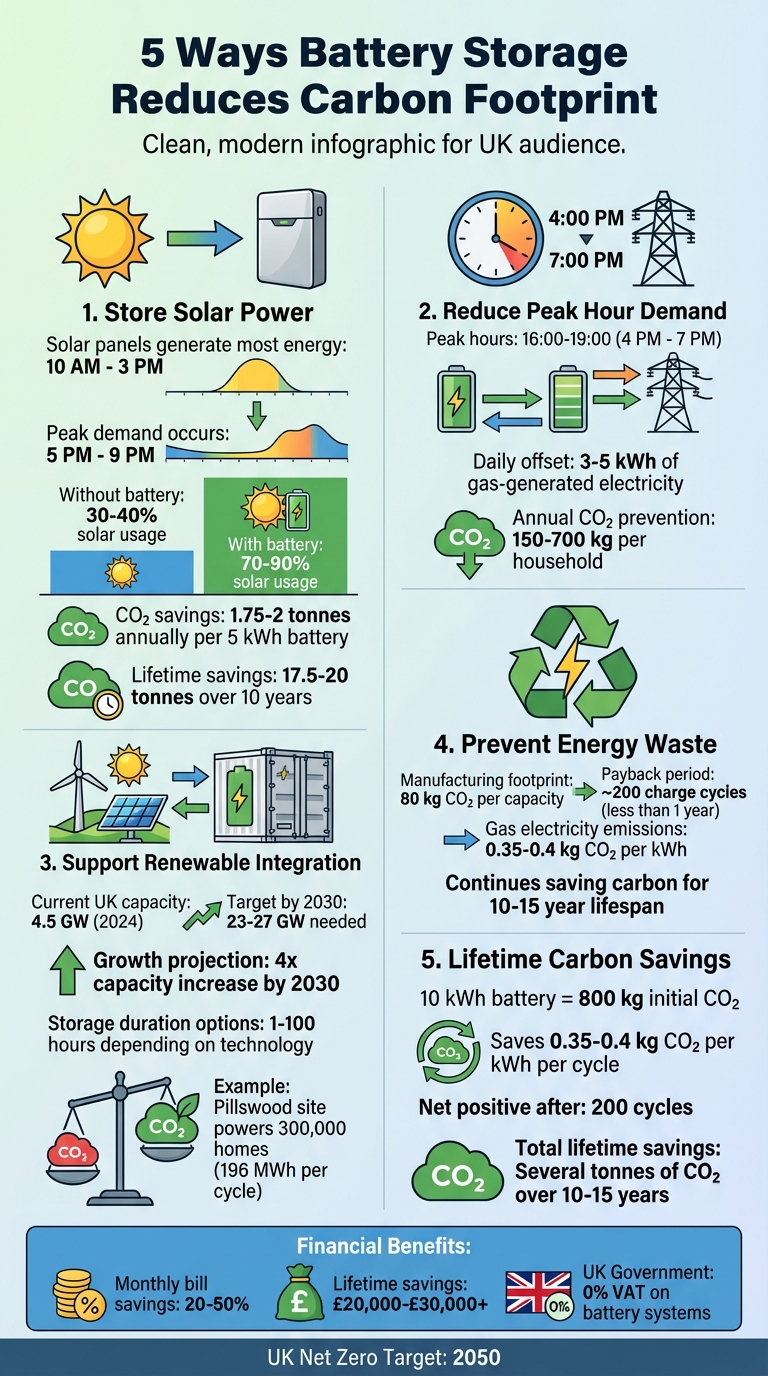
5 Ways Battery Storage Reduces Carbon Footprint – Key Statistics and Benefits
1. Store Solar Power For Use When The Grid Runs On Fossil Fuels
Solar panels generate the most energy between 10 AM and 3 PM when sunlight is at its peak. However, the highest energy demand typically occurs in the evening. Without a battery system, any extra solar energy either gets sent back to the grid at low rates or simply goes to waste. This timing gap is where battery storage becomes a game-changer.
Batteries solve this problem by capturing surplus solar power during the day and storing it for use during peak evening hours – usually between 5 PM and 9 PM – when the grid often relies on gas-fired power stations. By tapping into stored solar energy during these times, households can replace grid electricity generated from fossil fuels. In the UK, saving just 1 kWh of gas-generated electricity can prevent around 0.35–0.4 kg of CO₂ emissions. To put this into perspective, a lithium-ion battery with an 80 kg CO₂ manufacturing footprint needs about 200 charge cycles – achievable within a year of solar use – to offset its production emissions.
Take a 5 kWh home battery, for example. It can help reduce CO₂ emissions by roughly 1.75–2 tonnes annually, which adds up to an impressive 17.5–20 tonnes over a 10-year lifespan.
Beyond cutting emissions, battery storage significantly increases how much solar energy you can use on-site. Without a battery, most homes only use 30–40% of the solar power they generate. Add a battery, and that figure can leap to 70–90%. Companies like EECO Energy specialise in installing solar-plus-battery systems, allowing households to store daytime solar power for evening use, reducing their reliance on fossil-fuel-based grid electricity.
The financial perks are just as compelling as the environmental ones. Adding a battery to your solar setup can boost monthly savings by 20–50% and lead to lifetime savings of £20,000–£30,000 or more. Plus, the UK government’s 0% VAT policy on battery storage systems makes the investment even more appealing. On top of that, participating in demand flexibility schemes can provide extra income by exporting stored energy back to the grid during peak hours.
2. Reduce Demand During Peak Hours When Fossil Fuel Plants Run
Between 16:00 and 19:00, energy use in UK households tends to spike. To meet this demand, the grid often turns to gas-fired power plants. This is especially true on winter evenings when solar energy is minimal, and wind power might not be sufficient. One practical way to address this is through battery storage. Batteries can charge when energy demand is lower, typically when the grid relies more on renewable sources, and then discharge during the evening peak, reducing the need for fossil fuel generation. This approach helps balance the grid and cuts down on the reliance on gas power.
Batteries are typically charged overnight or during periods of excess solar energy production. They then discharge during peak times to cover essential household needs. This method directly reduces the energy demand during critical hours, further lowering the carbon footprint. By spreading out your energy use, you not only reduce strain on the grid but also help avoid the activation of additional gas plants.
The impact of this strategy is both environmental and measurable. For instance, if a household battery offsets 3–5 kWh of gas-generated electricity daily during peak hours, it could prevent around 150–700 kg of CO₂ emissions annually. A real-world example of this occurred during the winter of 2022–2023, when the Electricity System Operator‘s Demand Flexibility Service saved over 3,300 MWh of electricity by encouraging reduced consumption during peak periods. This amount of energy could briefly power 10 million homes.
In Northern Ireland, this approach proves equally effective. Smart inverters and control software can optimise charging during periods of low demand or low-carbon energy availability. These systems are designed to discharge automatically when local demand and grid carbon intensity are at their highest. Many modern setups even use half-hourly pricing and carbon data to make this process seamless.
There’s a financial upside too. Time-of-use tariffs offer lower electricity prices during off-peak periods, making it cheaper to charge batteries or buy electricity when demand is low. This stored energy can then be used when prices and carbon intensity rise, creating a win-win for both your wallet and the environment.
3. Help The Grid Handle More Wind And Solar Power
Wind and solar power are fantastic sources of renewable energy, but they come with one major challenge: they don’t produce power consistently. Their output depends on the weather – more electricity on sunny or windy days, and less when conditions change. This variability can lead to surplus energy when production outpaces demand. Without a way to store this extra energy, it risks going to waste. That’s where battery storage steps in. Batteries soak up the surplus electricity during peak generation and release it when production dips, ensuring a more stable and low-carbon energy supply.
In the UK, battery storage plays a vital role in making the most of renewable energy. The UK government’s Clean Power 2030 Action Plan estimates that the grid will need between 23 GW and 27 GW of battery storage by 2030. This is a significant leap from the approximately 4.5 GW available in late 2024. According to Aurora Energy Research, Britain is on track to quadruple its grid-scale battery storage capacity by 2030. These ambitious targets highlight just how crucial batteries are for integrating renewables into the energy system.
Different battery technologies cater to various needs, offering solutions for both short-term fluctuations and longer periods of low renewable output. For instance, lithium-ion batteries can store energy for 1–8 hours, flow batteries for 4–8 hours, and newer iron-air batteries can hold energy for up to 100 hours. This variety of technologies is essential for projects like the Pillswood battery site.
Located near Cottingham, the £75 million Pillswood site is a prime example of battery storage in action. Its system delivers 196 MWh per cycle, enough to power around 300,000 homes in Yorkshire. When wind farms or solar panels generate more electricity than is needed, facilities like Pillswood step in to store the excess, ready to be used when demand rises.
In Northern Ireland, combining solar panels with battery storage offers even more benefits. This pairing allows homes and businesses to store surplus energy, boosting grid reliability and providing power when renewable generation drops. Companies like EECO Energy are helping to lower energy bills while supporting a greener, more resilient grid with their solar and battery solutions.
sbb-itb-d2d975a
4. Prevent Wasted Electricity By Storing Excess Power
Surplus renewable energy often ends up going to waste. For instance, when wind farms generate more electricity than the grid can handle, or your solar panels produce more power than your home needs, this extra energy is either curtailed or sold back to the grid at a low rate. Battery storage offers a smart solution by capturing this surplus energy and making it available during periods of high demand. This transforms what would otherwise be lost energy into a valuable, low-carbon resource. Unlike simply improving self-consumption, as discussed earlier, this approach directly addresses the issue of wasted energy by storing it for later use.
Currently, system operators in places like Scotland and Northern Ireland often have to reduce output from wind farms when renewable generation exceeds what the grid can manage. By using batteries to store this excess electricity, clean energy is preserved rather than wasted. Later, this stored power can replace gas-fired electricity, which typically emits around 0.35–0.4 kg of CO₂ per kilowatt-hour.
In Northern Ireland, homes with solar panels often generate more electricity than they need during sunny midday hours, especially in spring and summer. Instead of exporting this surplus energy at a low tariff, a battery can store it for use later. This not only reduces wasted energy but also lowers reliance on grid electricity, which still depends significantly on fossil fuels.
The environmental benefits of battery storage are clear. Manufacturing a lithium-ion battery does come with a carbon footprint – around 80 kg CO₂ per kWh of capacity. However, a battery that cycles daily by storing renewable energy and displacing gas-fired power can offset this footprint in less than a year. After that, it continues to deliver carbon savings throughout its 10–15-year lifespan. Companies like EECO Energy help households and businesses in Northern Ireland design battery systems tailored to their energy needs, ensuring that surplus solar power is efficiently stored rather than wasted.
While residential systems focus on maximising on-site energy use, commercial setups also benefit greatly from battery storage. Businesses such as retail stores, offices, and farms with rooftop solar often generate their peak power during quieter times – like weekends, evenings, or holidays. Batteries can store this midday or off-peak surplus and release it later for essential uses like refrigeration, HVAC systems, or electric vehicle charging. This ensures that the power generated is used effectively, improving overall energy efficiency and reducing waste.
5. Save More Carbon Over Their Lifetime Than They Produce
Manufacturing a battery involves an initial carbon footprint of about 80 kg of CO₂ per kWh. For instance, a 10 kWh battery starts its life with roughly 800 kg of embedded CO₂ emissions. However, with each full cycle – storing low-carbon energy and replacing gas-generated electricity – it saves approximately 0.35–0.4 kg of CO₂ per kWh. This means it offsets its manufacturing emissions in about 200 cycles.
Once this initial footprint is neutralised, the battery continues to deliver significant environmental benefits. Over its 10–15 year lifespan, with daily cycling, it can prevent the release of several tonnes of CO₂. This long-term impact highlights just how important battery storage is in reducing emissions and supporting renewable energy goals.
In Northern Ireland, this is particularly relevant. EECO Energy provides tailored solar-plus-battery systems for homes and businesses, ensuring every installation is designed to maximise energy savings and carbon reductions. By storing energy from your solar panels and using it when the grid depends on fossil fuels, your battery becomes more than just a power source – it becomes a key tool in combating climate change.
Conclusion: What This Means For Northern Ireland Homes And Businesses
Battery storage presents a smart way for Northern Ireland to reduce carbon emissions while also cutting energy costs. The strategies outlined demonstrate how battery storage not only helps lower emissions but also enables homes and businesses to actively participate in the shift to cleaner energy.
Meeting the UK’s net zero targets will require a significant boost in battery storage capacity, and Northern Ireland’s role in this effort is crucial. Every home and business that adopts battery storage contributes to balancing the grid and reducing dependence on gas-fired power stations. This technology is essential for managing the fluctuations of renewable energy and ensuring a stable electricity supply at both local and national levels.
For households and businesses in Northern Ireland, the advantages are undeniable. Installing a battery storage system can lead to energy bill savings of 20–50% each month. With the UK government’s 0% VAT policy on battery storage systems making them more accessible, and with energy prices still a pressing concern, now is an ideal time to invest in a system that supports clean energy generation.
EECO Energy is helping homes and businesses across Northern Ireland take control of their energy use by offering solar panel and battery storage installations. These systems allow you to generate your own power, cut electricity costs, and reduce your carbon footprint. Whether your goal is to lower your environmental impact, achieve greater energy independence, or simply save money, pairing battery storage with solar power provides a practical solution that aligns perfectly with the UK’s net zero objectives.
FAQs
How does battery storage help lower your home’s carbon footprint?
Battery storage lets you save the extra energy your solar panels produce during the day, so you can use it later – like in the evening or at night. This reduces your dependence on electricity from the grid, which is often powered by fossil fuels, helping to cut down your home’s carbon footprint.
It also allows you to get more out of renewable energy, improving your energy efficiency. As a bonus, this could lead to lower electricity bills, all while contributing to a greener future.
What are the financial advantages of combining solar panels with battery storage?
Combining solar panels with battery storage is a smart way to maximise your energy savings. By storing surplus energy generated during the day, you can use it later when you need it most, cutting down your reliance on the grid. This approach can trim your electricity bills by 20–50% each month and could lead to lifetime savings of £20,000–£30,000 or even more.
With this setup, you’re not just saving money. Storing energy for use during peak hours helps shield you from rising energy prices, while ensuring you get the full benefit of your renewable energy system. It’s a win-win: lower costs for you and a step towards a greener future.
How long does it take for a battery to offset the emissions from its production?
The time it takes for a battery to balance out the carbon emissions generated during its production depends on various factors. These include the battery’s size, its usage patterns, and the energy mix of the electricity grid it connects to. In many scenarios, when a battery system is efficiently used alongside renewable energy sources like solar panels, it can offset its manufacturing emissions within just a few years.
By storing renewable energy and ensuring its optimal use, battery systems play a vital role in cutting down overall carbon footprints. They offer a practical, long-term solution for reducing emissions and improving energy efficiency.