
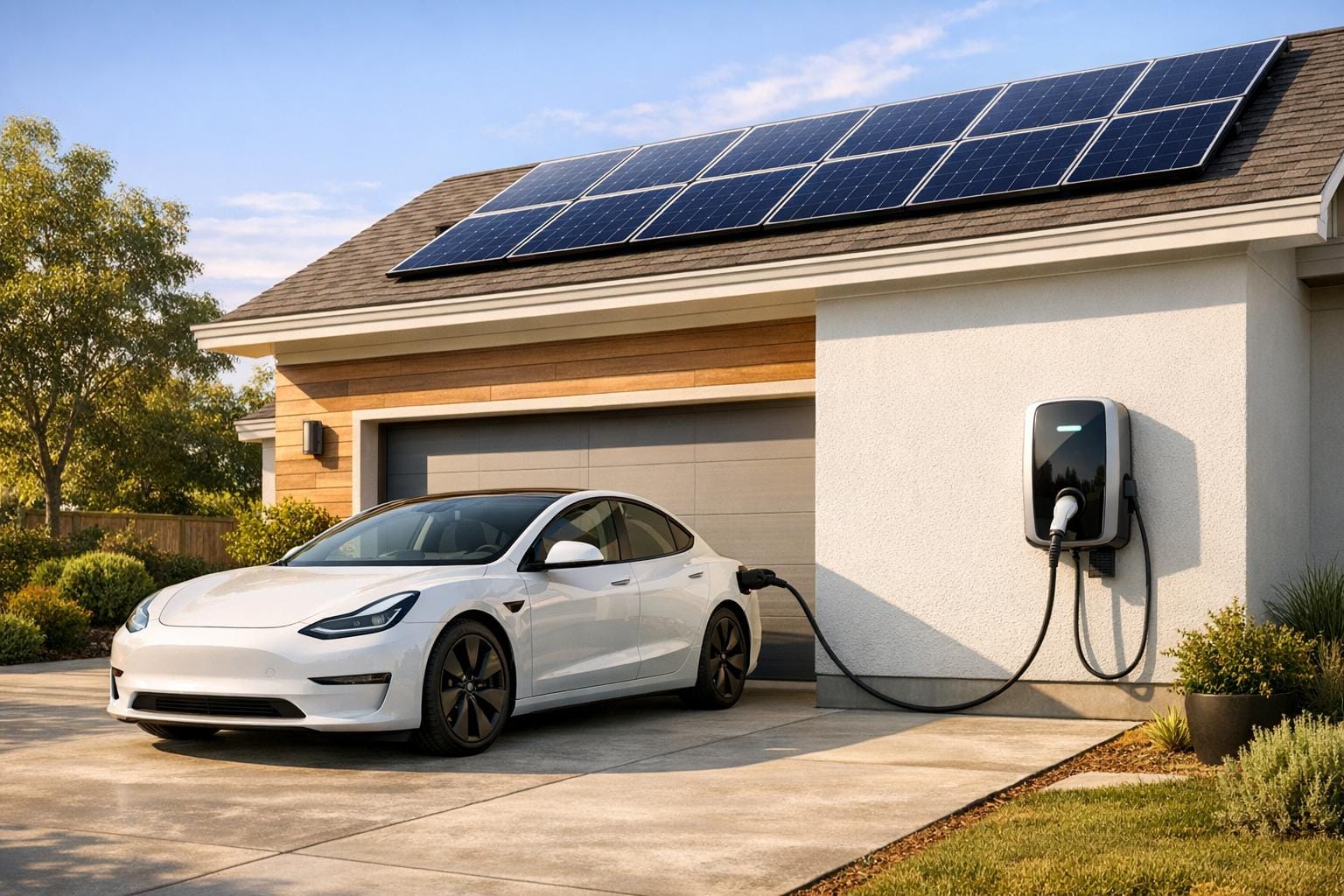
Charging your electric vehicle (EV) with solar power at home can save you money, reduce emissions, and protect against rising energy costs. If you already have solar panels or are considering installing them, pairing them with an EV charger makes sense. Here are the key points to know:
- A standard 4 kWp solar system can generate enough power for up to 21,000 km of driving annually, saving around 248 kg of CO₂ emissions per year.
- Combining solar with EV charging reduces reliance on grid electricity, which in the UK still emits about 125g of CO₂ per kWh.
- Smart chargers like Zappi or Easee can direct surplus solar energy to your EV, cutting grid electricity use and costs.
- Adding battery storage (5–10 kWh) can help store excess solar energy for evening EV charging but may not always be cost-effective compared to off-peak grid tariffs.
To get started:
- Check your solar system’s capacity to handle household and EV energy needs.
- Choose a smart EV charger with solar integration features.
- Decide if battery storage fits your usage patterns and budget.
With the UK’s 2030 ban on new petrol and diesel cars approaching, now is the time to invest in a solar-EV system to future-proof your home while lowering energy bills.
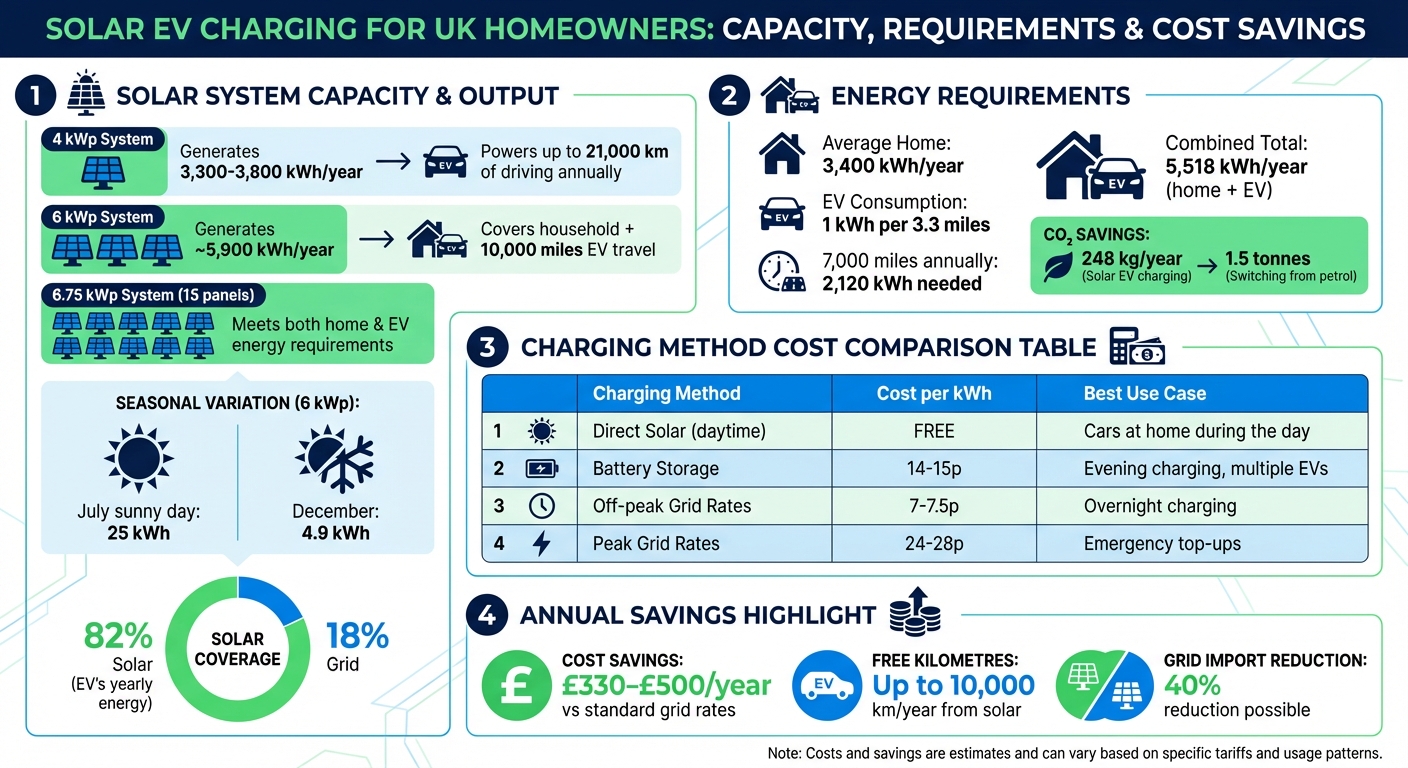
Solar EV Charging Methods Cost Comparison and System Requirements
Checking If Your Solar System Can Support EV Charging
To see if your solar setup can handle EV charging, you’ll need to compare your panel output, household energy use, and the charging needs of your electric vehicle (EV). Start by calculating your solar system’s energy production and pinpointing any surplus energy available for charging.
Combine your household’s annual electricity consumption with your EV’s estimated energy demands. On average, EVs use about 1 kWh per 3.3 miles, meaning a car driven 7,000 miles annually requires around 2,120 kWh. A typical three-bedroom home uses approximately 3,400 kWh per year, which increases to about 5,518 kWh when factoring in EV charging.
The energy your solar system produces depends on its size and the local solar irradiance. For example, in many areas, a system generates about 850 kWh per kWp annually. A standard 4 kWp system usually produces between 3,300 and 3,800 kWh per year. While this might cover most household needs, it leaves limited excess for charging an EV. For those installing new systems, a 6.75 kWp setup (roughly 15 panels) can often meet both home and EV energy requirements.
Keep in mind, seasonal variations play a big role. A 6 kWp system might generate around 25 kWh on a sunny day in July, but only 4.9 kWh during December. On average, solar panels can supply about 82% of an EV’s yearly energy needs, with the remaining 18% coming from the grid during months with less sunlight. This variability directly affects how efficiently your EV charges and how well your system performs overall.
Calculating Your Solar Energy Output
To estimate your system’s annual output, multiply its kWp rating by 850 – a standard figure for Northern Ireland. For instance, a 6 kW system typically generates about 5,900 kWh per year. This is generally enough to power a household and an EV travelling 10,000 miles, which typically requires between 2,800 and 3,000 kWh.
Identifying surplus energy is key. Smart EV chargers with CT (Current Transformer) clamps can monitor your home’s electricity usage in real time. When your panels generate more than your household consumes, these chargers automatically divert the extra energy to your EV. This ensures you’re using free solar power instead of expensive grid electricity.
For example, in October 2025, a homeowner in Co. Wicklow with a 4.2 kWp solar system and a Zappi v2 charger reported generating 3,400 kWh annually. Of this, 1,800 kWh was used for EV charging, providing about 10,000 free kilometres per year and reducing grid imports by 40%.
It’s also crucial to ensure your inverter can handle your system’s maximum output. If the inverter’s capacity is lower than your panels’ peak production, you might experience "clipping", where some of the potential energy is lost during high-output periods.
Working Out Battery Storage Requirements
If your system doesn’t generate enough surplus energy during peak demand times, battery storage can help ensure efficient EV charging.
A 5–10 kWh battery can store excess midday solar energy for evening use, which is especially useful for households with two EVs or irregular charging schedules. However, batteries aren’t always the most cost-effective solution for EV charging. When you consider factors like wear and energy conversion losses, the cost of storing solar energy in a battery works out to about 14–15p per kWh. By comparison, smart tariffs like Intelligent Octopus Go offer overnight charging at around 7p/kWh, while also paying approximately 15p/kWh for solar energy exported to the grid during the day.
| Charging Method | Cost per kWh | Best Use Case |
|---|---|---|
| Direct solar (daytime) | Free | Cars at home during the day |
| Battery storage | 14–15p | Evening charging, multiple EVs |
| Off-peak grid rates | 7–7.5p | Overnight charging |
| Peak grid rates | 24–28p | Emergency top-ups |
In most cases, batteries are better suited for covering household evening energy needs – like running appliances and lights – rather than the high energy demands of EV charging. If you’re considering a battery, size it to capture your system’s midday solar peaks and avoid wasting excess energy. Configure its settings to prioritise household energy use and prevent discharging into the EV at night. Using off-peak grid power for overnight EV charging is often more efficient while keeping your battery reserved for other home needs.
Selecting an EV Charger That Works with Solar
When choosing an EV charger for a solar-powered home, look for features like surplus power detection, solar charging modes, and dynamic load balancing. Surplus power detection ensures that any extra energy your solar panels generate, beyond what your home uses, is redirected to charge your EV automatically. Solar charging modes give you flexibility, allowing you to decide if your EV charges solely from solar surplus, a mix of solar and grid power, or at full capacity regardless of the power source. Dynamic load balancing monitors your household’s energy use and adjusts the charging rate to prevent overloading circuits when other appliances are running.
Consider chargers with smart app integration, OTA (over-the-air) updates, and battery compatibility. Smart apps let you manage charging schedules, track energy usage in real-time, and switch between solar and grid power as needed. OTA updates ensure your charger stays up-to-date with new features and compatibility improvements. Battery compatibility allows the charger to prioritise charging your home battery before your EV or draw power from the battery for charging during the evening. Some chargers even come with PEN fault protection, eliminating the need for an earth rod, which can reduce installation costs.
Here are two examples of chargers designed for seamless solar and EV integration.
Zappi Charger: Solar Integration Features
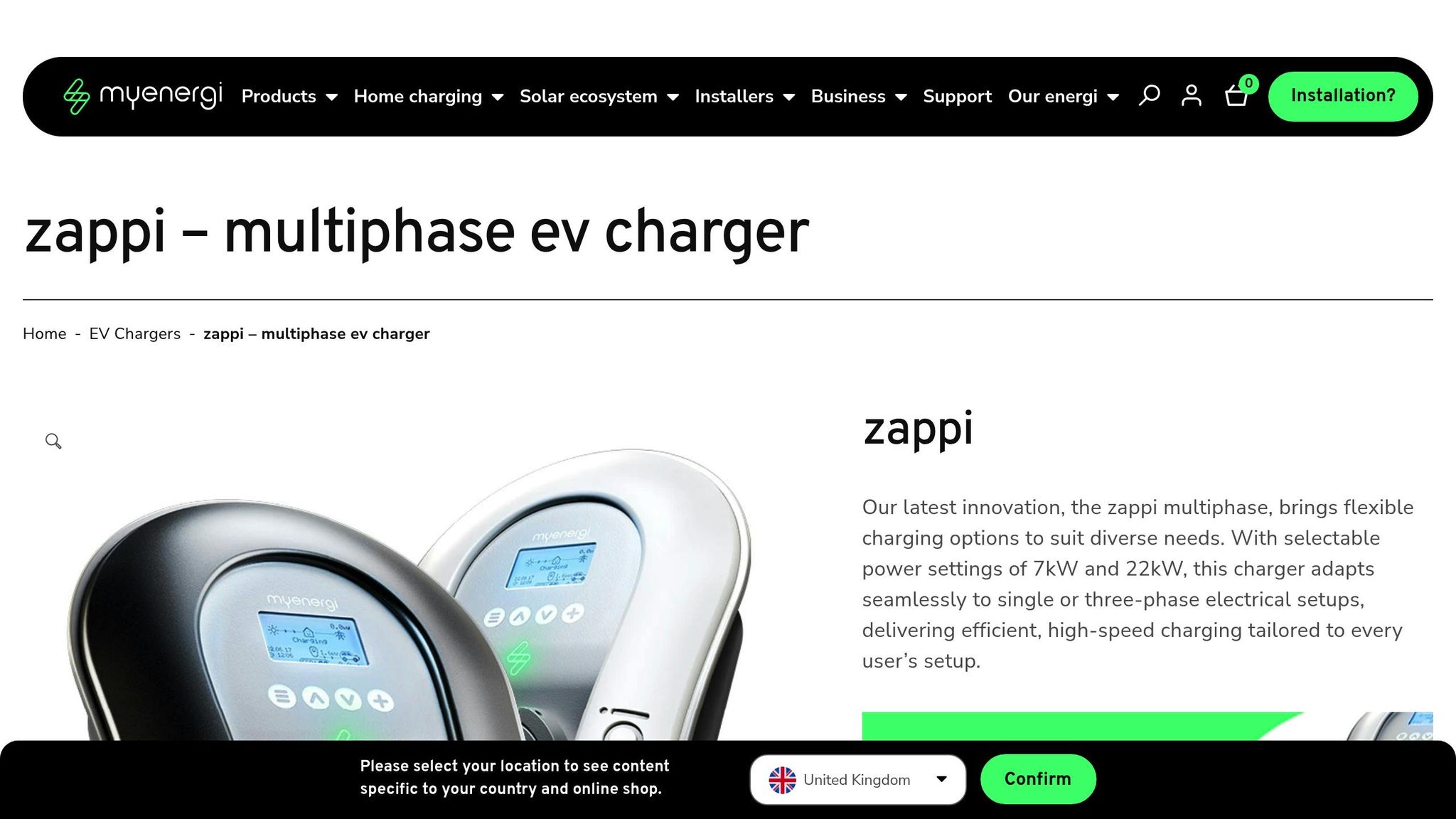
The myenergi Zappi is specifically designed to work with solar energy systems. It offers three charging modes to suit different needs: Eco (uses a mix of solar and grid power while maintaining a minimum charge rate of 1.4kW), Eco+ (relies entirely on surplus solar energy and pauses charging if solar generation drops below a set threshold), and Fast (charges at the maximum rate from any available power source).
"zappi is a unique and intelligent device that uses your self-generated energy from solar or wind sources to charge your electric vehicle." – myenergi
The Zappi uses CT clamps installed at your fuse board to monitor energy flow. When your solar panels produce more energy than your home consumes, the charger automatically redirects the surplus to your EV. In Eco+ mode, you can set the "Min Green Level" to 100% to ensure charging uses only renewable surplus energy. The Zappi also includes built-in PEN fault protection, simplifying installation and reducing costs. It comes in tethered models (with a 6.5-metre cable) and untethered versions, supporting charging speeds up to 7kW for single-phase and 22kW for three-phase systems. Prices start at approximately £799.
Easee Charger: Solar System Compatibility
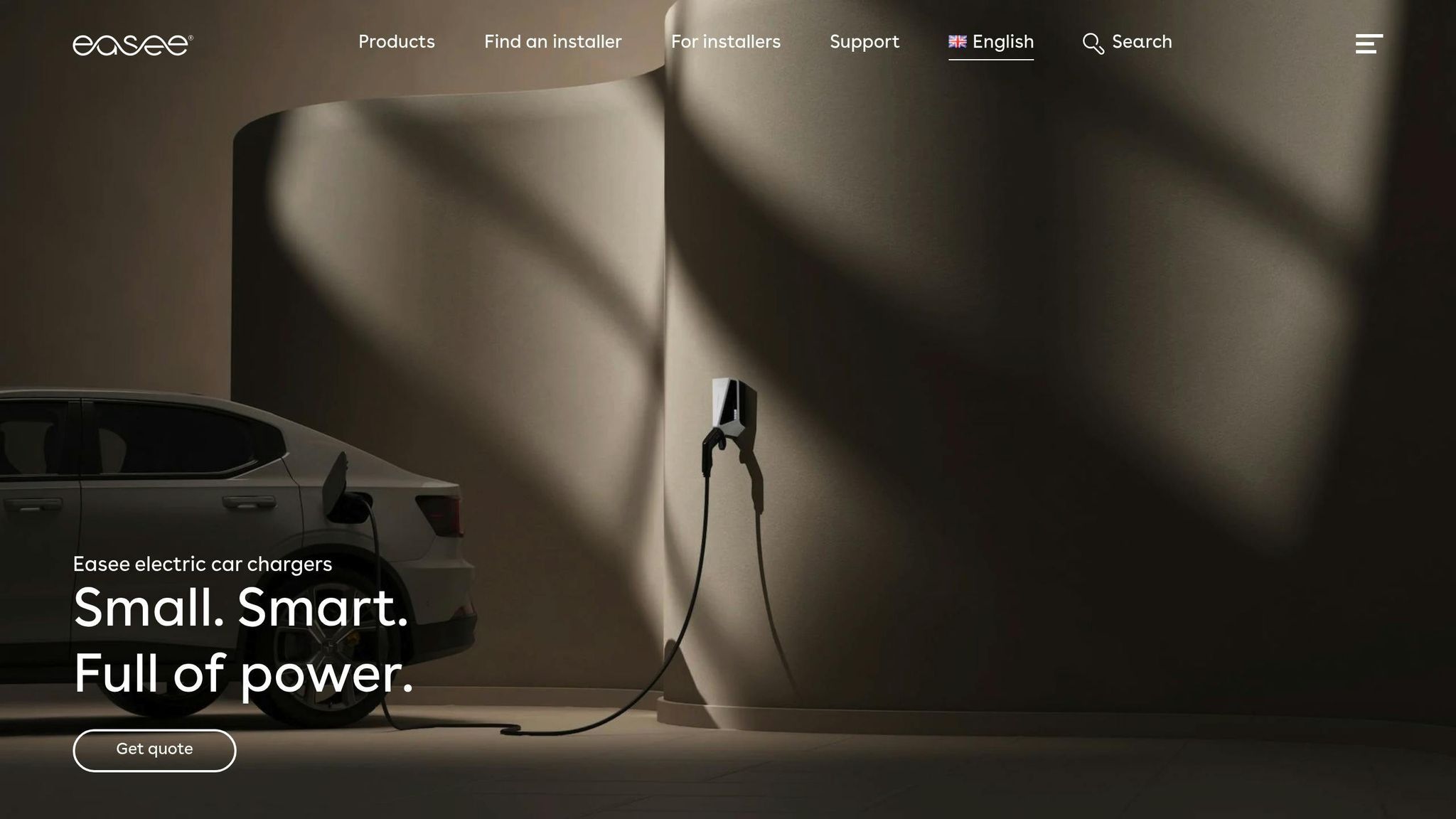
The Easee One is another excellent option for integrating with solar systems, offering smart connectivity and load balancing for efficient energy use. It features an app that enables you to schedule charging sessions and monitor energy usage in real-time. Its load balancing capability allows up to three chargers to share power on a single circuit, distributing energy automatically.
The Easee One supports charging speeds of 7kW on single-phase and 22kW on three-phase systems. It connects via WiFi, 4G, and Bluetooth, giving you flexible control over its operation. While it doesn’t have a dedicated Eco+ mode like the Zappi, its app allows you to manage when and how your EV charges from solar surplus. With a starting price of around £765, it’s a budget-friendly choice for solar integration.
Battery Options from EECO Energy for Solar-EV Systems

Once you’ve chosen the right EV charger, the next step is to optimise your battery storage to make the most of your solar energy. A good battery stores surplus solar power generated during the day, allowing you to charge your EV during evenings or cloudy periods without relying heavily on the grid. EECO Energy offers three 10kWh battery options, each designed to integrate seamlessly with solar-EV systems and ensure your stored energy is there when you need it.
Dyness 10kWh Battery

The Dyness 10kWh battery, priced at £2,400, is an excellent choice for those just starting with solar storage. It captures excess solar energy during the day and releases it in the evening – perfect for when you’re likely to plug in your EV. With its 10kWh capacity, this battery can provide enough energy to extend your EV’s range, making it a great fit for households with a single electric vehicle or for those who only charge a few times a week. If you’re looking for a middle-ground option, the next battery might suit your needs.
Soluna 10kWh Battery

At £3,000, the Soluna 10kWh battery strikes a balance between cost and performance. Like the Dyness, it stores surplus solar power for later use, helping reduce your grid dependency and maximise your solar investment. This battery is ideal for families with irregular charging habits or those occasionally charging two vehicles. It also features smart app integration, allowing you to prioritise stored solar energy for your EV before tapping into grid power, helping to keep your charging costs under control. For those seeking top-tier reliability, the next option is worth considering.
Duracell 10kWh Battery
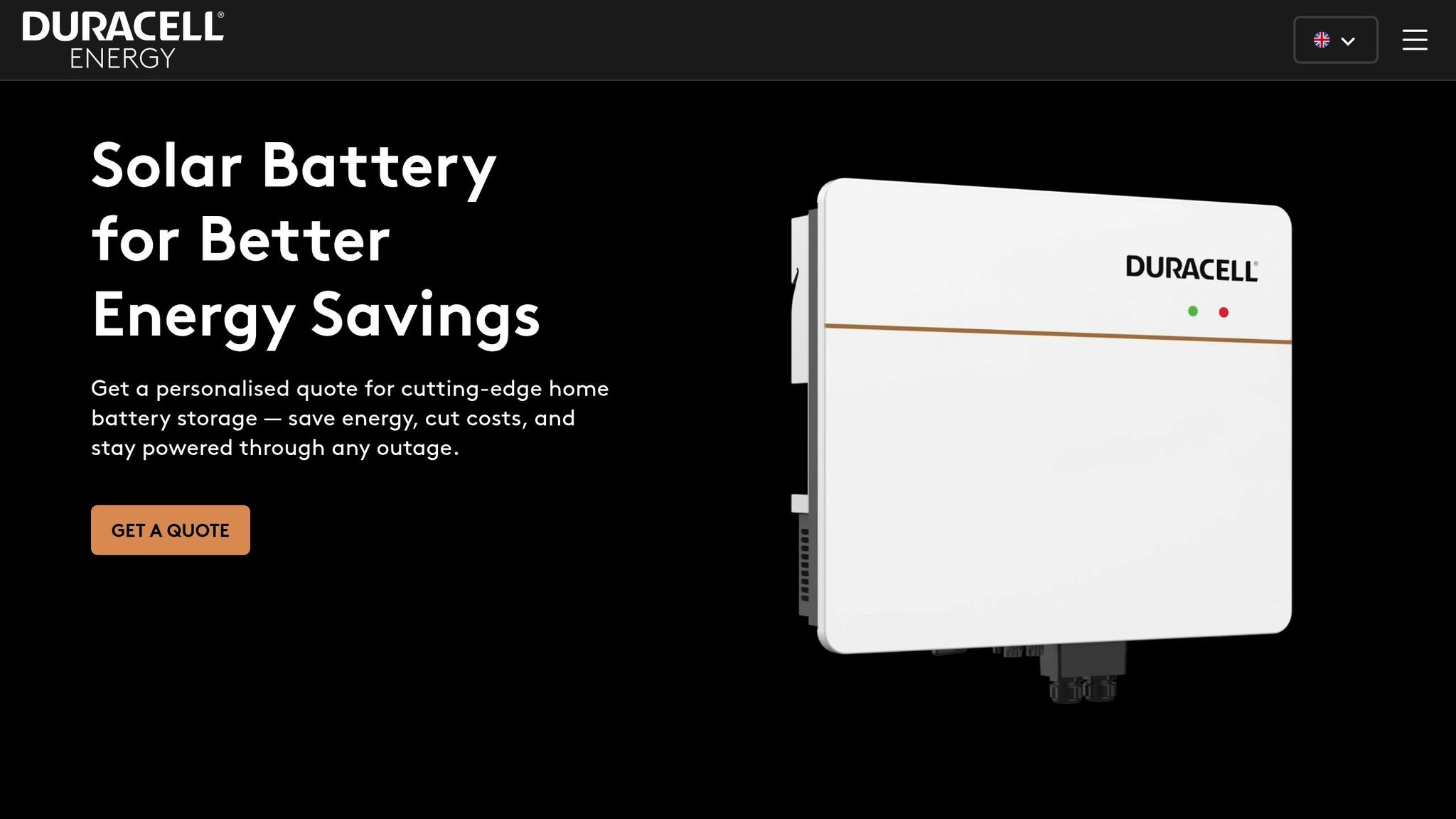
The Duracell 10kWh battery, priced at £3,650, offers premium performance and reliability. As a Duracell Approved Installer, EECO Energy ensures professional installation and ongoing support from their local Northern Ireland team. Known for its trusted brand and advanced engineering, this battery is a solid choice for homeowners looking for peace of mind and durability. Additionally, when paired with an isolation switch, it can provide backup power during grid outages, keeping your home and EV charger running even when the electricity supply is interrupted.
To extend the lifespan of your battery, avoid deep discharges whenever possible.
sbb-itb-d2d975a
How EECO Energy Installs Solar-EV Charging Systems
EECO Energy kicks off the process with a free home survey designed to fine-tune your solar-EV setup. During this survey, their team evaluates your consumer unit, the installation site, and any surplus solar energy you generate. This step lays the groundwork for creating a tailored system design and planning the installation.
Once you approve the proposed design, local, certified installers handle the installation. They set up the recommended Duracell charger, connect it to your consumer unit, and integrate it with your solar inverter using CT clamps. These clamps play a crucial role by tracking the flow of electricity between your home and the grid. This allows the smart charger to adjust its charging rate in real time, based on how much solar power your system is producing.
For most homes, the installation process is completed in just one day. The team ensures the setup is neat and fully operational before leaving. Elaine, a satisfied customer from Antrim, shared her experience:
"They were very professional. They explained the installation clearly and simply. When the staff came, they were courteous and efficient, and they tidied up after themselves".
Before wrapping up, the installers test the system and integrate it with the smart app to guarantee that surplus solar energy is prioritised for charging your EV. If you’re considering bidirectional charging (V2H/G), make sure to mention it during the survey to avoid potential rewiring costs later. For systems involving solar export or bidirectional capabilities, you’ll also need approval from your Distribution Network Operator (DNO), typically through a G99 application.
Every Duracell EV charger installed by EECO Energy comes with a two-year warranty and works with all electric vehicle models. Additionally, the company’s MCS accreditation ensures that your system is set up to meet top professional standards, providing you with a reliable and efficient energy solution.
Tracking and Managing Solar Energy for EV Charging
Once your solar system is operational, smartphone apps become your go-to tools for monitoring how energy is distributed between your home and your electric vehicle (EV). Apps like MyEnergi (used with Zappi chargers) or the Enphase App provide real-time data on solar energy production, household consumption, and EV charging activity. This level of insight lets you track your energy flow throughout the day, making it easier to manage and optimise your system.
A key component of this setup is the use of CT clamps, which were installed during the initial setup. These sensors continuously measure power flow at your consumer unit, enabling your charger to automatically adjust its output based on the available solar surplus. Essentially, this ensures that your system is always working as efficiently as possible.
Smart chargers take things a step further by offering different charging modes that prioritise solar energy. For instance, the "Eco+" mode only charges your EV when your solar panels generate more power than your home needs, pausing automatically if cloud cover reduces production. Alternatively, the "Eco" mode combines solar energy with a small amount of grid power, maintaining a steady charge rate while still prioritising solar surplus.
Take the example of a homeowner in Co. Wicklow in October 2025. With a 4.2 kWp solar array and a Zappi v2 charger, they used the MyEnergi app to focus on utilising solar surplus during the day while scheduling grid top-ups at cheaper, off-peak rates overnight. Their system produced 3,400 kWh annually, with 1,800 kWh specifically allocated to EV charging.
To maximise efficiency, syncing your EV charging with peak solar production hours (typically 11:00–16:00) is crucial. Many apps now include solar forecasting features, helping you decide whether to charge during the day or wait for lower-cost overnight grid rates. For some households, exporting solar energy at 15p/kWh and charging their EV overnight at 7p/kWh on a smart tariff can be a more cost-effective strategy.
Summary
Combining solar panels with an EV charger brings both financial savings and environmental perks for homeowners in Northern Ireland. A standard 4 kWp solar system can generate enough electricity to power around 18,000–21,000 km of driving annually. This could save you between £330 and £500 a year compared to standard grid electricity rates. On top of that, charging your EV with solar energy reduces emissions by approximately 248 kg of CO₂ annually, and switching from a petrol car to an EV cuts emissions by an additional 1.5 tonnes.
To get started, evaluate your solar energy production, decide if battery storage suits your needs, and opt for a smart charger that prioritises using surplus solar energy. EECO Energy provides full-service installations across Northern Ireland, offering solar panel systems from £3,950 for 4.5 kW, battery storage options like the Dyness 10 kWh model from £2,400, and professional EV charger installations. This setup not only lowers your current energy bills but also prepares your home for future energy regulations.
With the UK’s 2030 deadline for phasing out new petrol and diesel car sales, now is an ideal time to invest in solar panels and EV charging systems that align with upcoming energy policies. Northern Ireland residents can also take advantage of 0% VAT on solar panel installations, making the initial costs more manageable. Whether you rely entirely on solar power during the day or combine it with cheaper overnight grid electricity, this system gives you control over your energy expenses and shields you from potential price hikes. Plus, monitoring apps let you track solar generation, household energy use, and EV charging in real-time, helping you optimise your setup for maximum savings and reduced environmental impact.
FAQs
How can I check if my solar system can support charging my electric vehicle (EV)?
To figure out if your solar system can handle charging your electric vehicle (EV), start by checking the capacity of your solar panels. This is typically measured in kilowatts (kW) and can be found on your inverter or installation documents. For instance, a 4 kW system is often enough to cover regular household energy needs and provide some power for EV charging.
Next, calculate how much energy your solar panels produce. In Northern Ireland, a 4 kW system can generate about 12–16 kWh on a sunny day, while a 6 kW system might produce over 20 kWh daily. Compare this output to your EV’s energy needs, which depend on your weekly driving distance and the vehicle’s efficiency (measured in kWh per 100 km).
If your solar system produces enough energy to meet or exceed your EV’s requirements, you should be able to charge it directly using solar power. If your solar output is insufficient, you could explore other options like using grid power to supplement, adding a battery for energy storage, or installing a smart charger to make the most of your solar production during peak times. For a quick check, try charging your EV on a sunny day while monitoring your inverter’s real-time readings – this can help confirm if your setup can handle the load.
Which is more cost-effective for charging an EV: battery storage or off-peak grid tariffs?
Charging your electric vehicle during off-peak grid tariffs often proves to be a more economical choice. These tariffs offer reduced electricity rates at certain times, like overnight. To put it into perspective, a full charge might cost approximately £8, though this can vary based on your specific tariff and vehicle.
On the other hand, integrating battery storage into your solar energy system can help you make better use of the renewable energy you generate. However, this option comes with a hefty upfront cost, meaning it could take longer to see any financial return compared to simply relying on off-peak tariffs. Deciding between these options will largely depend on your budget, energy habits, and what you aim to achieve in the long run.
What key features should I consider when choosing an EV charger to use with solar panels?
When choosing an EV charger to pair with your solar panels, it’s essential to focus on options that are solar-compatible and designed to harness renewable energy effectively. A charger equipped with a CT sensor is a smart choice, as it can automatically activate when your solar panels produce excess energy, ensuring you make the most of your system’s output.
Look for chargers with smart features, such as app-based controls that let you schedule charging times or select energy sources. These tools can help you optimise energy usage and reduce waste.
Another key consideration is load management, which protects your home’s electrical system from being overloaded. Chargers that offer detailed energy usage data are also beneficial, giving you insights into your consumption patterns and helping you cut down on energy costs while relying less on the grid.