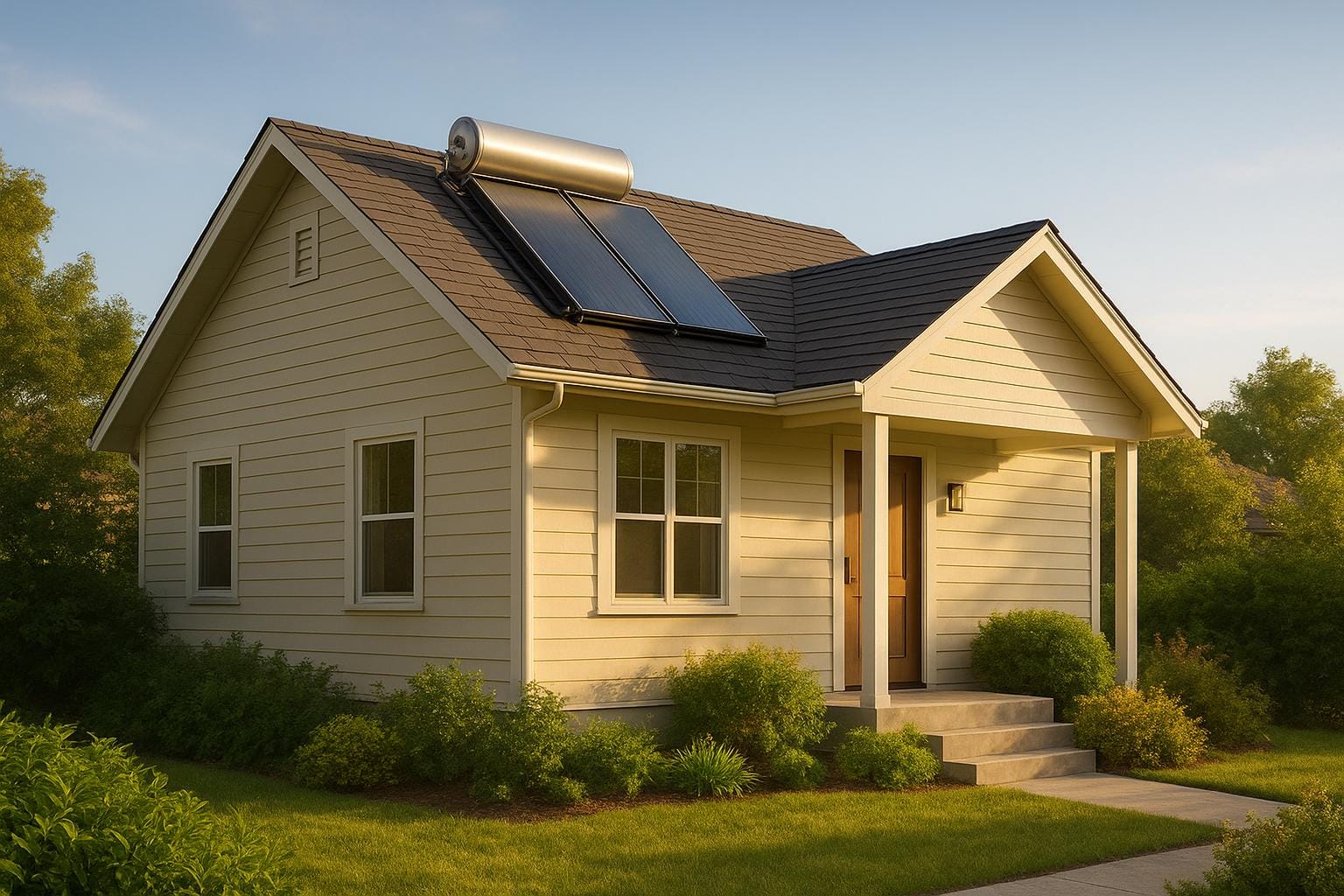
Solar water heating systems offer a practical way to reduce energy costs and carbon emissions while providing reliable hot water year-round. These systems use solar collectors to heat water, which is then stored for use, even in cloudy conditions. For homeowners in Northern Ireland, they present an effective solution to rising energy prices and align with local climate goals.
Key Benefits:
- Lower Energy Bills: Save up to £500 annually by reducing reliance on gas or electricity.
- Reduced Carbon Emissions: Cut household CO₂ output by using renewable energy.
- Year-Round Hot Water: Efficiently works even on cloudy days with backup systems for low-sunlight periods.
- Quick Payback: Initial costs (£3,000–£6,000) are offset by long-term savings, often within 4–7 years.
- Minimal Maintenance: Requires basic annual checks and occasional servicing.
- Increased Property Value: Improves energy efficiency and appeal to buyers.
- Integration with Existing Systems: Works alongside boilers or heat pumps for seamless operation.
- Energy Independence: Reduces reliance on grid energy, shielding against price spikes.
- Supports Climate Goals: Aligns with Northern Ireland’s efforts to cut emissions.
- Professional Installation: Reliable setup and warranties ensure long-term performance.
With a lifespan of 25+ years and low running costs, solar water heating systems are a smart investment for reducing energy expenses while contributing to a greener future.
1. Lower Energy Bills
Solar water heating systems offer a practical way to cut down on monthly energy costs by tapping into sunlight instead of relying on gas or electricity. For households in Northern Ireland, this translates into growing savings over time, complementing other energy-saving benefits discussed later.
On average, a family-sized solar water heating system can produce around 1,500kWh of heat each year. This contribution reduces the need for traditional heating methods, leading to noticeable savings on monthly energy bills.
Let’s break it down: with electricity costs hovering around 35 pence per kWh, families using direct electric heating can save over £500 a year. This means the initial investment in solar technology could pay for itself in less than a decade.
| Heating Type Being Replaced | Energy Price | Annual Savings | Payback Period |
|---|---|---|---|
| Direct Electric Heating | 35p per kWh | Over £500 | Less than 10 years |
| Gas Boiler | 12p+ per kWh | £180+ | Varies |
The numbers clearly show the long-term economic benefits of solar water heating. While installation costs range between £3,000 and £6,000, the consistent savings make this investment worthwhile. Plus, these systems offer a hedge against rising energy prices, providing predictable and sustained financial relief.
Even in Northern Ireland’s famously unpredictable weather, solar water heating systems perform reliably. They’re designed to capture enough solar radiation – even on cloudy days – to ensure consistent performance year-round, making them a practical and dependable choice.
2. Lower Carbon Emissions
Switching to solar water heating systems is a smart way to cut down on household carbon emissions. By replacing traditional heating methods that rely on fossil fuels with solar energy, these systems offer a cleaner, greener alternative. This makes them particularly appealing to UK households looking to shrink their environmental footprint.
One key advantage is the reduction in CO₂ emissions during energy generation. This is especially relevant in areas like Northern Ireland, where a large portion of electricity still comes from fossil fuels. Every kilowatt-hour of solar-heated water means less dependence on fossil-fuel-powered stations, making a noticeable difference in overall emissions.
For households committed to sustainability, solar water heating is a practical step towards supporting the UK’s net-zero goals, offering a tangible way to lower carbon output.
3. Consistent Hot Water Supply
Solar water heating systems provide a steady supply of hot water all year round, even in the often cloudy conditions of Northern Ireland. Thanks to modern solar thermal technology, these systems can efficiently utilise available daylight, ensuring they perform well even on overcast days.
This dependability is largely due to their efficient thermal storage. During daylight hours, solar collectors heat the water, which is then stored in well-insulated cylinders designed to retain heat. This setup ensures households have access to hot water not only during the day but also in the evenings or on particularly cloudy days when solar collection might be limited.
For those moments when sunlight isn’t enough, backup systems like immersion heaters or connections to existing boilers step in to guarantee a continuous hot water supply. Even in low-sunlight conditions, you won’t have to worry about running out of hot water.
Solar water heating systems are also built to work effectively in colder climates. They can operate efficiently even in freezing temperatures, capturing enough solar energy throughout the year to make a noticeable contribution to water heating, even during the winter months. This reduces the strain on backup systems and helps save on energy costs.
Another major advantage is their storage capacity, which is particularly beneficial during peak usage times. Unlike systems that heat water on demand and might struggle when multiple taps or showers are in use, solar water heating systems maintain a reserve of heated water. This makes them an excellent choice for larger households or homes with high hot water demands.
The straightforward design of these systems ensures consistent and reliable performance throughout their lifespan, making them a dependable option for meeting your household’s hot water needs.
4. Return on Investment
Solar water heating systems present a cost-effective renewable energy solution for many UK homeowners, offering the potential for significant long-term savings. By replacing traditional water heating methods, these systems can noticeably reduce annual energy bills. While the initial installation cost may seem high, the combination of lower energy expenses and minimal maintenance usually results in a relatively short payback period over the system’s lifespan. This makes solar water heating a smart financial move.
With energy prices often unpredictable, these systems provide a way to stabilise energy costs. They can also increase property value, making them an attractive option for homeowners looking to invest in sustainable upgrades.
For those living in Northern Ireland, solar water heating stands out as a particularly practical and economical choice. Next, we’ll delve into installation costs and performance figures to highlight these advantages further.
5. Less Dependence on Grid Energy
Solar water heating offers a practical way to reduce dependence on grid-supplied gas or electricity, which is especially useful during times of price spikes or supply disruptions.
By installing a solar water heating system, you create a renewable source of hot water right at home. During sunny days, the system can often handle most, if not all, of your hot water needs without tapping into external energy sources. This means you’re less affected by supply shortages or infrastructure problems.
Another major advantage is cost stability. Once installed, the system relies on sunlight, which is free, shielding you from rising energy prices. Even if the grid faces disruptions, your solar water heating system continues to function, ensuring a steady supply of hot water.
However, the system’s performance does shift with the seasons. In summer, many households find they’re almost entirely independent of the grid for hot water. In winter, while solar gain is lower, the system still significantly reduces energy consumption from the grid, helping to keep costs down.
In Northern Ireland, where renewable energy solutions are increasingly sought after, EECO Energy’s solar thermal systems are tailored to maximise this independence. They integrate smoothly with existing heating systems, ensuring a reliable year-round supply of hot water, no matter the season.
6. Higher Property Value
Adding a solar water heating system can give your property’s market value a noticeable lift. By cutting down on running costs and appealing to buyers looking for homes with lower energy bills, it makes your property more attractive. Plus, these systems highlight a commitment to reducing environmental impact, which resonates with those prioritising sustainability.
One key benefit is the potential improvement in your home’s Energy Performance Certificate (EPC) rating. A higher EPC rating not only enhances energy efficiency but also makes your home stand out to buyers, boosting its overall appeal in the market.
EECO Energy ensures that their installations meet all regulatory standards and come with comprehensive warranties. This provides peace of mind to potential buyers, as it guarantees both quality and long-term reliability.
As net-zero carbon targets gain momentum, homes equipped with renewable energy systems are becoming increasingly appealing. They’re seen as forward-thinking investments, offering protection against future changes in energy regulations.
sbb-itb-d2d975a
7. Simple Maintenance Needs
Solar water heating systems are surprisingly easy to maintain. Homeowners can handle basic annual checks themselves, such as inspecting the condition of the panels and topping up antifreeze levels, using a maintenance checklist provided by the installer. These small efforts go a long way in keeping the system running efficiently all year round.
For added peace of mind, many installers offer an annual service visit for around £100. This professional check ensures everything is in proper working order.
More in-depth servicing is typically needed every three to five years. During these visits, a technician will flush the system and replace the fluid mix, which is crucial for maintaining warranty coverage and long-term performance.
Modern systems often come with advanced features, like control panels that alert you to any potential issues. If a warning pops up, it’s best to contact your installer promptly. Many systems also include a handy ‘holiday’ mode, allowing them to operate safely and efficiently while you’re away.
EECO Energy provides clear, easy-to-follow maintenance instructions with every installation, helping homeowners maximise their system’s performance for years to come.
8. Works with Current Heating Systems
One of the key perks of solar water heating is how easily it pairs with your existing heating setup. Whether you rely on a gas boiler, oil boiler, or heat pump, solar thermal systems are designed to preheat your domestic water, working alongside your current equipment. The solar system doesn’t replace your boiler; instead, it takes on the job of heating water during sunny days, while your boiler steps in to provide extra heat when needed. This setup ensures you always have hot water, even on cloudy days or during periods of high demand. This smooth integration also makes upgrading your system straightforward.
What Changes Are Actually Needed?
The beauty of this system lies in its simplicity. Typically, you’ll need to install a solar-compatible (twin-coil) hot water cylinder. This cylinder connects to both your solar thermal system and your existing boiler. Homes with combi boilers, however, might require a dedicated cylinder to make the system work.
The twin-coil cylinder is a critical component. It includes two heating coils: one linked to the solar thermal system and the other connected to your boiler or heat pump. This ensures both systems work in harmony to provide hot water efficiently.
For homes with combi boilers – which heat water on demand and don’t use a cylinder – things can be a bit more complex. In these cases, you may need to add a solar hot water cylinder and, in some situations, switch to a conventional boiler or heat pump system.
Space and Technical Considerations
You’ll also need to ensure you have enough room for the larger solar-compatible cylinder.
On the technical side, specialised connection kits, like the Caleffi 262-263 series, are used to link your solar thermal store with your existing boiler. These kits make sure pre-heated water is properly directed to your boiler for any additional heating when solar energy alone isn’t enough.
Smart controllers play a big role in optimising efficiency. For instance, EECO Energy’s smart immersion controllers help manage when your backup heating system kicks in, ensuring you get the most out of the solar energy collected. By coordinating inputs from both the solar system and your boiler, these controllers make the integration as efficient as possible.
9. Supports Northern Ireland’s Climate Goals
Adding a solar water heating system to your home not only benefits you but also aligns with Northern Ireland’s goals for a greener future. As the region strives to cut carbon emissions and embrace renewable energy, every household that switches to sustainable solutions makes a real difference.
Local programmes stress the urgency of moving away from fossil fuels. Solar water heating systems are a practical way to reduce dependence on traditional energy sources, helping to lower carbon emissions. When more homes adopt these systems, the collective impact accelerates Northern Ireland’s journey towards achieving carbon neutrality.
Collective Impact
Each solar water heating system installed contributes to the region’s renewable energy capacity. When adopted on a larger scale, these systems deliver measurable environmental benefits, strengthening the community’s push for a cleaner and more sustainable future.
To encourage this shift, local policies are designed to make green energy solutions more accessible and appealing.
Aligning with Local Green Initiatives
Solar water heating systems tie directly into Northern Ireland’s plans for a sustainable and low-carbon economy. By cutting fossil fuel usage and boosting renewable energy sources, they enhance energy security and resilience for households and the region as a whole.
EECO Energy’s expert installations help households take meaningful steps towards reducing their carbon footprint, showing how individual choices can contribute to broader regional achievements in sustainability.
10. Professional Installation by EECO Energy
Getting the most out of a solar water heating system starts with proper installation, and that’s where EECO Energy comes in. Their professional approach ensures your system is set up for maximum efficiency and performance from the get-go.
Founded by Stuart Laing, EECO Energy carries MCS accreditation, a mark of quality that guarantees every installation meets strict industry standards with precision and attention to detail.
The Installation Process
EECO Energy begins with a free survey to design a solar thermal system that fits your specific needs. Their team completes the installation in just one day, carefully positioning the collectors to capture the most sunlight and seamlessly integrating the system with your existing setup. This meticulous process ensures long-term energy efficiency and reliable performance.
Warranty You Can Rely On
When you choose EECO Energy, your investment is backed by a 25-year warranty that covers both the equipment and the workmanship. This extensive coverage highlights the durability and reliability of their solar thermal systems.
Maintenance for Peace of Mind
To keep your system running smoothly, EECO Energy offers ongoing maintenance services. Regular checks help maintain efficiency and extend the system’s lifespan, giving you confidence in your investment.
Serving All of Northern Ireland
EECO Energy provides professional solar thermal installations to homes across Northern Ireland, whether in urban centres or rural areas. Their local expertise allows them to offer quick consultations, installations, and follow-up services, all while considering regional building styles, planning regulations, and weather conditions.
Cost and Performance Comparison
When you weigh the upfront costs against the long-term savings, the financial advantages of solar water heating become clear. While the initial investment might seem steep, the ongoing savings and reduced energy bills make it a worthwhile consideration.
Initial Investment Costs
Installing a solar water heating system typically costs between £3,000 and £5,000. To put this in perspective, a new gas boiler system costs around £1,500 to £3,000, an oil boiler setup ranges from £2,000 to £4,000, and an electric immersion heater system falls between £800 and £2,500. While solar thermal systems sit at the higher end of the spectrum, the long-term benefits more than make up for it.
Annual Running Costs and Savings
The real advantage of solar thermal systems lies in their low running costs. For example:
- A household spending £400 annually on gas heating could reduce this to £100, saving £300 per year.
- Homes using oil heating might cut costs from £600 to £150, saving £450 annually.
- Electric water heating users could see the most dramatic drop, cutting expenses from £800 to just £200, saving £600 annually.
Here’s a breakdown of the cost differences:
| System Type | Initial Cost | Annual Running Cost | Annual Savings vs Solar | Break-Even Point |
|---|---|---|---|---|
| Solar Thermal | £3,000-£5,000 | £100-£200 | – | – |
| Gas Boiler | £1,500-£3,000 | £350-£450 | £150-£350 | 4-7 years |
| Oil Boiler | £2,000-£4,000 | £500-£700 | £300-£600 | 3-5 years |
| Electric Immersion | £800-£2,500 | £700-£900 | £500-£800 | 2-4 years |
Efficiency Metrics
Solar thermal systems are highly efficient, converting 60-70% of solar radiation into usable heat. Even in less sunny conditions, modern evacuated tube collectors maintain efficiency levels above 50%, ensuring consistent performance year-round.
Return on Investment Timeline
The time it takes to recoup your initial investment depends on the system being replaced:
- Electric water heating: 2-4 years
- Gas heating: 4-7 years
- Oil heating: 3-5 years
Long-Term Cost Projection
Looking at a 25-year period, solar thermal systems prove to be the most economical option. Including the initial investment and minimal maintenance, a solar thermal system costs around £6,000. In comparison:
- Gas heating: £12,500
- Oil heating: £17,500
- Electric heating: £22,500
These figures assume current energy prices with a modest 3% annual increase.
Maintenance and Durability
Solar thermal systems require very little upkeep, with annual servicing costs typically ranging from £50 to £100. In contrast, conventional boilers tend to incur higher maintenance expenses and often require replacements over time, adding to their overall cost.
Moreover, solar thermal systems are built to last. With 25-year warranties covering both equipment and installation, they deliver reliable hot water for decades. Unlike traditional systems, solar thermal systems are immune to the unpredictability of rising fuel prices or the frequent breakdowns associated with boilers.
Conclusion
Solar water heating offers a range of practical advantages for homeowners across the UK. By harnessing the power of sunlight, these systems provide a reliable source of hot water throughout the year, requiring minimal upkeep and often backed by warranties of up to 25 years.
Beyond convenience, solar water heating plays a key role in reducing household carbon emissions and dependence on fossil fuels. It integrates seamlessly with most existing heating systems, aligning perfectly with Northern Ireland’s broader climate targets. On top of that, it can even enhance property value – an appealing bonus for homeowners.
For those in Northern Ireland, EECO Energy provides MCS-accredited solar thermal installations designed to deliver optimal efficiency and strong returns over time.
FAQs
Can solar water heating systems work effectively during winter in Northern Ireland?
Yes, solar water heating systems can perform effectively during winter, even in Northern Ireland. Although their output naturally decreases due to shorter days and less sunlight, these systems are built to work efficiently, even on overcast days. Impressively, they can still supply up to 60% of a household’s annual hot water needs, even during the colder months.
Many modern systems are equipped with freeze-resistant technology, ensuring they remain reliable all year round. This makes them a smart option for cutting energy costs and maintaining a steady hot water supply, no matter the season.
What maintenance is needed to keep a solar water heating system running efficiently?
To keep your solar water heating system operating smoothly and lasting longer, regular upkeep is a must. Start by checking for leaks, corrosion, or any visible damage. Clean the collectors to clear off dirt and debris that could affect performance, and make sure the insulation around the system remains intact. Don’t forget to keep an eye on the system pressure and flush it occasionally to avoid scaling and sediment build-up.
If you live in a colder region, proper freeze protection is crucial. Inspect and test pumps and valves regularly, and remember that antifreeze may need replacing every four years. For peace of mind, scheduling an annual professional inspection is a smart move to ensure everything is running as it should. These straightforward maintenance steps can help you save more on energy and keep your system in good shape for years to come.
Will a solar water heating system work with my current boiler or heating setup?
Most solar water heating systems can work alongside your existing heating setup, especially if you have a system boiler or a regular (heat-only) boiler. These boilers are ideal because they use a dedicated hot water cylinder, which solar systems can preheat. This reduces the strain on your boiler, helps lower energy bills, and cuts down on your carbon emissions.
On the other hand, combi boilers, which heat water directly from the mains supply, are typically less compatible. Since they don’t include a separate hot water cylinder, integrating them with solar water heating can be more challenging. If you’re unsure about your boiler’s compatibility, it’s a good idea to consult a professional installer. With the right setup, solar water heating can make your home much more energy-efficient.