
Yes, solar energy can be a great investment for homeowners in Northern Ireland. Here’s why:
- Cost Savings: Solar panels can cut your electricity bills significantly. With rising energy prices, this means long-term financial relief. You could see a return on your investment in 9–13 years.
- Affordable Installation: Systems typically cost between £3,500 and £9,000, with a 0% VAT rate reducing upfront expenses.
- Energy Independence: Generate your own power and rely less on the grid, protecting yourself from fluctuating electricity prices.
- Environmental Impact: A typical home system can reduce carbon emissions by about one tonne annually, contributing to Northern Ireland’s renewable energy goals.
- Increased Property Value: Homes with solar panels are more attractive to buyers and often sell faster due to lower running costs.
Northern Ireland’s climate is well-suited for solar panels, performing effectively even on cloudy days. Proper roof orientation, minimal shading, and structural readiness are key factors for maximising efficiency. Incentives like the Greener Home Reward scheme (£1,000 cashback for Barclays mortgage holders) and export tariffs for surplus energy add to the appeal.
If you’re considering solar, start with a free survey to assess your roof’s suitability and explore options like battery storage or EV chargers to optimise your system.

Solar Panel Investment Returns and Benefits for Northern Ireland Homes
Financial Benefits of Solar Energy
Getting a handle on the financial aspects is a key step in evaluating how solar energy can be a smart investment for your home.
Installation Costs and System Prices
In Northern Ireland, solar panel systems typically cost between £3,500 and £9,000 or more, depending on the size of the system. The price varies because larger systems are designed to meet higher energy demands.
Most trusted installers provide a complete package that includes solar panels, inverters, mounting systems, electrical connections, and professional installation. Thanks to the 0% VAT rate on domestic solar installations, the overall cost is reduced. However, there may be extra costs for optional features like battery storage, scaffolding, or EV charging points.
While the upfront costs may seem significant, they pave the way for long-term financial benefits.
Energy Bill Savings and Payback Time
In Northern Ireland, the typical payback period for solar panels ranges from 9 to 13 years, depending on how much of the generated electricity you use during the day. The more electricity you consume directly, the quicker you’ll see a return on your investment.
Annual savings vary based on the system size and your energy usage habits. Larger systems produce more electricity, which can significantly reduce your reliance on grid power and lower your monthly bills. Additionally, it’s worth speaking to your energy supplier about export tariffs. Selling surplus electricity back to the grid can provide an extra income stream.
These savings highlight why solar energy makes financial sense for many homeowners.
Government Support and Tax Relief
One major incentive is the automatic 0% VAT on solar panels and related equipment. This tax relief is applied without requiring any additional applications, making solar energy installations more affordable.
Currently, there aren’t any specific government grants or widespread incentives for domestic solar installations in Northern Ireland beyond the VAT relief. However, homeowners can reach out to NI Energy Advice to check for any new funding opportunities. The Northern Ireland Sustainable Energy Programme (NISEP) also offers grants of up to 20% for certain projects, though these come with eligibility requirements and limited availability.
Environmental and Practical Advantages
Solar panels bring more than just financial savings – they also offer clear benefits for the environment and practical day-to-day living.
Lowering Your Carbon Emissions
By generating clean, renewable electricity, solar panels significantly reduce your household’s reliance on fossil fuels and cut down greenhouse gas emissions. For an average home in the UK, a solar panel system could save around one tonne of carbon every year. That’s a meaningful step towards reducing fossil fuel consumption.
This shift supports the UK’s wider goal of achieving net-zero emissions. Chris Hewett, Chief Executive of Solar Energy UK, highlights this transformation:
The UK electricity system is rapidly changing to one that will be primarily powered by solar and wind come 2030. We now have an opportunity to make our homes active contributors of the flexibility needed to maximise the potential of renewables, rather than be simply passive consumers of electricity. The evidence is here – deploying smart energy technologies across the country not only cuts carbon and helps households save on their energy bills, but can actively minimise spikes in electricity demand which place the grid under intense stress. Therefore it is not simply the homeowner who stands to benefit from solar and energy storage, but everyone.
Increasing Your Property Value
Solar panels are also a smart investment for your home. In Northern Ireland, they’re known to boost property values, making homes more attractive to buyers. With lower running costs and better Energy Performance Certificate (EPC) ratings, energy-efficient properties are in high demand. Homes equipped with solar panels often sell faster, appealing to buyers who appreciate both the financial and environmental advantages.
How Solar Panels Perform in Northern Ireland
Northern Ireland’s unique climate works surprisingly well for solar panels. The region’s mild Atlantic maritime climate keeps temperatures cooler, which helps solar panels operate near their peak efficiency. While summer’s longer daylight hours naturally result in higher electricity output, modern solar panels are designed to perform reliably year-round – even during the cloudier, shorter days of winter. This adaptability means homeowners can benefit from consistent energy production regardless of the season.
sbb-itb-d2d975a
Selecting the Right Solar System with EECO Energy
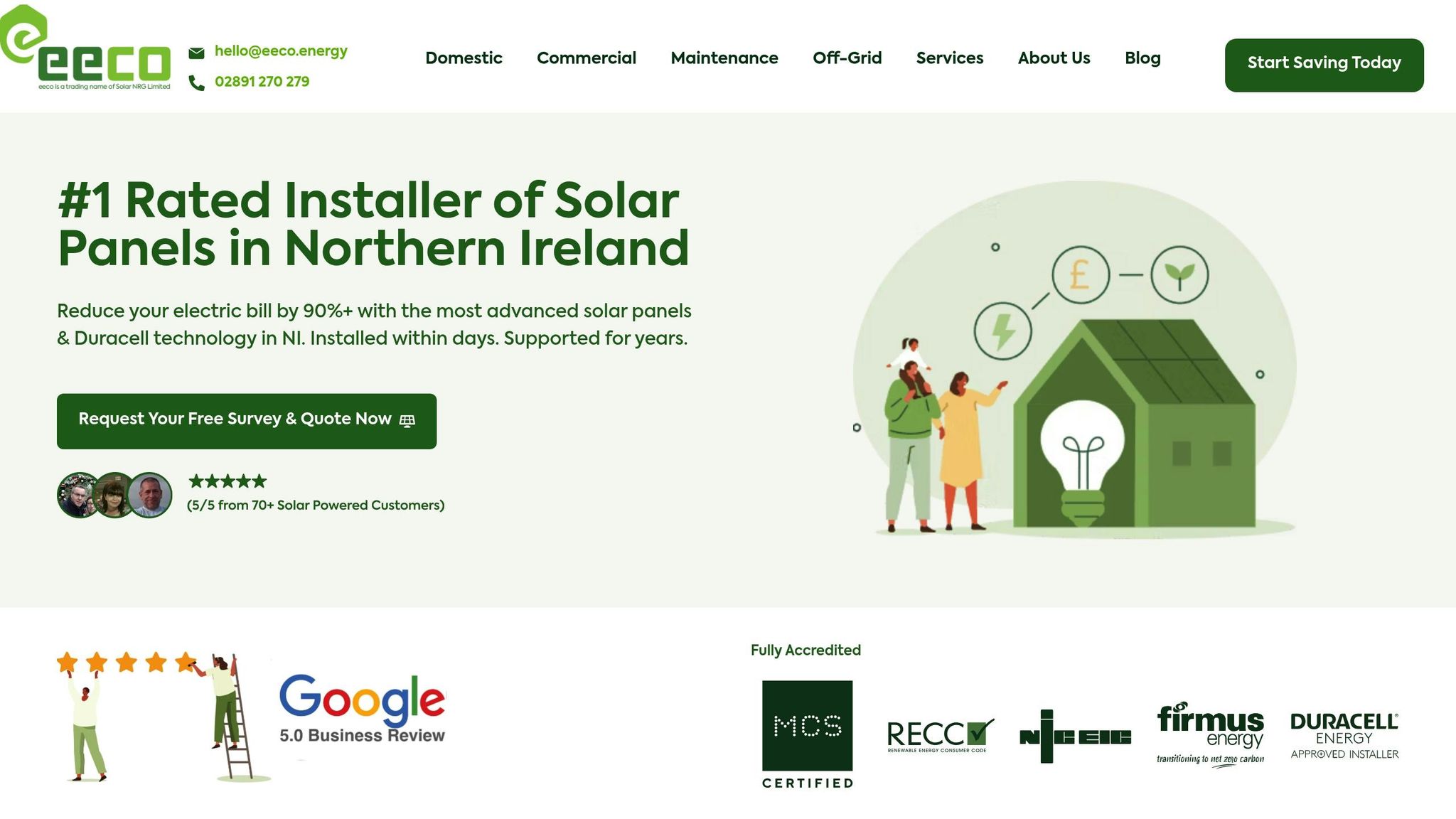
Tailored Systems for Your Home
EECO Energy offers solar systems designed to match your home’s specific needs and energy consumption. For smaller households, you can opt for a 4.5 kW system, which includes 10 panels, generates approximately 3,380 kWh per year, and costs £3,950. If you require more power, the 9 kW system with 20 panels produces around 7,099 kWh annually and is priced at £5,900. These systems are designed to fit your energy usage and available roof space.
To make the most of your solar setup, adding battery storage is a smart move. It increases energy usage efficiency from 20-40% up to an impressive 60-80% by storing surplus energy for use during evenings or cloudy days. EECO Energy offers several battery options, including the Dyness 10 kW (£2,400), Soluna 10 kW (£3,000), and Duracell 10 kW (£3,650).
For a seamless energy solution, EECO Energy can also integrate EV chargers and smart controllers into your system. These additions optimise how and when you use stored electricity, helping you get the most out of your solar investment. By combining tailored solar systems with advanced energy management tools, EECO Energy ensures your setup is efficient and future-ready.
Warranties and Customer Service
EECO Energy provides peace of mind by backing every installation with a 25-year warranty, offering long-term protection for your solar system. As an MCS-accredited installer, they follow strict industry standards and even handle the registration paperwork with NIE Networks, saving you time and effort.
The process begins with a free survey to assess your roof’s orientation, shading, and overall suitability. Most installations are completed in just one day. After installation, EECO Energy continues to support you with ongoing monitoring and panel cleaning, ensuring your system operates at peak performance for years to come.
Conclusion: Making Your Solar Investment Decision
Key Takeaways for Homeowners in Northern Ireland
Solar panels bring a host of advantages – financial, environmental, and practical. They help cut electricity bills, let you earn by selling surplus energy back to the grid, and benefit from 0% VAT, which speeds up your return on investment. Over time, these systems can provide meaningful savings and returns.
By producing clean, renewable energy, solar panels also play a part in reducing carbon emissions, aligning with Northern Ireland’s commitment to achieving net-zero targets.
Modern setups, especially those with battery storage, allow you to store unused energy for later use. This not only boosts energy independence but also helps you manage household expenses more effectively.
With these advantages in mind, choosing the right installer becomes a critical step in the process.
Why Consider EECO Energy?
EECO Energy is well-equipped to help you get the most out of your solar investment. Their competitive pricing, starting at £3,950, reflects their commitment to delivering tailored solutions that meet your needs.
From offering a free survey to providing ongoing system monitoring, EECO Energy ensures your system performs at its best. With installations completed across Northern Ireland – often in just one day – switching to solar has never been more straightforward.
FAQs
How does Northern Ireland’s weather impact the performance of solar panels?
Northern Ireland’s mild and often cloudy weather might not scream "solar power", but it’s actually a great fit for solar panels. Cooler temperatures play a big role in this. Solar panels tend to lose about 0.4% of their efficiency for every degree above 25°C. Since Northern Ireland rarely sees scorching heat, panels can maintain steady performance throughout the year.
What’s more, solar panels don’t need bright, direct sunlight to work. They generate electricity from daylight, which means even on overcast or grey days, they’ll still produce energy. This makes them a dependable energy solution, no matter the season or weather.
What should I consider to get the most out of a solar panel system?
To get the most out of your solar panel system, pay attention to a few critical factors: sunlight exposure, shading, and how the panels are positioned. For the best results, make sure your panels face south and are installed at the ideal tilt angle. Also, keep an eye out for potential obstructions like trees or buildings that might cast shadows on your panels.
Investing in reliable, high-performing panels with good thermal efficiency is a smart move, especially to handle the UK’s varying weather conditions. Regular upkeep is equally important – clean your panels and inspect the system periodically to ensure they work efficiently. Solar panels tend to perform best in mild temperatures, typically between 15°C and 25°C, which is well-suited to much of the UK’s climate.
What extra costs or factors should you consider before installing solar panels?
When you’re planning to install solar panels, there are a few extra costs and considerations to take into account. For instance, you might need to budget for a solar diverter, which typically costs around £800. Additionally, if your roof requires reinforcement or replacement to support the panels, this could add to your expenses. Don’t forget about the inverter, a crucial component of the system, which usually needs replacing every 10–15 years.
You’ll also want to assess your roof’s orientation, shading, and available space. These factors play a big role in determining how efficiently your solar panels will work. Giving careful thought to these aspects can help you get the most out of your system over the years.