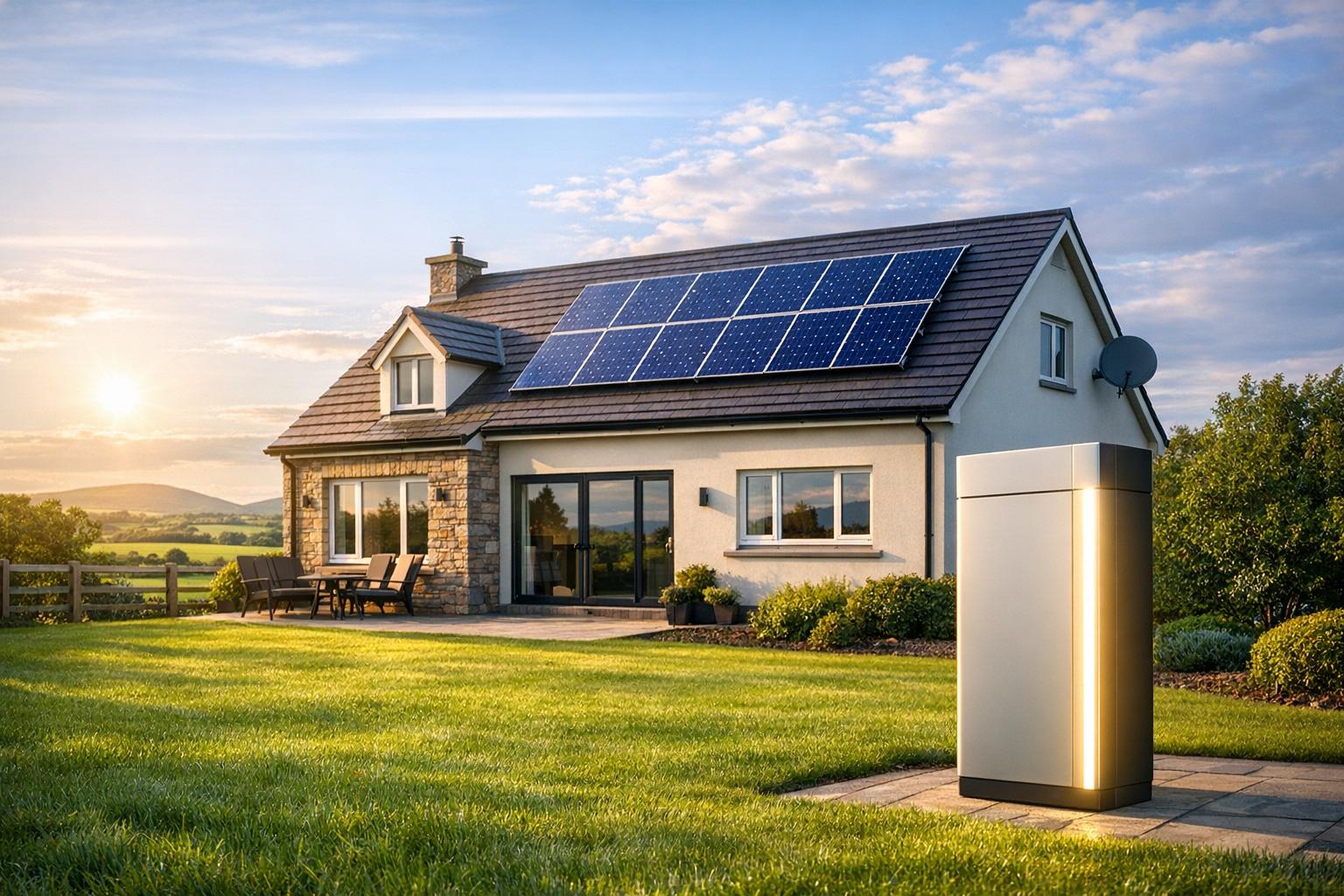
Owning your power source, such as solar panels and battery storage, can save you money, reduce your reliance on electricity providers, and even increase your home’s value. In Northern Ireland, a typical three-bedroom home can save £513 annually, with potential long-term profits of £7,841 over 25 years. Solar systems also help cut carbon emissions by 0.45 tonnes of CO2 per year, supporting cleaner energy goals.
Key takeaways:
- Savings: Reduce energy costs by up to 60%, with payback periods of 10–13 years.
- Government Support: Benefit from a 0% VAT rate on installations until 2027.
- Energy Security: Battery storage ensures power availability during outages and peak times.
- Property Value: Solar systems can increase home resale value by 5–10%.
- Environmental Impact: A 3.5 kWp system reduces your carbon footprint by around 13% annually.
Solar technology is now more affordable, with installation costs dropping by 30% since 2010. By pairing solar panels with battery storage, you can maximise savings and achieve greater energy independence. This is a smart, long-term investment for both your finances and the environment.
Financial Benefits of Solar Ownership
Lower Energy Bills and Payback Periods
Generating your own electricity can significantly reduce your reliance on the grid, cutting your energy costs. The savings depend on your home’s size and how much energy you use during the day. For example, a 1.5kW system installed on a one-bedroom property could save you around £372 a year, while a 6kW system on a larger four-bedroom home might save approximately £1,054 annually.
The secret to maximising these savings lies in self-consumption – using as much of the electricity your panels produce as possible. For every kilowatt-hour you use directly, you save about 28p, the current grid rate. However, exporting surplus energy back to the grid earns you less, typically around 17.66p to 18p per kWh.
In Northern Ireland, payback periods for solar systems generally range between 10 and 13 years, depending on your setup. For instance, a 4kW system costing around £6,800 could save you £560 annually, resulting in a 12.1-year payback period. Once you’ve covered the initial cost, the system can continue delivering savings for another 15 to 20 years, making it a worthwhile long-term investment.
Government Incentives and Support
To make solar systems even more affordable, the government offers incentives that reduce upfront costs. One major benefit is the 0% VAT rate on solar panel and battery installations, which can lower the cost of a home system by about £1,000. This scheme is set to remain in place until at least 2027.
For businesses, the Northern Ireland Sustainable Energy Programme (NISEP) provides grants covering up to 20% of solar PV installation costs. Managed by Power NI, this programme is available for non-domestic properties. However, businesses must register their interest and secure formal approval before beginning any work. The NISEP fund, worth £8 million, has been extended to run through March 2027.
Homeowners seeking advice on available support can contact NI Energy Advice at 0800 111 4455 for tailored guidance. While direct grants for domestic solar installations are currently limited, the 0% VAT relief can still shorten payback periods by about 12 to 18 months, making solar energy a more accessible option.
sbb-itb-d2d975a
Environmental Impact of Solar Energy
Reducing Your Carbon Footprint
Solar panels transform daylight into electricity without releasing carbon emissions. By generating power directly on-site, you reduce your dependence on the grid, which still relies partly on fossil fuels. This shift to clean energy helps cut overall reliance on traditional power sources.
The environmental benefits of solar systems are tangible. A typical residential setup can produce between 2,700 kWh and 6,850 kWh of clean energy annually, depending on its size and configuration. Adding battery storage takes these advantages even further. By storing surplus energy for use during peak times, such as evenings, battery systems can cut carbon emissions by up to 20 times more than solar panels alone.
Traditional power plants consume between 20,000 and 60,000 gallons of water per megawatt-hour (MWh), while solar systems use less than 1% of that amount, primarily for cleaning panels. Additionally, solar panels offset the carbon emissions from their own production within just 2 to 3 years of operation. After that, they continue generating clean energy for over 20 years.
Supporting Northern Ireland’s Renewable Energy Targets
Installing solar panels does more than save you money – it also supports regional renewable energy goals. Northern Ireland aims to produce 80% of its electricity from renewable sources by 2030. Every solar installation brings the region closer to this target by supplying clean, on-site power.
In June 2025, the Department for the Economy published research conducted by Ulster University, highlighting the potential for rooftop solar across Northern Ireland. The study identified rooftop solar as a major opportunity for increasing electricity generation.
Energy Security and Independence
Owning your power source isn’t just about saving money – it’s also about securing your energy future and reducing dependence on external providers.
Protection Against Rising Electricity Costs
Producing your own electricity shields you from the unpredictability of energy markets. For instance, solar PV systems can cut annual electricity bills by up to 60% for homeowners. In the UK, a 4kW solar system can deliver yearly savings of approximately £500 to £700.
As electricity prices climb, the financial benefits of solar panels grow. By generating your own power, you effectively lock in today’s rates for the lifespan of the system, which typically lasts around 25 years. Plus, using battery storage to save surplus energy for peak hours (16:00–20:00) can boost savings by an extra 20–30% annually. Over a decade, combining solar with battery storage can save you between £9,000 and £11,000, compared to £6,000 to £8,000 with solar alone.
In Northern Ireland, homeowners can also profit by exporting excess electricity back to the grid through providers like Power NI. This can earn an additional £70 to £150 per year. With the current 0% VAT rate on MCS certified installations under the Windsor Framework, the financial benefits of going solar are even more compelling.
When paired with battery storage, the advantages multiply – not just in cost savings but also in efficiency and energy security.
Resilience Through Battery Storage
Battery storage takes solar systems to the next level, turning them into reliable, around-the-clock energy sources. A 5kWh battery, for example, can power the essentials of a gas- or oil-heated home through the evening, increasing the self-consumption of solar energy from roughly 30% to as much as 70%.
While standard grid-tied solar systems shut down during power outages to prevent back-feeding, batteries with back-up reserve units can "island" your home. This means they keep critical circuits running during blackouts. Some advanced systems even include Uninterruptible Power Supply (UPS) features, ensuring sensitive devices like medical equipment or electronics stay powered without any interruptions, thanks to switching speeds as fast as 0ms.
Modern batteries also use smart technology to optimise their charging and discharging. For example, you can programme them to charge during cheaper, off-peak hours – like overnight "night boost" periods – and discharge during pricier daytime hours. This not only maximises your financial savings but also ensures energy availability when you need it most. By reducing your reliance on the grid, battery storage protects you from rising costs and the risk of rolling blackouts.
Typically, battery systems last 10 to 15 years and retain around 70% of their capacity after a decade or 6,000 charge cycles. The installation costs range between £2,000 and £4,500, depending on the battery’s capacity, with a 5kWh system averaging around £4,600. Installing a battery at the same time as your solar panels can also help lower overall costs, as the installer is already on-site for the solar setup.
Property Value and Economic Impact
On top of energy security and cost savings, renewable energy installations can also make your property more appealing on the market. Owning your energy source not only boosts your home’s resale value but also contributes to Northern Ireland’s economy.
Increased Property Value
Adding solar panels and battery storage to your home can increase its resale value by 5–10%. In many cases, solar installations allow homeowners to recover their costs entirely through the increased property value – something that typical home improvements often can’t match.
Homes with solar power offer a dual advantage: protection from rising energy costs and a reduced carbon footprint. Properties with owned solar systems often sell for a 5–10% premium, and newer systems can push that figure up to 9%. Additionally, solar installations improve a home’s EPC rating, which may qualify it for "Green Mortgages" and exemptions under the Rates (Microgeneration) Order (NI) 2012.
However, ownership is key. Studies show that owning your solar system outright significantly enhances property value, while leased systems may not offer the same benefit and could complicate the sale process. To maximise your home’s resale potential, it’s best to own your system rather than lease it.
These property value increases not only benefit homeowners but also attract investment and new residents, feeding into local economic growth.
Local Jobs and Economic Growth
The installation of solar panels and battery systems fuels economic growth by creating skilled jobs and boosting the Gross Value Added (GVA) of the renewable energy sector. Northern Ireland is uniquely positioned to take advantage of the energy transition due to its "potentially excellent renewable energy resource" and the ability to sidestep some of the infrastructure issues seen elsewhere in the UK.
"Northern Ireland is very well placed to benefit from the energy transition and from decarbonisation in general" – Richard Lowes, Senior Associate at the Regulatory Assistance Project
Each solar installation generates demand for skilled professionals like installers, electricians, and support staff. This not only creates jobs but also strengthens the region’s economic resilience.
EECO Energy Solar and Battery Solutions
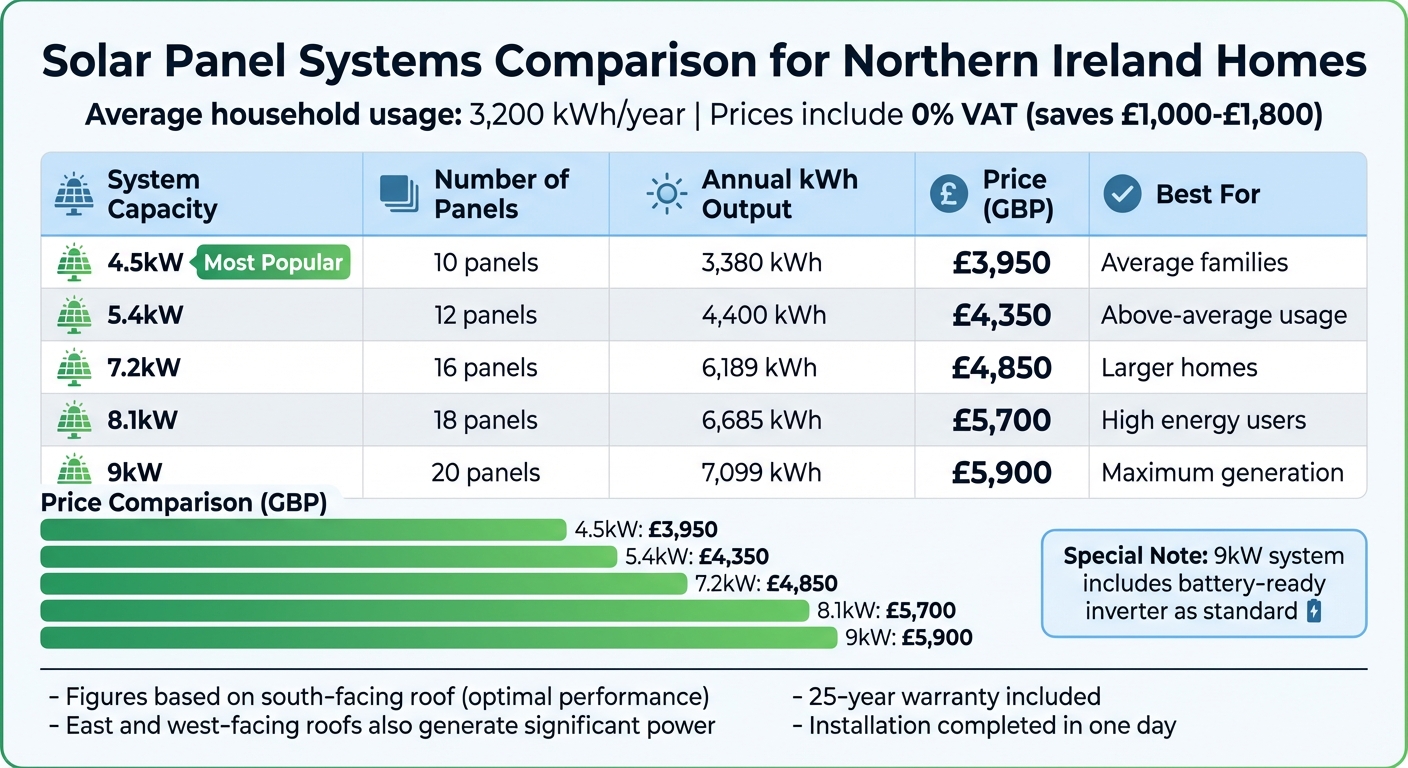
Solar Panel System Comparison for Northern Ireland Homes
EECO Energy takes the advantages of solar ownership to the next level, offering solutions that boost energy independence and help reduce costs. With more than 25 years of experience installing solar systems across Northern Ireland, the company has earned its reputation as a leading provider in the region. Every installation comes with a 25-year warranty, is completed in just one day, and meets industry standards thanks to MCS accreditation.
Stuart Laing, the Company Director at EECO Energy, highlights their straightforward approach:
"Solar panels are simple, cost-effective, and deliver real results".
The systems are specifically designed to perform well in Northern Ireland’s climate, ensuring reliable power generation even on cloudy days. Below is a comparison of solar panel options tailored to maximise energy output for homes in the region.
Solar Panel Systems Comparison
Here’s a quick look at the solar panel options designed to suit various household needs. With the average family in Northern Ireland using around 3,200 kWh of electricity per year, the 4.5kW system is a popular choice. These prices reflect the 0% VAT rate introduced in May 2023, saving homeowners between £1,000 and £1,800.
| System Capacity | Number of Panels | Annual kWh Output | Price (GBP) |
|---|---|---|---|
| 4.5kW | 10 | 3,380 | £3,950 |
| 5.4kW | 12 | 4,400 | £4,350 |
| 7.2kW | 16 | 6,189 | £4,850 |
| 8.1kW | 18 | 6,685 | £5,700 |
| 9kW | 20 | 7,099 | £5,900 |
The 9kW system comes with a battery-ready inverter as standard, making it easier to add storage later. While the figures above assume a south-facing roof for optimal performance, east- and west-facing roofs also generate significant amounts of usable power throughout the day.
Battery Storage Solutions Comparison
Without battery storage, homes typically use only 15–25% of the energy generated by their solar panels. Adding a battery captures excess energy, increasing on-site usage and boosting monthly savings by as much as 20–50%.
| Battery Model | Capacity | Price (GBP) |
|---|---|---|
| Dyness | 10kWh | £2,400 |
| Soluna | 10kWh | £3,000 |
| Duracell | 10kWh | £3,650 |
These battery options ensure that energy efficiency and savings continue even during the winter months. Batteries can be programmed to charge from the grid at cheaper night-time rates and discharge during peak hours, helping households save money even when solar generation is lower.
The impact of these solutions is evident in real-life examples. In 2024, Lynsey, a customer from Belfast, shared her experience after installing a solar and battery system with EECO Energy. Her electricity bill dropped dramatically, going from approximately £200 per month to just £20. She commented:
"As a family we’re delighted with the performance we’ve seen from our solar system. My bill dropped from approximately £200 to £20".
Conclusion
Solar panels paired with battery storage bring enduring financial savings and help reduce environmental impact. For homeowners in Northern Ireland, this means slashing electricity bills and shrinking their carbon footprint by around 13%.
Beyond savings, solar installations can increase property values by 5% to 10%. Few home improvements offer the same return on investment, combining higher resale value with ongoing reductions in energy costs. With over 27,676 homes in Northern Ireland already producing their own electricity, solar energy shields homeowners from rising grid prices. Adding battery storage allows households to make the most of their solar power during peak evening hours, boosting efficiency and self-sufficiency. Together, these advantages not only meet today’s energy needs but also provide a solid foundation for future energy security.
The good news? Solar technology is now more affordable than ever. Installation costs have dropped by roughly 30% since 2010, and the 0% VAT rate makes it an even more attractive option.
EECO Energy offers customised solar panels and batteries solutions, combining MCS accreditation and a 25-year warranty. Their systems empower homeowners to achieve long-term energy independence while playing a vital role in Northern Ireland’s move towards renewable energy. With EECO Energy, these benefits are well within reach for every household.
FAQs
How can solar panels and battery storage add value to my home?
Installing solar panels and battery storage can boost your home’s value in several ways. By cutting energy bills, enhancing its Energy Performance Certificate (EPC) rating, and appealing to buyers who prioritise eco-friendly living, your property becomes more attractive in today’s market. Homes equipped with renewable energy systems are often viewed as modern, efficient, and ready for the future – qualities that buyers are increasingly seeking.
Studies have shown that adding solar panels can increase property values by several thousand pounds, though the exact figure depends on factors like the size of the installation and your location. On top of the added value, the long-term savings on electricity and reduced dependence on the grid make these homes even more appealing to prospective buyers.
Are there any government incentives for installing solar panels in Northern Ireland?
Currently, Northern Ireland does not offer specific grants for domestic solar panel installations. However, you might be eligible for the UK-wide Energy Company Obligation (ECO4) scheme. This programme supports energy-efficiency upgrades, which could include solar-related improvements if they form part of a broader retrofit initiative.
If you’re located near the border or in the Republic of Ireland, the Sustainable Energy Authority of Ireland (SEAI) Solar Electricity Grant could be an option. This grant provides €700 per kWp for the first 2 kWp, €200 for each additional kWp up to 4 kWp, with a maximum grant of €1,800. To qualify, your property must have an MPRN and must have been built and occupied before 2021.
These are the main government-supported schemes available for solar panel installations across the island of Ireland.
How does owning your own power source help reduce your carbon footprint?
Owning a personal power source, like solar panels paired with a battery storage system, can make a big difference in cutting down your carbon footprint. By producing clean, renewable energy right at home, you reduce your dependence on grid electricity, which is often generated using fossil fuels that release greenhouse gases into the atmosphere.
Switching to self-generated energy not only helps the environment but also promotes a more sustainable way of living. Over time, this choice supports energy independence and can lead to noticeable savings on your energy bills, all while contributing to a healthier planet.