
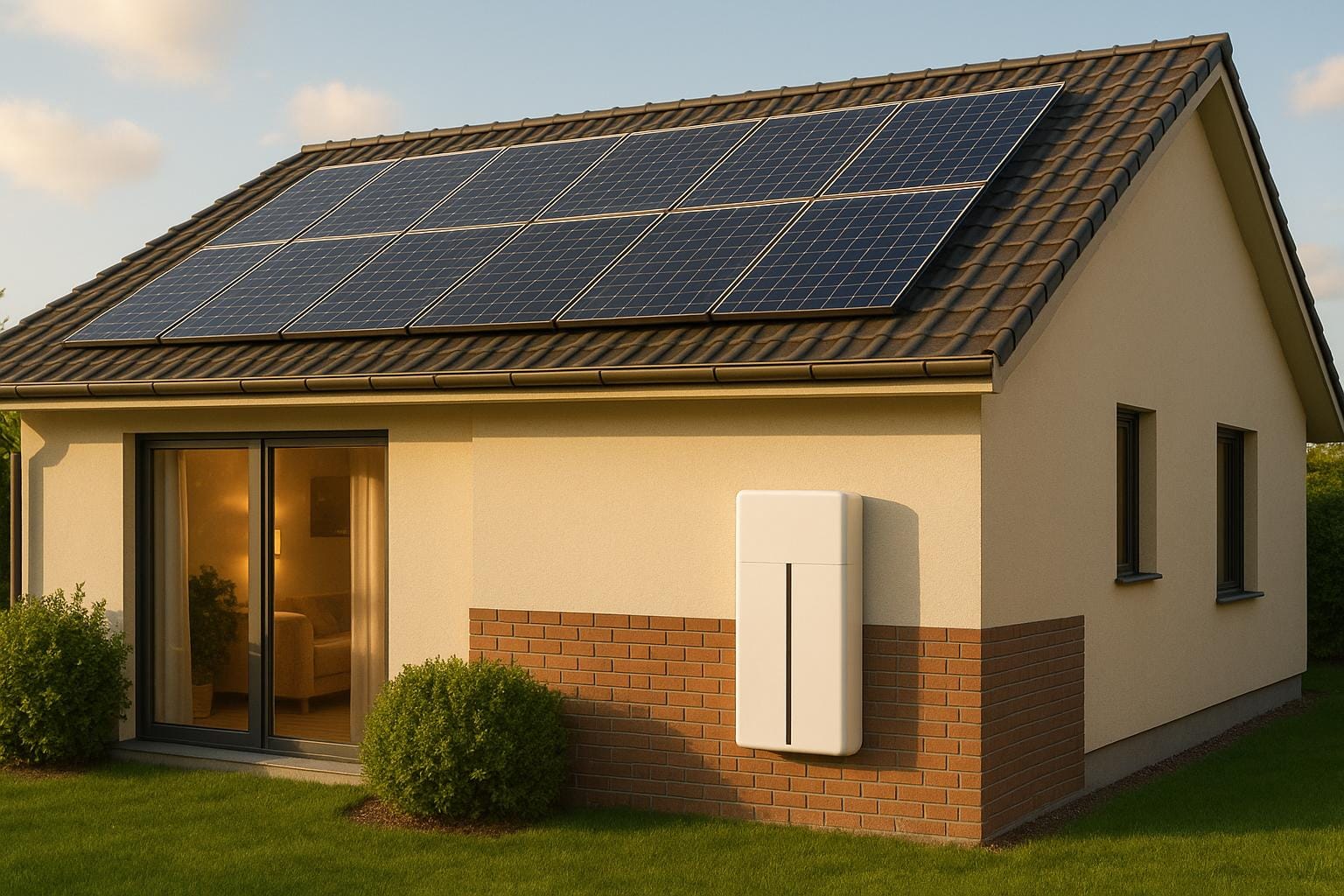
Adding battery storage to your solar system can help you save money, reduce your reliance on the grid, and improve energy security. In Northern Ireland, where electricity prices are high, storing surplus solar energy for use during peak times can lead to noticeable savings. Here’s what you need to know:
- Why it matters: Electricity prices are rising, and feed-in tariffs offer low returns. Storing solar energy lets you use it when grid electricity is most expensive.
- Key benefits: Lower energy bills, backup power during outages, and reduced carbon emissions.
- Choosing the right battery: Look at capacity, lifespan, and compatibility with your solar system. A 10 kWh battery is a popular choice, costing between £2,400 and £3,650.
- Installation tips: Use a certified electrician and ensure your system is compatible with your inverter. Place batteries in a cool, dry space for optimal performance.
- Maximising value: Use time-of-use tariffs to charge your battery at off-peak rates, and check for grants to reduce upfront costs.
With the right setup, you can cut energy costs by 20% to 50%, potentially saving £20,000 to £30,000 over 25–30 years.
How to Choose the Right Battery Storage System
Picking the right battery storage system means finding one that aligns with your energy needs and installation setup. This helps you avoid overpaying for unused capacity or running into energy shortages. Let’s break down the key considerations: capacity, lifespan, and compatibility.
Battery Size and Capacity Requirements
To choose the right battery size, start by understanding your household’s energy use – especially during the evening when solar panels aren’t generating power. A quick look at your electricity bills can help you identify your peak energy consumption, which will guide your battery selection.
Your solar system’s capacity is another important factor. For example, a 4.5 kW solar setup in Northern Ireland typically generates around 3,380 kWh annually. This often leaves surplus energy that can be stored. However, seasonal variations in solar output mean you’ll need a battery with enough capacity to handle fluctuations. Many households find a 10 kWh battery strikes a good balance between capacity and cost, with prices ranging from approximately £2,400 to £3,650, depending on the brand.
Battery Life, Warranties, and Performance Over Time
A battery’s lifespan is key to getting the most out of your investment, making warranty terms and performance guarantees critical. Lithium-ion batteries generally last 10 to 15 years, far outliving lead-acid options, which typically last 5 to 10 years. Even the best lithium-ion systems lose some capacity over time, with many retaining about 80% of their original capacity after 10 years of regular use. For instance, a 10 kWh battery might provide around 8 kWh of usable storage after a decade.
When comparing batteries, check for warranties that cover both capacity loss and manufacturing defects. High-end systems often include 10-year warranties with performance guarantees, while budget models may offer shorter coverage. Given the high cost of battery replacement, strong warranty terms are a must.
Northern Ireland’s weather can also impact battery performance. Batteries placed in temperature-controlled or sheltered areas tend to maintain their efficiency and last longer than those exposed to extreme temperature swings.
System Compatibility and Installation Requirements
Compatibility with your existing or planned solar inverter is a crucial consideration. The type of inverter you use will determine how easily you can integrate battery storage. Hybrid inverters are designed to work seamlessly with both solar panels and batteries, while string or microinverters often require additional components.
You’ll also need to decide between AC-coupled and DC-coupled systems. AC-coupled systems are typically more affordable for retrofitting existing solar setups, as they use your current inverter along with a separate battery inverter. However, this setup can be less efficient due to multiple energy conversions. On the other hand, DC-coupled systems are more efficient because they use a single hybrid inverter for both solar and battery storage. That said, this option often involves replacing your existing inverter, which increases the initial cost.
Make sure your consumer unit can handle the extra load, which may require upgrades such as adding circuit breaker spaces or increasing amperage capacity.
Batteries should be installed in a cool, dry, and well-ventilated area close to your inverter and consumer unit to simplify installation.
Lastly, always hire a certified electrician for installation. Working with high-voltage systems is complex, and professional installation ensures safety, regulatory compliance, and warranty protection. DIY setups can lead to reduced performance or even void warranties, so it’s best left to the experts.
Battery Storage Options Available in Northern Ireland
Now that you know what to consider, let’s explore the battery storage solutions offered by EECO Energy specifically for Northern Ireland. EECO Energy provides a selection of systems tailored to suit the region’s energy demands and climate, with options designed to match different budgets and energy requirements.
Battery Comparison: Features and Prices
Here’s a quick overview of the three main battery systems available through EECO Energy:
| Battery Brand | Capacity | Price | Warranty | Key Features |
|---|---|---|---|---|
| Dyness | 10 kWh | £2,400 | 10 years | Affordable option with dependable lithium-ion technology |
| Soluna | 10 kWh | £3,000 | 10 years | Mid-tier pricing with smart monitoring features |
| Duracell | 10 kWh | £3,650 | 10 years | High-quality build from a trusted brand, with EECO Energy-approved installation for full warranty coverage |
This table gives a clear comparison of cost, features, and warranty. The Dyness system, priced at £2,400, is a solid choice for those prioritising affordability without compromising on performance. The Soluna system, at £3,000, adds smart monitoring capabilities, making it a great pick for users who want to keep a close eye on their energy usage. For those seeking the best in quality and brand trust, the Duracell system at £3,650 stands out, offering premium reliability and the assurance of professional installation by EECO Energy.
Which Battery System to Choose
Deciding which system is right for you comes down to your budget, energy usage habits, and long-term goals.
- If you’re looking for a budget-friendly option, the Dyness system is the way to go.
- For those who want more advanced features like energy tracking, the Soluna system strikes a balance between cost and functionality.
- And if you’re after top-tier performance and peace of mind, the Duracell system is worth the extra investment.
Battery storage systems can significantly boost your monthly energy savings – anywhere from 20% to 50%. Over a lifespan of 25 to 30 years, this could translate into savings of £20,000 to £30,000.
For households in Northern Ireland, any of these options can enhance the efficiency of your solar setup, helping you save more and reduce reliance on the grid. Up next, find out how these battery systems can cut installation costs while maximising your overall savings.
How to Save More Money with Battery Storage
Adding battery storage to your energy system can significantly cut down your energy expenses. The trick lies in using your system wisely while ensuring the upfront costs remain within your budget. Let’s break down the costs and explore ways to speed up your financial returns.
Installation Costs and Payback Period
Based on EECO Energy pricing, a 10 kWh battery adds between £2,400 and £3,650 to your setup. For example, pairing a 7.2 kW solar system costing £4,850 with a Dyness battery would bring your total to £7,250. Knowing these figures helps you plan and estimate how long it might take to recover your investment through energy savings.
Making the Most of Off-Peak Electricity Rates
One of the biggest perks of battery storage is the ability to take advantage of time-of-use tariffs. By charging your battery during off-peak hours – such as those offered by Economy 7 tariffs in Northern Ireland – you can store cheaper energy and use it during peak periods when rates are higher. Some flexible electricity plans even offer variable pricing, giving you more opportunities to cut costs. This approach not only lowers your energy bills but also maximises the value of your stored energy during peak times. It’s a simple yet effective way to boost your savings.
Grants and Financial Support in Northern Ireland
To help with the upfront costs of solar panels and battery storage, various financial support schemes may be available in Northern Ireland. These could include grants, loans, or other incentives. Since these schemes can change over time, it’s worth checking local council websites or government portals for the latest updates. Taking advantage of these programmes can make your investment more affordable and improve your overall return on investment.
sbb-itb-d2d975a
Battery Storage Installation Examples in Northern Ireland
Making the most of your solar and battery setup means customising installations to fit your property and energy needs. Across Northern Ireland, examples show how different property types shape the ideal battery storage configuration. EECO Energy specialises in designing systems tailored to individual energy requirements and available space.
City vs. Country Property Installations
Urban homes, like a terraced house in Belfast’s Titanic Quarter, often require compact solutions due to limited space. For instance, a system featuring a Dyness 10kWh battery paired with a 5.4kW solar array was installed here at a total cost of £6,750. This setup is perfect for properties where space is at a premium.
In contrast, rural properties can accommodate larger systems. Take a farmhouse near Omagh, for example. With more roof space available, it was equipped with a Duracell 10kWh battery and a 7.2kW solar array, enabling it to capture more solar energy and improve overall efficiency.
Systems for High Energy Usage Properties
For homes with greater energy needs, such as those with electric vehicles or heat pumps, more robust systems are key. In Ballymena, a household with higher daily energy consumption installed a 9kW solar system alongside a Duracell 10kWh battery. This setup, costing £9,550, ensures better management of peak energy demands while maximising the use of stored solar energy.
EECO Energy also integrates smart energy management tools to optimise how stored energy is used, ensuring every system meets the unique needs of the property it serves.
Getting the Most from Your Solar and Battery Investment
To make the most of your solar and battery system, it’s essential to ensure your battery capacity, efficiency, and installation align with your energy needs and property setup. As mentioned earlier, choosing the right battery size is key – understanding your household’s energy usage allows you to avoid paying for unnecessary capacity while still achieving long-term savings.
Getting the system’s size right is just the beginning. To truly optimise performance, you’ll need to focus on smart energy management and regular upkeep.
Modern battery systems go beyond simple energy storage. They often include intelligent management features that decide when to use stored energy versus drawing from the grid. For instance, EECO Energy’s systems come with monitoring tools that analyse your energy habits and provide recommendations to maximise efficiency, even as solar generation fluctuates with the seasons.
Maintenance plays a big role in keeping your system running smoothly over its 10-15 year lifespan. This includes checking battery health, cleaning connections, and making sure there’s adequate ventilation around the units. Scheduling professional inspections once a year can help catch potential problems early, ensuring your system operates efficiently and remains within warranty conditions.
You can also boost savings by adjusting how and when you use energy. For example, running energy-intensive appliances like washing machines and dishwashers during peak solar production hours can make the most of your system’s output. Meanwhile, saving battery power for evening lighting or essential devices ensures you’re getting maximum value from every kilowatt-hour your system generates.
FAQs
How can I choose the right battery capacity for my home’s energy needs?
To figure out the ideal battery capacity for your home, start by estimating your usual daily electricity usage – especially during evenings or times when your solar panels aren’t producing power. For many UK households, a 5kWh battery often meets the needs. However, if you have a larger home or higher energy demands, you might want to consider options ranging from 9kWh to 13.5kWh.
If you’re unsure about the right size, it’s a good idea to consult a professional installer. They can analyse your energy usage patterns and recommend the best capacity to help you save money and get the most out of your solar energy system.
What should I look for when comparing battery brands and their warranties?
When comparing battery brands and their warranties, it’s important to pay attention to a few key factors. Look at the warranty length, the number of charge cycles, and the minimum guaranteed capacity over time. These details give you a clear idea of how long the battery is likely to function effectively.
You should also consider the warrantied energy throughput, which reflects the total energy the battery can provide throughout its life, and the end-of-warranty capacity, indicating the remaining storage capacity at the warranty’s end. Opting for a battery with solid warranty terms and reliable performance guarantees can lead to better savings and dependable performance over time.
How can I save money using off-peak electricity with my battery storage system?
You can cut costs by charging your battery storage system during off-peak hours when electricity rates are lower, then using that stored energy during peak times when prices rise. This strategy not only reduces your dependence on costly grid electricity but also allows you to get the best out of your solar energy system.
Combining this method with a time-of-use tariff can lead to even greater savings, helping you lower your energy bills while making your renewable energy system work harder for you.